
“Those of you who have seen my book, whatever you may think of its contents, will probably agree that it is a beautiful object. And if the physical book, as we’ve come to call it, is to resist the challenge of the eBook, it has to look like something worth buying and worth keeping.”
From Julian Barnes’s acceptance speech at the 2011 Booker Ceremony, on winning with his novel, The Sense of an Ending.
A Guardian article states at length how the book buying public are now being seduced by a book’s appearance as well as its content, how more care is being taken in the production and appearance of books. Generally, I don’t believe this is true.
The Sense of an Ending is a physically beautiful object; a compact hardback with dust wrapper containing a nice but simple design, all put together with good quality material. I think all books are beautiful in their own way, but that is another discussion. Barnes’s book is a beautiful object, but how practical is it? By that I mean how well does it do its job, perform its practical purpose of being read, and being read with ease, without unnecessary hindrances? The answer to that is: not very well.
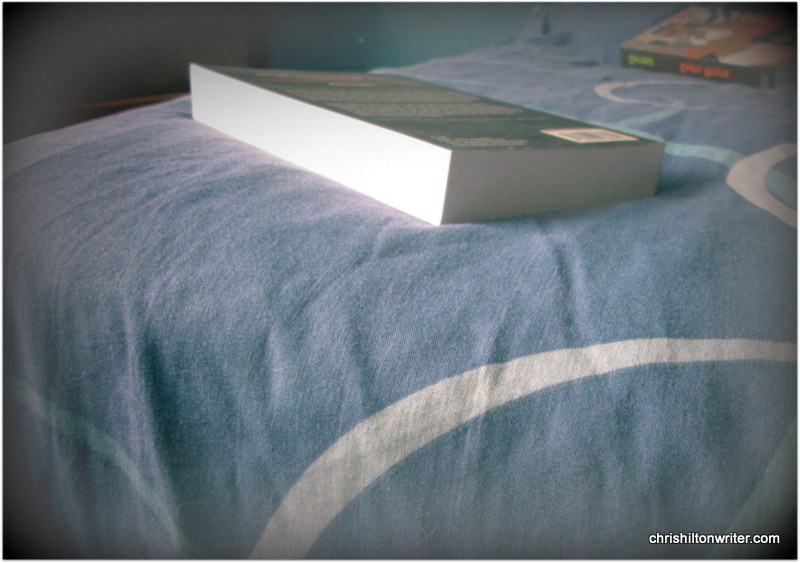
I read frequently in bed. That may not be where the majority of reading hours are put in, but it is the place where my reading most often takes place – every night without fail. Actual reading time can be as little as one minute before the object of reading falls onto my face to remind me that I’ve fallen asleep; it can also be hours or occasionally a whole book. In bed is where one judges the practicality of a book. I believe most of us must read while lying on our back, holding the book above our face; that way when sleep comes it’s possible to place the book on the floor or on the bedside table and quickly get to perfect slumber without unnecessary interruptions, such as changing position drastically or rearranging pillows, cushions and covers. If, like me, you do read this way, then you should know what I mean about the practicality of reading a book as opposed to its beauty.
Julian Barnes is right. His Booker winning novel is a beautiful object; I read it over a few nights, entirely from a prone, on my back, position. And it is not a practical object. For a very simple and infuriating reason: its inner margins are too narrow. The book requires an uncomfortable and impractical two hands to be able to see the whole of the text; in other words, without forcing the book wide open with two hands the inner text on both pages will disappear into the fold of the book; one is constantly tilting the book this way and that to read the end of the sentences on the left-hand page and their beginning on the right hand page. This is unusual with hardback books, but this is a small book.
Although this fault is most noticeable in bed – I suppose publishers will protest that books are not designed to be read in bed (if not, they should be) – it is almost as annoying when reading anywhere in any way. If, like me, you love books as ‘physical’ objects then you will resent having to practically break their backs to read the central text. Apart from the discomfort and the detraction of pleasure, you are damaging the book, shortening its life – the act of doing this, bending the two halves of a paperback hard against its spine makes me angry; apart from the inconvenience which has been added to what should be a pleasure (depending on the book), I resent having to treat a book this way. It should never be necessary.
Why are so many books made this way? And who is producing them? I can’t decide if this is just a quirk of printing or penny-pinching. I was unable to decide if some publishers habitually printed unreadable books, if some never erred or if the whole business is a lottery. I was going to put together an extensive list but found that margin width is completely random, there is no pattern to it; a publisher may release a book with wide margins followed by one with narrow margins: same price, no reason. It appears to be haphazard. Rather than try to catalogue the problem, here are just a few examples of what I have been reading lately.
Geoff Dyer’s Working the Room (Canongate) is impossible to read in bed without forcing the covers back with two hands (not a natural position). Using the natural stance of holding the book between thumb and forefinger reveals the bottom half of the text, but the top half disappears into the centre, forcing one to use unnatural, uncomfortable pressure to be able to see the upper text.
A Little Aloud (Chatto & Windus) is not only a marvellous book, its proceeds going to charity, it has really wide central margins to make one-handed reading easy as well as silent or noisy reading in bed – in fact why not read aloud to a loved one in bed?
I had hoped that this would be a modern phenomenon, a sign of the philistinism and greed of the post-modern era, penny pinching publishers saving another £0.0001 per copy by depriving the reader (me!) of reading space and comfort. It was not to be: A 1998 Penguin edition of Lucky Jim is very mean with its margins. It requires two hands and needs forcing open at all times because also, without the book open flat there are always shadows to contend with, a hazard for all but those with 20:20 vision.
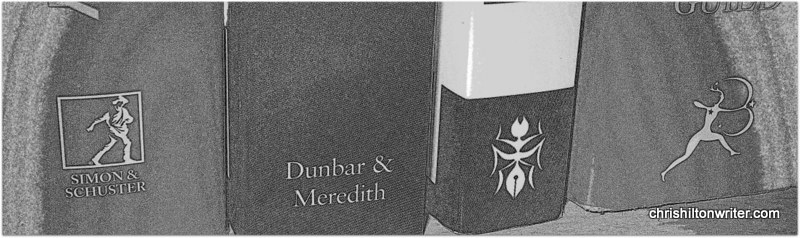
Another factor is ‘Give’. Have you noticed how the better paperbacks allow themselves to be forced flat, you feel as though you are breaking them but you are not – the spine remains uncracked, the glue holds – they are a miracle of design and engineering. I present two examples: Alone in Berlin (Penguin) 2009, and Leviathan (Fourth Estate) 2009; beautifully put together books, but Alone in Berlin has narrow margins while Leviathan has wide margins; they are both priced at £9.99 – the problem has nothing to do with cost. I don’t think publishers even consider this. The Empty Space by Peter Brooke also has ample room on the inner margin.
The crazy thing is: Who needs outer margins? They are necessary for appearance’ sake but provide no practical purpose. Why not shorten the outer margin and give the difference to the inner margin? I hope I’m not the only person to notice this. Any thoughts?
 Chris Hilton ~ Writer
I’m with you all the way, particularly as my dexterity problems have made the physical part of reading a nightmare for many years. There is no rhyme nor reason for the problems and the sooner publishers and manufacturers realise this and act accordingly, the more likely books will provide a more than tempting alternative to an e-book.
Thanks for your comment. Glad I’m not the only one. Hope there’s more to come!
Hey Chris – without those outer margins, where do we put our thumbs? Like the post though, and I too hate the dreaded tiny inner margins.
Hey Greg. Well, yes – need some thumb room. No use without the inner margins though!
I have many physical problems, that I can only read kindle currently. Good post!
Hey Lori, yes, kindles are useful for that. Thanks for your comment!
i hear you… however, this one gets listed under #firstworldproblem
I would love to see a larger inner margin! I have a Kindle, but I do love the feel of a book.
I think the cover is important. A lot of book descriptions lack a true depiction of what the story is about, and most covers provide little insight. Everyone that saw the cover on my book loved it. They were interested until they saw the print. The publisher did it in 9 font! Just one of the problems with self-publishing.
Inner margins are a nightmare, and there’s no reason for it. No consistency either. You need to somehow get control over font type, size etc. Very important. Glad people liked the cover. So many are boring. Good luck with whatever you’re doing.
Slightly off-centre of the topic here, but the producers of blank journals ought to take these matter into consideration. Pages need to open flat so you don’t need your second hand to hold them open as you write in them. I have several beautiful leather bound journals that are very hard to use pleasantly; one I have to keep bending to try and soften the spine so I can actually use the damn thing.
And books falling on the face? Yes. Kindles hurt much less if they fall on your face. I’ve broken my nose twice so far in my life (once with a frisbee in my face, second time a heavy mug fell on my face- don’t ask) and I don’t want it broken a third time by a big hefty tome.
I agree. Book designers seem to design books and journals for appearance, not for actual use. I recently bought ‘Far from the Tree’, a recent bestseller about families. It has nearly 1000 pages but has been produced in paperback by Vintage with such narrow inner margins that it is unreadable. It is that bad, so tightly bound and difficult to read, that I shall never get round to reading it. If it had been in a shop I would have rejected it but I ordered it through Amazon. A complete waste of money and an interesting book that I won’t read. I’m surprised more people don’t complain. It’s quite mad.
Yes, watch those Kindles falling on your face. I don’t use them being a technophobe and a lover of real books. I’m reading ‘Harlot’s Ghost’ by Norman Mailer at the moment, an old library copy. It’s both difficult to handle and quite a weight to fall on the face; it’s well-produced though. No complaints about readability. Some publishers get it right, some don’t. There is no consistency.
Good post. Thanks.
I’m a big reader and a huge fan of Diana Gabaldon’s Outlander series. Each of them being over 1,200 pages makes a two-handed grip necessary. The last time that I read them through I actually ended up at the doctor with a spasm in my neck! I broke down and bought the books for my iPhone/iPad just to save my body! I miss having a book in my hand but now I can carry 10,000 pages of great fiction around in my pocket and don’t have to worry about muscle strain! I’ll be watching the margins from now on too.
Great post! I gave up on paper books a few years ago and haven’t looked backed. I do agree with you on the outer margins though! Thank you for sharing and Happy Blogging!!
I always read in bed before I go to sleep. It is the most comfortable place and I remember things most at night! Check out my blog!!
What an interesting topic. I’ll be looking at all my books now.
What type of books do you write Chris?
Congratulations on being ‘Freshly Pressed’, Chris! From now, I will start to pay closer attention to book’s margins, thanks to you!!
Books are great. I love reading but reading in bed is a recipe for sleep after the first few pages. I had no idea, though, that someone paid this much attention to the margins and spines of books. I always thought that small inner margins were publishing errors.
Great!
Agree with you that inner margins should be bigger. As for why we need such big outer margins… I think it’s to make sure the next Fermat has ample space to fit his proofs so that humanity will not be tormented for the 350 years or so trying to prove his theorems.
As someone who loves maths, this made me laugh. 😉
You never know right ;P
I feel you. That is always been the problem with these books. Great post though!
Reblogged this on Yuanne Dynasty.
Now I know why a book feels ‘wrong’ when I’m holding it.
Reblogged this on ★格の違い★神ブロガー霞拳志郎★.
I own a few favourite books in duplicate: ‘real’ and e- versions. I no longer read anything but my Kindle in bed. A book of paper pages, no matter how beautifully bound, cannot compete for my slumbering attention with a text which provides its own light source in a darkened room. In daylight however, a flattened jacket and broken spine are prerequisites for underlining the best bits and scribbling in the margins. And the bigger the margins the better.
Reblogged this on Risalah Akbar.
I have gone to buying e-books rather than books themselves, but I miss real books. I always preferred hard bound books over paperback because of the covers and size. Large paperbacks are hard on my hands to hold for long periods of time and if it’s a good book I’ll read for hours. Now that I’ve gotten a bit older, I find it hard to read real books due to the font size. Inner margins were always a problem in paperbacks as well. With a tablet I can change the size of the font to what is most comfortable for me and not have to strain to read. Plus, if I go on a trip I don’t have to think about which book I want to bring, I just grab my tablet and I have them all with me.
Very good post. Because I am a book lover and a reader. 👍
Oh goodness. I love this post. And the responses! To be honest, I chuckled a bit, not in a demeaning way, but in a “that’s so true!” way. What an interesting critique; i wonder how much the text layout impacted your enjoyment of the novel. With minor annoyances like that, it can really put a damper on your fun. Cheers!
Seems like yoy said exactly what I was feeling! Great post. Following you now 🙂
I know a lot of people who read in bed – so I do agree with you that a book should be readable there. If it is not, because of its design, then something IS wrong with the book.
Your post sent me scurrying to find one of my old (1960’s onward!) folder/books, in which I’d saved favourite pictures, cuttings and cartoons, to find a wonderful cartoon where a bohemian/tramp-like man was returning a large book to the library, covered in dirt, rubbish, fish skeletons, coffee etc, pages all bent and torn…with the caption “I just couldn’t put it down!”.
Sadly didn’t find the cartoon, (tho’ I found many old treasures!); and it’s one reason I love books….I’m a speedy, impatient, hoarder type… you can find treasured books almost instantly on the shelves, by size, spine colour etc, you can lend them to friends, unlike Kindle books, you can quickly find the marked paragraphs or lines that struck you maybe years ago, see who you were then, find new treasures you’d missed at an earlier age and sensibility. There are theatre tickets you’d used as bookmarks, sometimes old postcards you’d received then, so much more than just the written pages. Whilst not covered in fish scales, my favourite books are spine bent and scribbled over…comfy old friends!
Kindles are great for travelling, (I’m always petrified of having nothing to read in train stations etc, and would lug at least three books along, rather than spare clothes etc.) and are good to read in bed, but they have the transience of things half remembered from seeing on the net….you can highlight passages you like, but I never go back to find them….gimme real books anyday!
Just wanted to say I love the idea of leaving postcards and theatre tickets in books to see who I was when I read it. I used to be quite particular with my books and not leave anything in them when I had finished reading. It was part of my finalising my reading of a book – emptying it of all my belongings and putting it neatly back on the shelf. However, the older I get I appreciate neatness less and find colourful disarray much more enthralling!
Indeedy!
I’m also a bedtime reader, in fact my whole family is:)
I tried audio books but did not like the feel, I tried the tablet books and did not like what they said. But the physical pleasure of a book is a joy.
Reblogged this on vishnuzus and commented:
Nicer
Reblogged this on elizairaandes07's Blog.
I guess book publishers open books on their desks and take a look and say it is brilliant. The rest of us wonder how can I hold this book when I have to grasp the Subway pole with the other, or what can I do when the commuter next to me takes up so much elbow room, or what if the fluorescent light reflects off the page….. I guess I am thinking like a commuting book lover, rather than a publisher. Funny, though, I am the one who is supposed to purchase the book.
Absolutely agree that is all publishers do – perhaps one will read this and think twice in their future publishings!
We can only hope so.
Fantastic piece. Captures the pleasures and irritations of the physicality of reading perfectly.
Great post. Love books, and as practical as e-books appear, I’ll never cross over.
Amazing post, I really like it!
Reblogged this on Oblivion – Resurrected and commented:
I can SO relate to this post!
Chris: Agreed and can so relate to your observations.. except for the outer margin. For people like me, who LOVE to mark and take notes on the page while reading, the wider the margin and the line spacing the better! 🙂
Reblogged this on udomchomlove's Blog and commented:
ดี
Curling up in bed with a great book is a real pleasure in life. As to margins et al, I would rather treat the book with the courtesy, love and affection due to a two year old. Often, if I really like a portion on a page, I pull out a separate diary and note it down there, rather than disfiguring the book in any way.
That’s what I do when I like a quote from a book! Often I share them on Facebook!
Funny, I never pondered the question of margins, inner or outer; so thank you for planting a seed of curiosity. I am ALL for books designed with the bedtime reader in mind!
Reblogged this on The other side of me.
Reblogged this on Sebastian's Blog.
Reading in Bed is the only way to go for me!
yeah next time I publish a book I’ll get rid of the outer margins and have medium sized inner margins. Let’s see. What would be the most space efficient type of paragraph style?
I have to say I have never given margins in book much thought and asked myself if this was a bit tongue in cheek! However, I don’t tend to read in bed in that position. Instead I toss and turn and let the book decide my position. Perhaps I am simply too malleable as a person! However, it is an interesting argument – publishers should consider making their books not only attractively sleek but also essentially readable!
Most of us are “librocubicularists” and enjoy reading in bed and know exactly what you are talking about. Hope that the “industry people” will also read this post 😉
Oh wow I thought I was the only one who thought about the practicality of reading a book in bed. So glad i came across your article!