
“Those of you who have seen my book, whatever you may think of its contents, will probably agree that it is a beautiful object. And if the physical book, as we’ve come to call it, is to resist the challenge of the eBook, it has to look like something worth buying and worth keeping.”
From Julian Barnes’s acceptance speech at the 2011 Booker Ceremony, on winning with his novel, The Sense of an Ending.
A Guardian article states at length how the book buying public are now being seduced by a book’s appearance as well as its content, how more care is being taken in the production and appearance of books. Generally, I don’t believe this is true.
The Sense of an Ending is a physically beautiful object; a compact hardback with dust wrapper containing a nice but simple design, all put together with good quality material. I think all books are beautiful in their own way, but that is another discussion. Barnes’s book is a beautiful object, but how practical is it? By that I mean how well does it do its job, perform its practical purpose of being read, and being read with ease, without unnecessary hindrances? The answer to that is: not very well.
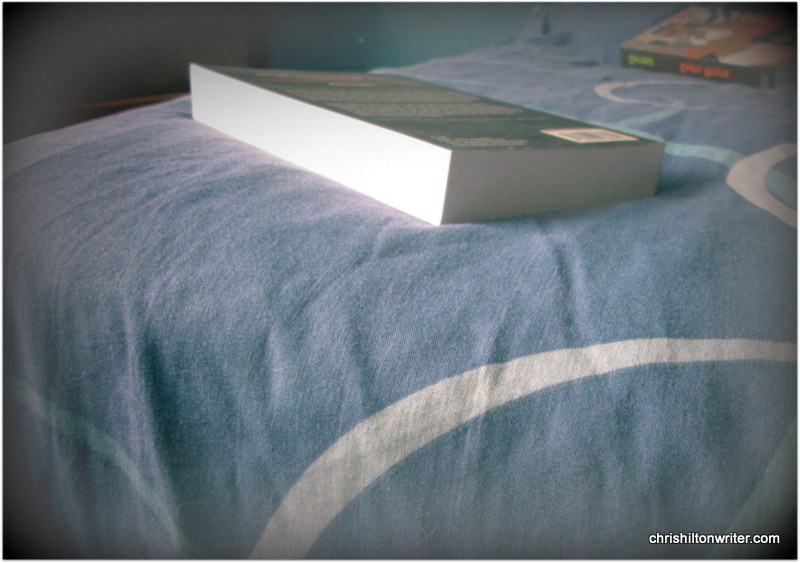
I read frequently in bed. That may not be where the majority of reading hours are put in, but it is the place where my reading most often takes place – every night without fail. Actual reading time can be as little as one minute before the object of reading falls onto my face to remind me that I’ve fallen asleep; it can also be hours or occasionally a whole book. In bed is where one judges the practicality of a book. I believe most of us must read while lying on our back, holding the book above our face; that way when sleep comes it’s possible to place the book on the floor or on the bedside table and quickly get to perfect slumber without unnecessary interruptions, such as changing position drastically or rearranging pillows, cushions and covers. If, like me, you do read this way, then you should know what I mean about the practicality of reading a book as opposed to its beauty.
Julian Barnes is right. His Booker winning novel is a beautiful object; I read it over a few nights, entirely from a prone, on my back, position. And it is not a practical object. For a very simple and infuriating reason: its inner margins are too narrow. The book requires an uncomfortable and impractical two hands to be able to see the whole of the text; in other words, without forcing the book wide open with two hands the inner text on both pages will disappear into the fold of the book; one is constantly tilting the book this way and that to read the end of the sentences on the left-hand page and their beginning on the right hand page. This is unusual with hardback books, but this is a small book.
Although this fault is most noticeable in bed – I suppose publishers will protest that books are not designed to be read in bed (if not, they should be) – it is almost as annoying when reading anywhere in any way. If, like me, you love books as ‘physical’ objects then you will resent having to practically break their backs to read the central text. Apart from the discomfort and the detraction of pleasure, you are damaging the book, shortening its life – the act of doing this, bending the two halves of a paperback hard against its spine makes me angry; apart from the inconvenience which has been added to what should be a pleasure (depending on the book), I resent having to treat a book this way. It should never be necessary.
Why are so many books made this way? And who is producing them? I can’t decide if this is just a quirk of printing or penny-pinching. I was unable to decide if some publishers habitually printed unreadable books, if some never erred or if the whole business is a lottery. I was going to put together an extensive list but found that margin width is completely random, there is no pattern to it; a publisher may release a book with wide margins followed by one with narrow margins: same price, no reason. It appears to be haphazard. Rather than try to catalogue the problem, here are just a few examples of what I have been reading lately.
Geoff Dyer’s Working the Room (Canongate) is impossible to read in bed without forcing the covers back with two hands (not a natural position). Using the natural stance of holding the book between thumb and forefinger reveals the bottom half of the text, but the top half disappears into the centre, forcing one to use unnatural, uncomfortable pressure to be able to see the upper text.
A Little Aloud (Chatto & Windus) is not only a marvellous book, its proceeds going to charity, it has really wide central margins to make one-handed reading easy as well as silent or noisy reading in bed – in fact why not read aloud to a loved one in bed?
I had hoped that this would be a modern phenomenon, a sign of the philistinism and greed of the post-modern era, penny pinching publishers saving another £0.0001 per copy by depriving the reader (me!) of reading space and comfort. It was not to be: A 1998 Penguin edition of Lucky Jim is very mean with its margins. It requires two hands and needs forcing open at all times because also, without the book open flat there are always shadows to contend with, a hazard for all but those with 20:20 vision.
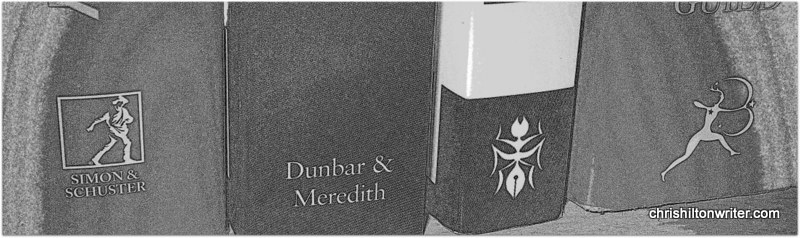
Another factor is ‘Give’. Have you noticed how the better paperbacks allow themselves to be forced flat, you feel as though you are breaking them but you are not – the spine remains uncracked, the glue holds – they are a miracle of design and engineering. I present two examples: Alone in Berlin (Penguin) 2009, and Leviathan (Fourth Estate) 2009; beautifully put together books, but Alone in Berlin has narrow margins while Leviathan has wide margins; they are both priced at £9.99 – the problem has nothing to do with cost. I don’t think publishers even consider this. The Empty Space by Peter Brooke also has ample room on the inner margin.
The crazy thing is: Who needs outer margins? They are necessary for appearance’ sake but provide no practical purpose. Why not shorten the outer margin and give the difference to the inner margin? I hope I’m not the only person to notice this. Any thoughts?
 Chris Hilton ~ Writer
I love it when the inner and outer margins are the same width, but perhaps that’s just because of my irrational love for text, and images, to be centered. However I also don’t understand why some novels have the tiniest of inner margins. I hate breaking the back. I don’t think it’s something publishers really consider or if they do, it’s probably not important enough for them to change.
I don’t think it occurs to them. it doesn’t save any money, it’s just careless. But I think everything is about money now – they just don’t think about the actual reading of the book or the reader. Editing is becoming a thing of the past too. There are a lot of bad errors in quite a few books.You’re right that it’s not important enough to them, but there is a market for well-produced books. Hardbacks are usually OK, although expensive and unwieldy. Thanks for the response and sorry for the delay – been out-of-touch.
What about reading in the bathtub? I get bargain books specifically for this purpose, until Kindle makes their device 100% waterproof.
I’m reading Orwells essays; All art is propaganda at the moment in bed. Very interesting but the words get fuzzy past 3am.
I know how you feel. I prefer to read books that have a decent margin, but it’s tiny text that throws me. It feels like I spend more time trying to focus on seeing the text than actually reading.
Totally agree, and I’m sad to say it’s one reason I’m fast becoming addicted to e-readers. Easy, always with me, don’t have to worry about waking up t’other half in bed with my lamp. I do love physical books, but the ease of the textual novel in e-format is hard to resist in bed.
I prefer the hard copy over ebook because i actually love flipping through my page rather than scrolling. I also love the smell of the book, i think its one of the best fragrance out there. As for appearance of the book, my only demand is it should have a good quality of pages and print , otherwise i would prefer content over appearance any day
Reblogged this on Reflective Journal and commented:
Very interesting post… I am a book lover too, I like them as objects as well as containers of great stories, ideas and knowledge. This post got me thinking about my favorite books, the ones that got me engaged as soon as I laid eyes on the first page and the ones I could never finish because of how physically uncomfortable was to read them. Margins and font size/type are extremely important. The inner margins -as Chris Hilton mentioned, are something that really matter for me in order to read a book comfortably, and with that I don’t only mean physically comfortable but visually too. When the text is all packed up against the fold it makes it virtually impossible to enjoy the writing and engage with the story/essay.
I have never ever read a book lieing on my back. Have to lie on my front and sort of prop my self up on elbows.. most problems mentioned here are never a problem for me. Good insight though, it’s made me think about things I wouldn’t usually have even noticed.
My dad always tells me to sleep early because he always sees me with a book in hand every night. I can NEVER sleep without reading anything until I’m satisfied (or at least, too tired to continue). And I agree with the margins. Sometimes I think pages need more texts in them or sometimes less, depending on the story. And every time I purchase a new book, or get a hand-me-down one, I always protect them by using plastic covering. I’ve done this religiously and I always handle books-even when they’re not mine- with care. I prefer books rather than ebooks and they remind me of how my taste in reading materials have changed for the past 17 years (including picture books as a toddler).
As a westener living in China I thank the gods daily for my Kindle, but I would far rather have ‘real’ books. Whenever I go to the UK or USA I come back carrying as many as I can fit in my luggage – weight permitting.
I totally agree that most books should be judged by how easy they are to read in bed (some years back I was given a hard-back copy of Vikram Seth’s ‘A Suitable Boy’, fell asleep reading it and it dropped on my face – I thought my nose was broken.)
For me the point of any book is not how fabulous it may look as an object – thought that is appealling in another way – but what is written within it. Folio Society volumes – pah! First Editions – who cares. Give me the story every time.
I had never really thought about inner and outer margins till I read your piece, but now that you mention it…what does bug me is very small type or overly large type or weird typefaces.
Congrats on being Freshly Pressed, I’m going to enjoy reading through your blog posts.
Zai jian!
To go somewhat against the grain I have to disagree. I like to read with a pencil in hand, and without the outer margin I can’t write the little one or two word notes that I like to jot down here and there. It’s difficult to do that from a prone position, admittedly, but getting to grips more thoroughly with a book, particularly non-fiction, requires a bit of ‘pencil and thought’ room.
Fair point – I don’t tend to write marginalia in fiction – but in non-fiction I can become rather verbose!
Agree! I’m surprised that there are only a couple of comments saying this. Perhaps the rest of the world reads only fiction?
Reblogged this on H.A.M.H.
Reblogged this on ghaitskyo77's Blog and commented:
Amazing.
AMAZINGGG…!! Follow me i can follow you dear ^_^ share and coment back friend..!!
Marvelous post. Excellent writing. A friend of mine, who works here in New York in publishing always says, “They put pretty covers on books for a reason.” Personally, I like the feel, the weight of a new book, all fresh and just waiting for me to open it up. Books are cultural artifacts; replacing them with e-things is like replacing your mother with a hologram (though the hologram might get less stressed at holidays!).
Thank you ever so much for putting my thoughts and habits into words! I’ll always love to hold books, but my old eyes often make me squint to read. Despite that, last summer I read every page of my rubber banded, falling apart, tissue thin paged, minuscule print 1957 paperback of Atlas Shrugged – purchased for .95cents at the UW Madison bookstore. It was worth the effort, and the margins didn’t matter. I’m going to find what you have published.
…and Congratulations on being Freshly Pressed!
Reblogged this on chuckysueslastdance and commented:
Some things about a book I never paid attention to:
Thank you for focusing on the real reason I prefer my Nook for bed-reading :). You honed in on a problem no one else thought about although we suffered through it. You deserved to be Freshly Pressed. Congrats!
Another thought: Book binders should take note of your post and start to design books with not only margin adjustment but with an attached stand which will hold the book up on one’s ribcage. Just sayin’.
Reblogged this on M.T. Miles.
The worst book-reading experience I’ve ever had was trying to wade through a paperback copy of “For Whom the Bell Tolls”. Some people like Ernie and then there’s me, but I figure he’s so revered that I should try all his most famous stuff to see if I’ll like any of it (4 books later–still no). The worst part wasn’t the “thee” and “thou” crap or that he forgot he was supposed to be the master of brevity; it was that the text was “diving” into the center fold of the book and I nearly had to pull it apart to read it. Thanks for writing this; hopefully publishing houses will take note.
Ha, love it. I’ve never thought to analyse the ease of reading a book when in bed before, but you’re right. Sometimes is so frustrating. Publishers should have someone employed to test this before each publication or re-print of a publication hits the shelves. Hmm, being paid to read in bed…I’ll go with that.
‘Being paid to read in bed.’ I’d go for that too. Don’t think it will happen though. A concerted campaign might get publishers to consider changing, but I’m not sure enough people care. I’ll keep plugging away. You never know!
Sorry for the late reply. Been out-of-touch.
This is a great post. I, too, read in bed. Wonder if we need a “Consumer Reviews” for books with the “reading in bed” road test. Funny how we often only review the content of books. But some physical books are much more pleasurable to read than others for just the reasons you talked about! Great post!
Thanks! Amazon reviews would be a start – not only review the content but the ease of reading. I’ll have a go. I’m not sure enough people care, but we can try and I’ll keep plugging away. Thanks for the comment. Sorry for the delay in replying – been out-of-touch.
I was never a big buyer of hardcover books. But in the past few years I’ve found that holding the extra weight makes my shoulders so tired that I’ve totally sworn off hardcovers altogether. My favorite time for reading novels is while I’m eating breakfast, so I need a book that can be held open with one hand while I eat with the other. I also use a book stand at breakfast. If I’m not using my Kindle, I find that the book needs the same characteristics you mentioned above. I love books that open wide without falling apart and that have a big enough inner margin.
Cool post. An interesting read for sure.
http://tshirtlegend.com/
Reblogged this on Apps Lotus's Blog.
My favourite pastime, by far.
Didn’t get a chance to read through all the comments on here, but I had to chime in and say I enjoyed reading your article. I agree, very tiring holding a hardback, but I could never give it up unless physically forced to. Call me a traditionalist, but there’s something to the smell of the pages and the feeling of starting a new book, and closing the last page. Ha! I always find myself flipping through the extra pages looking for more after a great ending.
Take care,
-L
That’s a good idea, about diminishing the outer margins.
Completely unrelated to appearance or practicality now, but nothing urges me more to pick up a book than its smell. I often have a sneaky sniff of a book I’m interested in buying, guiltily glancing around the bookstore in case someone spots me indulging in my dirty fetish. I bet I’m not alone on this one.. Or I hope so, anyway.
Pingback: A Usability Test for Books? « Bob on Books
I adore books! I have tried an ebook….. it’s just not the same, I need my paperbacks, the feel of the paper, the smell. There is no better smell than that of a book that falls across your face when you doze off whilst reading, it’s a paper-based tranquilizer.
I also read mostly in the bath – not a good place for dozing off with a book, but even less so with an iPad LOL!
Thanks for a really AMAZING post!
Reblogged this on 7mee and commented:
happy bed time :p
Very interesting article! I’ve got an argue with a friend recently about the plus and minus of e-book vs print book. Reading in bed is better with kindle or other e-reader, because you may use the small lamp to read it, without causing problems to the sleep of your partner or any other guys in the room. It’s not so easy to do so with a book.
I also bear a deep hatred of tiny inner margins that force me to damage a book to read it. More of my focus is devoted to opening the book just enough to read it rather than losing myself in the story. While I tend more strongly to read while sitting, because I have weak little T-rex arms and reading when on my back makes them tired, even when holding an average-sized book, this is still a huge problem which I despise. I also still prefer a book which I can hold open with one hand, if for no other reason than because when I’m absorbed into a book, I hate to leave and I’d rather multitask activities like eating while reading which is far more difficult to do without interrupting my absorption if I have to continuously shift the book’s position to be possible to man with one hand when really, it needs two, and then back. Usually in the end I just give up, give my attention to the other activity, and then possibly return to the book.
I love books as an object of beauty…but they can be unpractical. All the same, the reason I’ll take a book over a kindle is because of the smell.
Quite agree. One should be able to hold a book open with one hand and see both pages clearly, but with most you can’t. it’s something I’ve found frustrating for years and wondered if any others felt the same. Clearly, they do. Perhaps in future it’s worth adding to any book reviews the readability of the book. Some books smell nice – depends where they’ve been. And books over kindles? No contest, books every time.
Sorry for the late reply – been out-of-touch.
Not a problem.
Hi Guys
I’m currently in Bahia Honda, Cuba for the birth of my daughter – the internet is not very reliable here but thanks for the great feedback to the post, I’m reassured to find so many like minded people. I’m leave here in early June and will go through the interesting points you raise as soon as I return to the UK.
C
Reblogged this on gustyariaindah.
You are SO right and it’s good to see it said by someone else! I mostly read my Kindle in bed for this very reason, if only publishers would take note…
Such a great post! It’s so rare, I find, to even see anyone reading an actual book anymore, and I confess that when I travel, given how quickly I generally read, I have been seduced by my iBook app. However, there is nothing quite as seductive as climbing into a cozy bed, fluffing up the pillows, and turning the pages of an actual book. And the margins thing – TOTALLY agree!
Thanks! You can’t beat a good book in bed – till it falls on your nose. I find I can reject a book because of its design when shop buying. Amazon etc is much more difficult, you don’t know what you’re getting till it arrives. I’m a Luddite when it comes to technology – still carry a dozen books when I’m travelling (a lot), bumping up my luggage weight. Worth it though.
Sorry for the late reply – been out-of-touch.
I am a night time reader and I have a kindle but to read at night I use a Barnes and Noble Nook. It is light and easy to handle. I use my kindle very little because I have an I pad I really enjoy. Love your post, very interesting brought up things I had never thought about.
Glad you can enjoy that stuff. I’m anti-technology and always read real books, carrying many when I travel. I can’t imagine reading from a screen, but accept that I’m in a minority. Thanks for the compliment.
Sorry about the late reply – been out-of-touch.
Hi Chris,
Even I am satisfied with your suggestion, I would also prefer to read books and novels while lying on bed. Sometimes, I fall asleep but that would not harm my readings…
This is definitely a first world problem. Still, I’m all for anything that keeps physical books relevant in a culture that is misogynistic of technology
Anything that keeps real books relevant. I think real books are valued worldwide. Sorry about the late reply – been out-of-touch.
Yes, Ive noticed some bks are easier than others to read in bed! I’m currently reading a hardback bookclub edition of Steinbeck’s excellent novellas, and I’m pleased to say it is behaving well!
Hardbacks are generally fine (apart from the bulk) and book clubs are pretty good. Excellent choice with Steinbeck. i have most of his books. I find ex-library copies of books are excellent – well-read but decent condition and easy to read. Enjoy your Steinbeck!
Sorry about the late reply – been out-of-touch.
Reblogged this on mesa komputer and commented:
JUDUL SKRIPSI TEKNIK INFORMATIKA
Reblogged this on hmstartup, Asst. Director.
Reblogged this on Tainted Reverie and commented:
A humorous but honest article about the impracticality of book margins. I could’ve have said it better myself,
Reblogged this on Author Mariella Hunt and commented:
Food for thought!
‘I love eReaders because I can find out of print manuscripts online and drag them on. It’s so comforting to know there’s ALWAYS something to read! ‘
You have the best of both worlds. Not keen on e Readers or any technology. I’m a bit of a Luddite. Books will be around long after the techno-age burns itself out. Enjoy your scruffy paperbacks!
I notice this too. I’ve been using my eReader because I can just tap it for uninterrupted reading, but when I find a paper book that’s before-bed-reading friendly, it’s a joy!
I find I can’t get on with e Readers. I carry loads of books with me when I travel. Can’t think of anything more civilised than reading in bed. Joy is the word.
Sorry for the late reply – been out-of-touch.
I love eReaders because I can find out of print manuscripts online and drag them on. It’s so comforting to know there’s ALWAYS something to read! 🙂
Reblogged this on shanric and commented:
‘Reading in bed’ – How interesting! I must admit, i do regularly read e-books! They are less money and it is convenient reading from a kindle or iPad. But sometimes you just can’t beat sitting down and reading a good ol’ paperback!
I’m afraid I can’t read from a screen and am a bit of a Luddite anyway. Great if it suits you and glad you still appreciate the real thing!
Sorry for the late reply – been out-of-touch.