Unknown's avatar

About Chris Hilton ~ Writer

I am Chris, the author of Caliente, a love story from Havana, Cuba. The book recounts my time in the island country at the turn of the millenium. "I thought it a fantastic tale" ~ Matthew Parris "I read it with immense pleasure" ~ Richard Gott "I must say I was gripped." ~ John Carey "Hilton's Cuban adventure is like Havana's mojito cocktail, deceptively smooth and tasty, but underneath is a wicked bite." ~ John Harrison

Santeria – part one

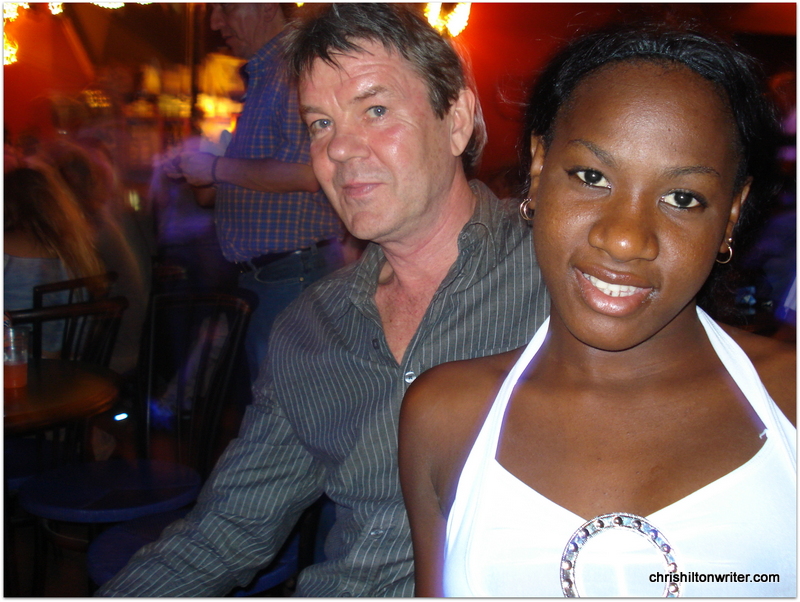
On arrival in Cuba, Yuri, my woman, asked if I remembered that I would consider paying quite a lot of money for a massive santeria campaign for her, involving over one week’s intensive treatment: clothes, occupation and all the paraphernalia that went with it. I remembered the email conversation of six months before but there had been no discussion since, and I had forgotten about it. Yuri hadn’t. I quickly calculated the reliability of the request, the chances of her staying faithful to me and agreed to finance the santeria. It would mean less money to spend on whatever, but I hadn’t intended much in the way of entertainment anyway.
DSC00196

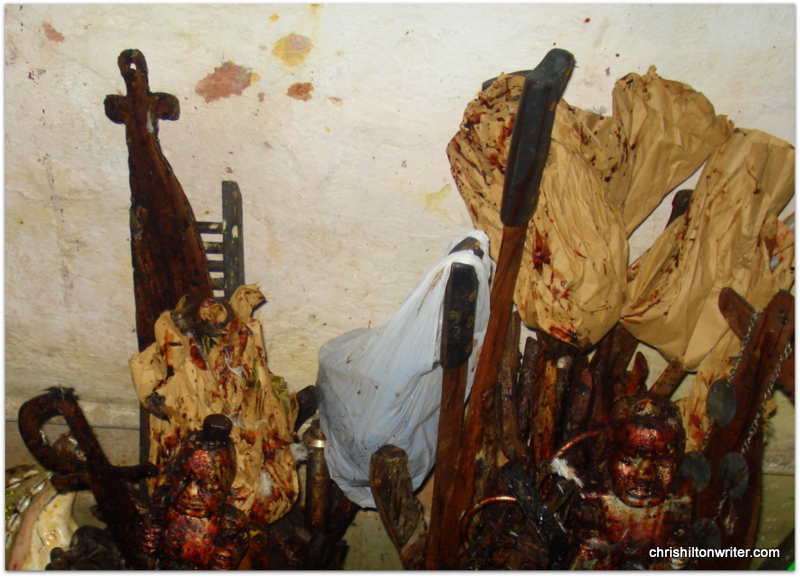
The santeria involved two afternoon preparatory sessions. I was persuaded to attend the first one. I was not a stranger to santeria, having undergone sessions in 2001, 2009 and 2012. I was not a believer – well, certainly a sceptic – but as my experience grew I realised just how firmly entrenched the religion was in Cuban culture. My 2001 experience, though extensive, paled in comparison to late experiences. In 2009 I encountered, more closely, the thoroughness of operations, undergoing a two hour session involving the sacrifice of a young goat, a chicken and a goose. Although the sacrifices took up only a small part of the operation, most of which involved two santeria practitioners repeating from the book of Yoruba, a series of litanies. I had no idea what was being said; I was ordered to bow, touch, speak, perform strange rituals, and touch objects, symbols, dust, powders and liquids. I kissed the severed neck of the young goat. At the end I was told that I was capricious and would need to be careful of my health. I didn’t need santeria to tell me that. Yuri could have told them that. But one of the practitioners told me several times that I was crazy, which may or may not be true, and also I didn’t understand ninety per cent of what they told me. My Spanish is very, very basic. Yuri speaks little English. Despite both of us taking lessons in each other’s language we have so far failed to learn much beyond the absolute basics, although we communicate between each other pretty well, mainly using my rudimentary Spanish.
DSC00553

The next occasion entailed santeria for Yuri. We visited a spacious and airy building where a man began preparations for her ritual. He was impressed by my book on Cuba, Caliente; at least he appeared to be. He was accompanied by at least two women who seemed to be there permanently. While we were there he was visited by several other people; there seemed to be a constant flow of people, mainly white Cuban, during the time I was there. Some spoke English, some did not; the age and occupation varied but I was left with the impression that santeria was not a minority interest, but that practically all Cubans followed it to some extent.
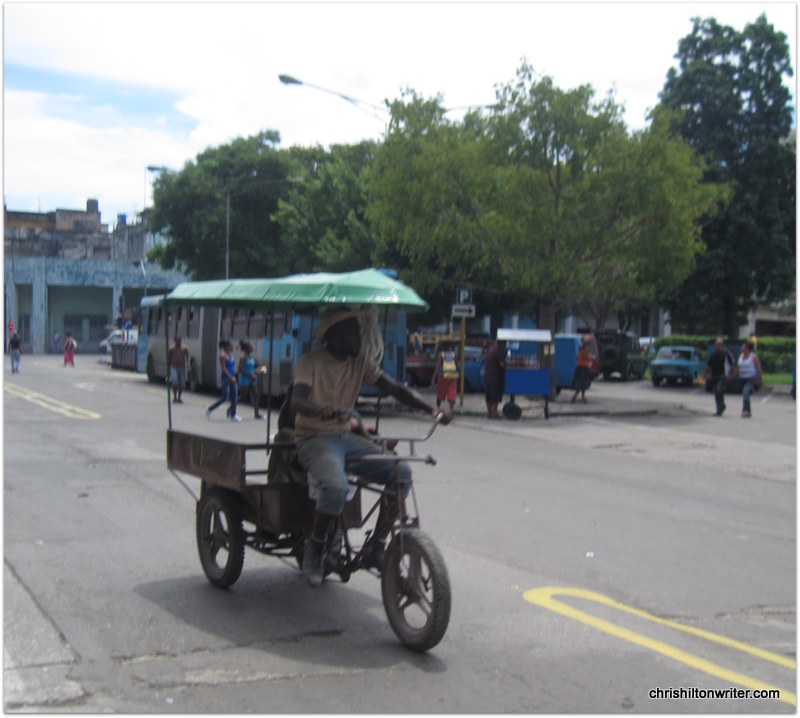
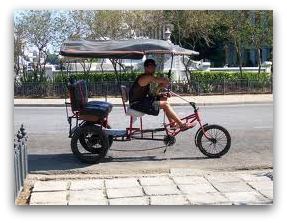
123We took two bicycle taxis, first to a nondescript building where a few people waited outside. The man knocked several times and we waited several minutes before someone opened the double-doors. A very sleepy, attractive young woman opened the doors, very reluctantly allowed us access. The interior was completely dark with three walls lined with cages. The cages contained goats, chickens, cockerels, geese, and other varieties of bird. For reasons of which I know not, perhaps price, we didn’t stay long, and rejected what was on offer. Off in the two bicycle taxis again, for about a mile where Yuri, the main man and an assistant, much older, found another place. I was told to wait in the taxi. After about thirty minutes they arrived back with two chickens and a goose. A motor taxi was hailed, the animals, tied by the feet were thrust into the boot and we set off elsewhere.

Elsewhere turned out to be about fifteen miles away, on a beach, although not facing the sea. A small lake adjoining the beach was chosen and preparations made. One of the chickens immediately escaped. I thought this funny, but just watched with amusement as they tried to catch it. They didn’t. I was secretly pleased. I have no particular fondness for chickens but I was happy to see it make its burst for freedom. Perhaps it’s still there or thereabouts. I hope so. No such luck for the remaining chicken and goose, both had their heads removed, the blood sprayed over Yuri’s legs among the usual chants and exhortations. The ceremony lasted about thirty minutes. I have no idea what it was about or what it was supposed to achieve.

We later stopped at one of the several little shops or holes in the wall (one at least on every street) to renew my bracelet, a yellow and green beaded effort that I had been wearing for three years, to protect me from I know not what.  The shop contained every trinket imaginable. We also visited, by taking the harbour ferry to its other side, the Catholic Church where Yuri lit candles for my book and briefly prayed at the altar. The santeria religion is a mixture of the Catholic faith and the beliefs that countless slaves bought with them from Africa. As far as I can tell the religion is perhaps twenty percent Catholicism and eighty per cent an unfathomable mixture of African beliefs, but be sure, it is widespread and inseparable from the rest of Cuban culture.
121

Fast forward to today and the preparation for Yuri’s week long santeria initiation. I hadn’t intended to go, not knowing what to expect. First we visited the top flat of an overweight young woman, her Madrina. I was given coffee and there was much talk about what was to come. After about thirty minutes we moved to another top floor flat, the stairs to which would have been condemned anywhere else, wooden and rickety and only vaguely attached to whatever they were supposed to be attached to. The last leg of the journey upwards involved a spiral staircase covering three floors. We finally settled into a small room where the young woman and one female, very attractive assistant, prepared for whatever was to come. Although the size of the room made it impossible, I sat as far away from the action as I could. The two women were later joined by two others – so four practitioners and one subject, with me sitting in the corner with my book and cigarettes trying to pretend that nothing was happening.

What followed was three to four hours of intense chanting and activity. The overweight woman seemed to go into a trance of some sort for at least two hours. Whether she became people from the past (the dead), one person or several people, I don’t know. I was trying to avoid involvement. The other three women and Yuri followed many of the chants and vague suggestions. They all knew exactly what was going on and how to respond. The overweight woman inhabited other personalities. She shouted, screamed, had minor fits and seemed very much to be genuine. If it was at all fraudulent then it was exhaustingly so. She involved me a couple of times but I tried to remain invisible and take no part at all.

Three days later at twelve o’clock, Yuri left. Eight days were to follow of intensive treatment. She left on Tuesday. I was to join, reluctantly, on Thursday. Alone in the flat was both pleasant and unpleasant. I missed Yuri but I also enjoy being alone. Every provision had been made. I had food to last. Yuri’s mother, who had come from Bahia Honda to assist with the santeria, would come in every day and cook.
083

Santeria – part two

Being Gay in Cuba

When I first came to Cuba, Gayness wasn’t discussed. It was disapproved of and people rarely talked about it. Yamilia whispered to me in 2001 that Raul (Castro) was gay; José asked me if I could find him a book on gayness, but beyond that it was never mentioned, acknowledged – it just didn’t exist (openly). Prostitution existed, but to me it was never that open or that common. Sure there are women who will sell themselves, some, a few, to anybody, while others are more fussy, more opportunist. The rest of the world makes a big deal about Cubans selling sex, but in reality, I would bet that any English, European, American town or city – worldwide probably – has more prostitutes per square mile than Cuba. Cuban attitudes to sex are different too. It is not very important; it is fun but they do not mistake it for love or take it too seriously. They take it seriously while they’re doing it, but it’s just a bodily function, quickly forgotten.

009

I noticed things were changing in 2006. Mine and Yuri’s room had been double booked, so we were temporarily sent to another house. It was run by three gay men and populated mostly with gay travellers. The main man of the house spoke English and for the few days that we were there he spoke to us frequently. He was jovial and friendly, but afterwards Yuri always gave me a look, a isn’t he strange look; she wasn’t comfortable with it. If we stopped in the street to talk to someone (always male), she would afterwards say

‘he’s gay’

and give me that look.


It’s different now. Gays are everywhere.  And Yuri never mentions anyone’s gayness. It’s so common she has just accepted it. About gay prostitution I’m not sure. Yuri did set up a meeting with a gay friend but it fell through. I know they congregate around the Capitol building (which is being restored) and in Vedado. Beyond that I know little about it. Actually, I take little interest. To me it’s just a sexual preference. If that’s the way you are – fair enough – do what you like. I don’t agree with Gay Pride marches or advertising yourself too much, but I dare say that will settle down.


If you’re not gay, then there is little to notice. You may notice an apparently obvious gay person wandering around, but that’s about it. As far as I can see, whatever gay community there is, keeps itself to itself. If I hadn’t been told about the gay culture, I would certainly barely notice it. Perhaps I’m wrong, perhaps it is more overt and I just don’t see it, but I don’t think so. In ten years Cuba has gone from not even acknowledging gayness, in fact persecuting open gayness, to accepting it quite openly. Not bad going.

023

A Cuban memory trick


Some of the older people do have memories, for big events. Those old enough remember the revolution or, much later,  the Russians leaving, but everyday life, everyday people, they are past or gone, unless they stick around or return. Tony remembers, he clearly remembers me, but he could not remember Yamilia, José or Paul. He says I am family, that I can stay in his house anytime, but I don’t think he remembers why; I don’t think he remembers any of the stuff we got up to all those years before, he just knows there was something, that I keep coming back, that there is something there.

DSC00568

Lucia (my nurse) didn’t remember when I went to see her. She remembered me, the face, but when I mentioned Yamilia, to whom she was close, there was a complete blank. No memory of her. No memory of the flat, of the eighteen or so months we were intermittently together, of José or anybody else. I wish I spoke Spanish. I have tried. I have a good memory; I remember loads of words and their meaning, I can make myself understood, but I can never get the hang of putting all the words together. I don’t understand how they link. I’m hopeless; being able to learn a language is a gift – I don’t have it.


If I could speak Spanish (I will continue to try), I could talk to people, learn more about what happens here. I’ve learned a lot because I am curious; I know a great deal about Cuba, but I want to know more, before it disappears. I think it will disappear, not as quickly as many people think, but it will go, and here will be the same as everywhere else.


Yuri remembers our meeting and many of the events since. But we have stayed in constant touch; I have been part of her life for seven years. If I had disappeared after meeting her in 2006, I don’t think she would remember me. At the Ambos Mundos, where I used to stay before I met Yuri, the staff there remember me from 1998, my first visit, but in between I’m sure they don’t remember me at all. Perhaps that is typical, to a certain extent I think it is; my memory is very good, perhaps I assume that everybody has the same faculty.


There is something unique about Cuban memory. Joel James Figarola believes that Cubans live in ‘a spiritual environment where life is lived as if one would die the following day – which is to say as if one would never die’. I think this explains Cuban life quite well; they live very much in the moment – what has just passed has gone, the future does not matter, all that matters is now – this moment.


It is a good way to live. It requires that everyone else lives that way too, but it is a good way to be. Stuff still gets done, in a way that is sometimes mystifying. For ages nothing seems to happen, then suddenly there is a new building or a new cafe or restaurant. The pace of life is slow, but that is partly the weather – who wants to hurry in 30˚ of heat? Bureaucracy can be painfully slow, but that can happen anywhere. It is a hangover from the Soviet influence. I think it will change, slowly, but things will always take longer here.


Whatever the answers are, life in Cuba is unique. It has its faults (as does everywhere), but there is nothing like here, the way it is now. I love it. I leave the final words with Andrei Codrescu (not a fan of modern Cuba):

‘The best quality of an observer is empathy, which has to come with your worldview. No amount of immersion or adventure can take the place of empathy. If you look with love, you get back love. Ditto anger, indignation, or indifference. The Cubans are full of warmth, a vast reservoir of affection.’

082

This is progress?


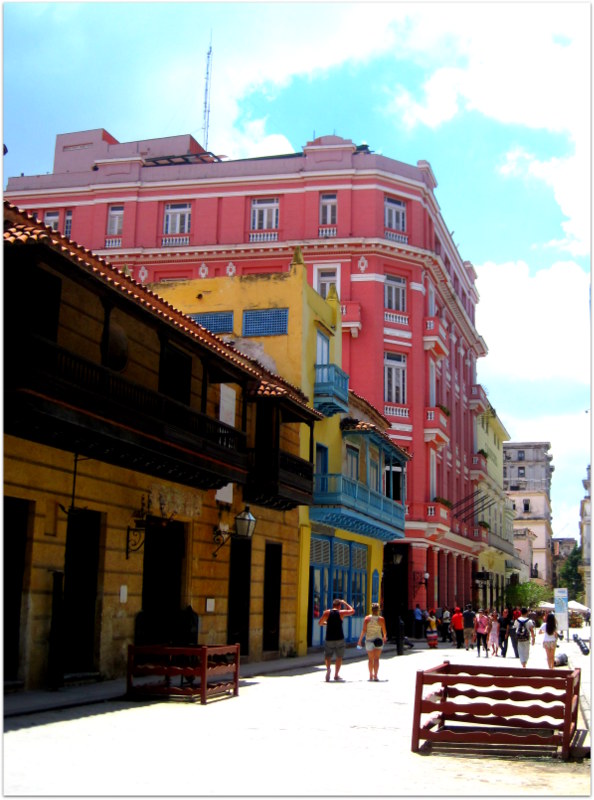
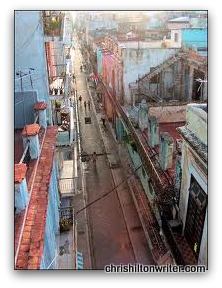
The buildings here are much the same as they were when the revolution occurred. They have been extended upwards and backwards, but the main structures are the same as they were then. Many are in disrepair. Three, four or five stories have been added to most of the buildings. Most have gas and electric systems that would be illegal in most other countries: wires and tubes protruding everywhere. Even on Obispo, the most touristy of streets, there is nothing new. Away from Old and Central Havana there are fairly new flats, but it is hard to find any progress.

viva

The building opposite us is empty. Some of its balconies are shored up. It must have been some kind of government building, whatever, definitely not inhabited. Perhaps one hundred years old, on a list somewhere for renovation. I have only seen what there is between Jose Marti Airport and central and old Havana. But I have not noticed any change; there are many derelict factories, many more signs of dilapidation than progress. Occasionally there is a newish building with a newish business, but it all seems a bit depressing. Perhaps progress is being made, but in a depressed world economy and a collapsing Cuban economy, it is hard to find it. Apart from tourism, I’m not sure that the Cubans have much going for them.


I don’t really know anything beyond Old, Central, Bahia Honda, Villa Pan Americana or Guanabacoa, I don’t know much about Cuba. I lived in Villa Pan Americana for a year; I lived in Guanabacoa for six months; I stayed in Bahia Honda on several occasions, Lugareno too; I stayed in various places in Havana many, many times. I noticed much about those places, felt at home in them, was part of them. But I still feel that I don’t know much about Cuba. I know a lot more than most foreigners, but still not much.


I’ve seen how the very poorest live and the rich too. Some clearly stayed rich after the revolution – I don’t know how. Some get money sent to them from the United States, many don’t. This trip I had been unsure until the last minute whether I wanted to come or not; I have been bored by my last few visits. But then I had a different outlook; I was mainly clubbing and drinking and getting up at midday. Now, I have adjusted to the pace of life here; I’m looking at it from a different point of view. I like it. It needs money. Not a great deal, but more than I have, so far.


According to Graham Greene,

‘The Spanish, the French and the Portuguese built cities where they settled, but the English just allowed cities to grow.’

I hadn’t thought about that before, but it is true. This is a Spanish city that has had a Cuban makeover, but very little has been added; most of what has been added is for the benefit of tourists, not Cubans. I think plans are afoot to improve the Cubans lot, but they will be slow and very gradual. Much will depend on the success of quasi-socialist governments in South America. Can they hold out against US influence or will they find a way to succeed? If they do succeed, even partially, then Cuba will have friends and allies. If the embargo were to end (without the US taking over), that would help tremendously too.


I don’t think Cuba will change quite as quickly as some people suppose. There are plans in place for gradual change, but what influence will the new entrepreneurship have on the people? Will the taste of money change everything? Or will they continue with a vaguely socialist outlook? Whatever happens, I hope that change doesn’t come too quickly, that Cubans somehow find a way to retain their uniqueness. It really is unique here; it would be awful if Cuba were just to become like everywhere else.

What do People do here?

malecon

I didn’t really ask myself in the past – what do people do here? I still don’t know but I have much more idea. What almost everybody does is something. Starting at around five in the morning, a constant stream of people pass beneath my balcony; just one street of millions in the city. Among the first to arrive are the taxis, not taxis in the imagined sense, but ordinary low level private cars. They use the seventy yards or so just before the corner as a queuing spot for customers, perhaps eight or so taxis at any one time, constantly changing as customers take the first in the queue, all day, six or seven days a week. Although this happened before; there were always willing drivers to take people on whatever journey they wished, this is more official. I don’t know how much they charge because we only take bicycle taxis, of which there seem to be many more than were here a few years ago.

taxi

Whatever they charge, they are just part of the burgeoning private enterprise; along with the taxis are soft drink sellers, fruit sellers, cloth sellers, trinket sellers – anything sellers. All this activity takes place non-stop, every day, along with what must be the normal day-to-day activity of everyone else.  The daily pushing of carts, trolleys, the carrying of goods, those who work and those who don’t – a constant stream of people – in one street, my street, one of many, many thousands.


There are more people begging on the streets, more selling Granma, the daily paper here, more persistently, more of a nuisance and mostly completely tolerated by hotel staff and anyone else involved. Perhaps that is the result of a more tolerant attitude to free enterprise. While they were once stopped or discouraged by police, they are now more ubiquitous. Nothing like as bad as in almost any other country, but certainly more here, more real and more confident.


The Capitol is closed for renovation, as is a very big shopping centre close by and many public buildings. No matter what else is happening here the country is gearing up for more tourism. The shopping centre contained six or seven floors above it, also closed and empty. What happened to the people who were in those rooms? I don’t know. Were they moved elsewhere? Will they be able to return? I don’t know.


It is hard to tell what is going on here. Most people take no interest, too busy in surviving, getting by. There are more paladares, more taxis, more stalls selling bits and pieces. I asked Yuri if life was easier now or more difficult than, say, 2006. She says things are easier. What of the buildings? Coming in from the airport there seems to be no difference in anything: people still stand by the road waiting for lifts or rare buses; people still seem to struggle with their daily lives. Our lift from the airport stopped along the way to carry out some private business or other. Old and central Havana, where I spend very much most of my time, is different. More people have more, though not so that most people would notice.


With the world economy in a complete mess, demonstrations and revolts occurring everywhere: Egypt, Spain, Iran, Iraq, Turkey, Greece… what are the Cubans doing? Yuri has not the slightest interest. At the moment I don’t know anyone that has, although if I make contact with more English speakers or find an interpreter then I’m sure there will be a different story. At the moment I don’t care. I am curious though. I know only what I see. Some of that I may interpret correctly, much I’m sure that I don’t.


The police have new cars. There are new buses although they are as full as ever and the queues remain long. There are designer stores, many more now than before, and not just for tourists. This is one of the big contradictions here: How can ordinary Cubans, on a wage of ten dollars a month, afford the prices, which are much the same as any other store worldwide. But many Cubans do afford the prices, perhaps with money from the United States or perhaps through employment in the more profitable parts of the tourist industry or perhaps through the new entrepreneurship, although I very much doubt it.


Everywhere you go is fantastically clean in Cuba. A woman comes every other day to clean our apartment. If it were left to me I would probably give it a very quick once over, maybe once a week. Just tidy the bathroom and the kitchen and a quick sweep elsewhere. She takes between two and three hours every time. Everything is spotless. You do come across the odd mosca (fly) and very occasionally a mosquito; otherwise I have never seen an insect in any Cuban house.


It is not just the cleaning lady who is so conscious of cleanliness. We have her because I rent a room, otherwise the lady of the house would clean everything every day. Many years ago, when I was with Yamilia, although she was basically lazy, she would always clean the house first thing. It is the same wherever I’ve stayed in Cuba – I’ve never seen a dirty house.


It seems to be part of the Cuban DNA. The floor is always covered with water and mopped – all rooms have tile floors. Of course there are many dilapidated buildings which, until they get attention, are left to rot, but any inhabited house, no matter how humble will be clean.


Certainly things have changed since I first came here. Cubans can now stay in their own hotels (if they can afford it), visit their own beaches. Accommodation is much easier to find. All sorts of jobs (about 180) have been added to an entrepreneurial list. In other ways it’s not so good. The bars on Obispo used to stay open all night, now they shut at twelve (so as not to disturb tourists in the few hotels nearby) – why come to Havana if you’re bothered by noise? Now, I don’t mind the changes, but a quiet Obispo does not seem right. Even though I rarely drink, I would like the choice; there are always other places, but it’s not quite the same.


Just now I don’t know. I know a lot and I will learn more, but after fifteen years there’s still loads I don’t know. Yuri knows everything, absolutely everything. I’ll have another go at Spanish (they talk so fast here), but I’ll try.

chriscuba-001


Some are mathematicians, some are….

Some are mathematicians, some are carpenter’s wives,

I don’t know how all that started, I don’t know what they do with their lives.


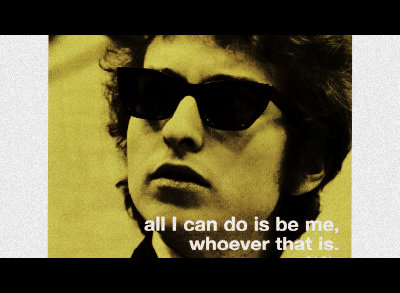
My intention is not to demean mathematicians or carpenter’s wives, but this is one of my favourite lines from Bob Dylan. I’m not even sure why; like much of his work it seems to sum up my life, get to the very essence of it. I’ve never understood how people get along, how people who have a choice can devote themselves to various occupations, day in, day out, for the whole of their lives. I don’t understand the pursuit of money either – of course Bob Dylan has pursued it throughout his life – but I don’t think money has anything to do with his talent, which is genius, something I don’t think he has any control over. So, I’ve drifted for most of my life. Not that I had much opportunity, only realising very, very late that I was moderately talented. I’ve been quite happy with my life though. No complaints.

SS057

Of course, half the world is poor. They have no choice in what they do. They have to survive, and every ounce of energy is taken up with that – surviving. The other half, from bus driver to prime minister, have a choice. The choice varies, but they can do all sorts of things. Most men seem to want to get married. Even at a very young age, long before puberty, I thought this a strange choice. Men can do anything they want. They have complete freedom, but seem to be in a mad rush to lose it, to become enslaved to young versions of themselves, to provide for them forever. The woman will lose interest in them, if they haven’t lost interest in her, and they will be stuck, for life. Lately, they will probably divorce. But then most of them will go and marry again, somehow believing it will be different. Fidel Castro once said that anybody who marries for a second time is insane. Fidel has said many wise things (and the opposite), but this seems to me to be the wisest. Some men serial marry, again and again and again. It’s very strange.


Different people have different talents. I do understand this: mechanics, doctors, dentists, scientists – and carpenters – it is endless. And you have to do what you’re good at. I’m very glad that there are mechanics and doctors. To me, the only duty is to enjoy your life. It is quite short (although mine seems to have lasted forever), and I’m very surprised at the number of people who discount this, especially among the young, who seem to think that some kind of financial success represents happiness. The pursuit of most things, especially money, is a chimera. Perhaps it does make some people happy, it’s hard to tell, but not many. The same is true with many professions. Many years ago my friends and I used to play friendly cricket matches against a team of trainee dentists. We were all poor, would arrive at the matches in various old bangers, play our games and have a drink afterwards. We all knew that while we would stay poor, the dentists would soon be very rich. I don’t know if they went into that profession for money – would you do that by choice? – but anyway, they were all going to be dentists. Gradually we all lost touch. Rich they may be. But they have been peering into people’s open mouths for years, fiddling around under their tongues, dealing with rotten and broken teeth. I don’t envy them.


I’ve drifted from job to job, probably did about fifty different things before I reached the age of forty five, sometimes well-paid (on a low scale), sometimes not. I’ve never been without money or a roof over my head. I’ve never held on to any money either; I don’t have any money now. But I don’t regret anything. I didn’t commit myself to slavery or a career; I’ve travelled very widely; I’ve lived through a very propitious time, granted, but it wasn’t easy in the seventies or eighties to find work; it was certainly very difficult to get rich. I’ve lived through peaceful times, which I’m grateful for, and I’ve been lucky, and more than once I’ve had a lot of help from friends. Generally, I’ve enjoyed my life, but that’s what I set out to do; I don’t mean enjoy at others expense either – I’ve been mainly well-behaved.


So, that’s what I mean by my title. A bit of a ramble; I haven’t explained myself very well but I had a go. Many of Bob Dylan’s lines encapsulate things for me. Desolation Row makes perfect sense to me; it is considered a drugged out, psychedelic muddle by most people, but every verse, every word, rings true for me. Perhaps I’m a misfit:


I just don’t fit,

Yes, I believe it’s time for us to quit.


You see, there I go again.

Myths, Legends and outright Lies

rainbow_overperranI’ve often wondered about the many myths we believe in. There must be thousands, more. I know of only a few, but in many ways modern life is based on myth, what we believe to be true, but which is only partly true or not true at all. You probably wonder what I mean. Well, everybody knows now, for example, that Iraq had no weapons of mass destruction – it was one of the many stories concocted by people determined to go to war with Iraq. I’m not sure, but surely most people know now that WMDs were a myth. Of course there are still those among us who believe the war was justified, and they may well choose to believe the claim. But they believe a myth. It simply isn’t true.

Likewise, when the USA chose to attack Iraq, Americans were told that Saddam Hussein was responsible for the destruction of the twin towers. None of the nineteen people responsible for 9/11 was from Iraq; Iraq had absolutely nothing to do with it, but apparently 60% of Americans believed it to be so. For those who do not want to believe that the war was a mistake, an ongoing mistake that is still costing hundreds of lives, it is much easier to believe that Iraq was responsible, to believe in the myth.

Myths do not need to be quite so important, to have such dire consequences, for example, it is popularly believed that one is never further than six feet from a rat. I’ve no idea where this originated, but the BBC’s More or Less team calculated that there are 3.1 million rats in urban areas; even if they were spread absolutely evenly (which they are not), this would give each rat 5000 square metres, which means that you are never further than 164 feet (minimum) from a rat. But of course, urban myths are a good topic of conversation; it is often more fun to believe them than to coldly consider the truth.

A rather more serious, but archaic myth, is that of King Richard III, who is, or was, widely believed to have murdered the two young princes in the tower. He is the perfect villain, hunchbacked and unappealing, with a record for ruthlessness and murder throughout his very short reign (1483-85). The first time I doubted this was on reading Josephine Tey’s The Daughter of Time, the title taken from the proverb, Truth is the daughter of time, written in 1951, and included in a fictional detective story. It is a forensic debunking of the whole Richard III myth; there is much detail, but basically, most of the evil attributed to Richard was Tudor propaganda, started by Henry VII, his successor, and continued throughout the whole Tudor dynasty, which lasted until the death of Elizabeth in 1603. But, the propaganda was marvellous stuff, Shakespeare’s play was based on it (written in Elizabethan times) and the story became embedded in the public consciousness. I’m sure that many people still believe in Richard’s villainy.

Less seriously again, it is widely believed that Sir Arthur Conan Doyle simply got fed up with writing about his fictional detective and stopped, and that it is only by popular demand that he resurrected him. The truth is more prosaic. In 1903, McClure’s magazine in the United States offered Doyle $5000 ($60000 today) per story; he told them he’d be a fool to refuse, so after a ten year hiatus, Holmes returned. Doyle hated writing the stories; he wanted to write more serious stuff, but continued writing Sherlock Holmes stories for another 25 years, and it is a credit to him that most of them remain of a very high quality.

Apparently, if you ask anyone how many immigrants are in this country (the UK), they will say about a third or 33%, and over half the population (57%) believe that there are too many immigrants. This is the highest figure of many countries surveyed, including the US, Germany, Italy, Spain and France. The UK population that was foreign born represents 11.1%. The unusually high belief that this is otherwise is probably mainly due to the media, papers such as the Daily Mail propagate the myth of immigrants daily, and politicians, especially today’s will soon jump on the bandwagon. Benefit fraud is another popular myth, mainly encouraged by the media. Surveys revealed that people believe that 27% of their money is lost to fraud. In fact the figure is 0.7%, rather a wild difference. These are just two of the many myths that a large percentage of the population live by; their whole belief systems, their philosophies and the way they behave are based on myths.

Lastly, I would like to mention a myth of my own, that of Mother Theresa. In 1992, I was in Bucharest, Romania, during the crisis of abandoned children; I was part of a many faceted and international aid programme that intended to help, and as far as I can see, did help in many ways. I was there for two weeks at the Sisters of Mother Theresa Orphanage in Bucharest. It was a fairly small orphanage, with little room in the building but extensive grounds and playing areas. There were two small rooms where the children, of varied disability, very few were normal, played; there was also a small school room where very basic stuff was taught. The children were allowed into the garden during the day, but only on request from the volunteers (there were about eight of us); the nuns wanted to keep the children inside, where there was little space, because it was easier to control them, perhaps not even control them because they ran wild, but at least they knew where they were.

After a few days Mother Theresa arrived on an inspection visit. She briefly surveyed the premises, not looking at the children once. She ordered that the school be closed ‘God will provide’, so that there would be more room and that the doors to the garden be locked. She did not speak to any of the children or the volunteers. And she was gone. The school remained closed, but we managed to persuade the nuns to allow the children into the garden, as long as we took responsibility for them. The encounter aroused my curiosity and when I got home, I investigated her. It emerged that her sanctuary in Calcutta (now Kolkata) was extremely basic: an iron bed, minimal food and toilet facilities. Nothing else was provided for the children in care under her name. Nothing. Doctors observed a lack of hygiene, unfit conditions, a complete lack of care, inadequate food, and no painkillers. Presumably God would provide.

Over the years I kept an eye on her. Her political contacts included the murderous Duvalier regime in Haiti, Charles Keating of Lincoln Savings and Loans and Donald Trump, in whose private jet she travelled. Of the numerous disasters in India, she offered medallions; no funds were forthcoming from the massive donations she received. In Bhopal in 1984, between 16000 and 30000 people were killed when Union Carbide’s pesticide plant leaked. No compensation has ever been paid and Union Carbide changed its name. Mother Theresa visited Bhopal not long before her death. She walked around while villagers begged her to do something, to spur some kind of action and help them; it was not only a case of people dying, many thousands were injured and since then there have been birth defects. Mother Theresa wandered among the suffering, hands held in prayer, and said merely

‘Forgive, forgive’

she couldn’t wait to be out of there.

Without my Romanian trip, I suppose I would be like anybody else, and believe that Mother Theresa is a saint. Just an example of one of the many myths we live by. Well, in reality, Mother Theresa is not a saint, very far from it. I would go as far as to say she was a very wicked woman.

Changing Cuba

In the street outside our flat, taxis start to position themselves early in the morning. It seems to be a partly or wholly official business. There are perhaps twenty or so people who come here daily. They work from about six to midnight, depending on how keen they are. Before in Cuba it was always possible to find an unofficial taxi, but it was illicit, easy but illicit. Now, I assume that it is official and controlled. It is low status, compared to the official taxis, but it is here, and it means that the drivers can turn up every day and be able to work, I would imagine, much more regularly than before.

bluecar

The line of taxis, usually seven or eight, but varying as the day progresses, works peacefully most of the time. Ninety per cent of the cars are Ladas in various states of disrepair although efforts have been made to spruce them up. The other cars are a mixture of all sorts, usually slightly more modern, but well below the standard of the official taxis. Occasionally, every few days, a row breaks out over the positioning of the taxis; it is not serious but often continues for about an hour. Much shouting and waving of arms, but there is no violence; the argument is not serious – Cubans just like shouting at each other, letting off steam.


Repairs are continuous. Most days at least two of the taxis will undergo running repairs. The system appears to be random, but it isn’t; someone has control, someone is getting the customers, making sure they go to the right taxi and so on. This process is being repeated all over the city; wherever you go there will be someone touting for a taxi. Their service will be mostly taken up by Cubans looking for a cheaper ride, whereas before they would wait by the roadside until someone appeared willing to take them where they wanted to go; now they go direct to the taxi. I assume the price is about the same. We took mostly bicycle taxis because we weren’t going very far, but on the couple of occasions we had a longer journey, we took one of the taxis queuing rather than an ‘official’ one, always checking the price first.


This is just one example of the new entrepreneurship. There are apparently around one hundred and eighty possible avenues. There are many more bicycle taxis – by far the bobispoest way to go short distances and many more stalls. The stalls are selling everything that can be sold: drinks, peanuts and fruit and much more; there are many more paladares. There must be some kind of pecking order for where you can sell your stuff, but it is mostly not obvious. The taxis in our street have a good spot, but nearer Obispo would be better and, of course, there are sellers of everything there too. There must be strong competition for the best spots, probably corruption too.


The new entrepreneurship is called trabajo por cuenta propia, the individuals are cuentapropistas. Every street in every town has something new. In 2010 Fidel Castro told, then president of Venezuela, Hugo Chavez, that

‘Here we nationalised even the funeral home, the barber shop, the sale of ice cream. That doesn’t have any reason to belong to the state.’

Attitudes have changed very slowly since the Russians left, but they are changing nonetheless, and will probably speed up from here. There are estimated to be six hundred thousand Cubans in the private sector now; half-a-million state sector jobs are expected to be lost by 2015.


On one street is an Esoteric Digital Library. What is it? Customers arrive with a blank disc or flash drive to download books and articles and music. The first download costs twenty pesos, and each one after that costs ten. Streets have cafeterias, room rentals, ice cream stands, sellers of trinkets, pizza makers and new private restaurants.


This is just a very brief snapshot of what’s happening. Where will Cuba be in five years, ten years? I don’t know, but it will be very exciting. I hope I’m here to see it.

redcar

Cuban television is great…


Cuban television is great. There are five channels (I think) – I can only ever find three with regularity – but I live in a flat with poor reception. I don’t watch much TV in the UK; I’m very, very fussy.  I can’t stand advertising of any sort, so watch mainly the BBC channels or, if occasionally I want to watch a commercial station, I edit out the adverts before watching. I don’t have SKY or any other non-traditional station. Cuban TV has no adverts, none whatsoever.


It is a mixture of imported stuff and home-grown Cuban stuff, mainly documentaries. It is twenty four hours now, which it wasn’t back in the early noughties. Strangely, there is a mass of United States’ imports: everything from reality shows, weight loss programmes, cartoons, crime shows and films – everything. US programmes are shown regardless of content. Life is shown as the Americans want it to be shown; it is repeated here as though it is something that exists, but is nothing to either envy or comment on.


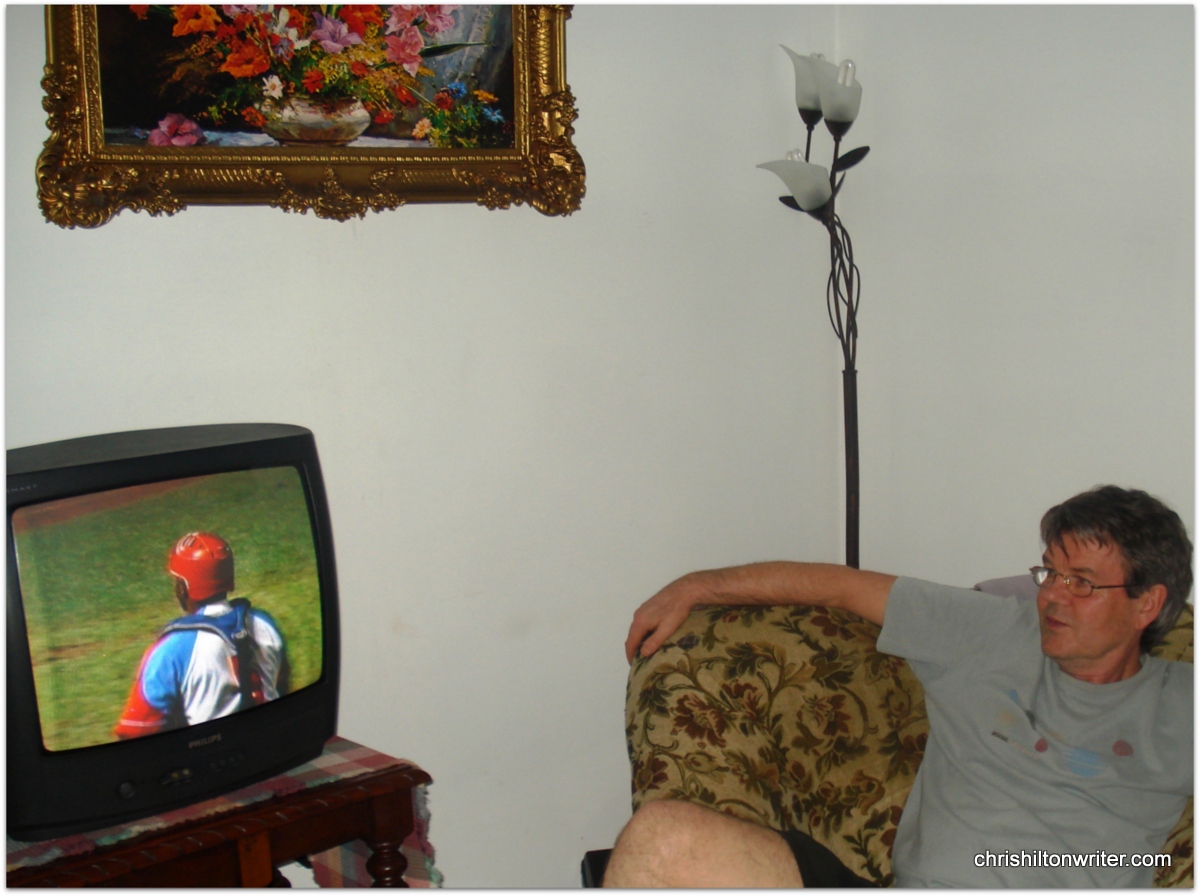
The news is pretty biased. Every country has a prejudice towards itself, but Cuba is quite extreme. The news programmes, although not so plentiful as they are here, tell you next to nothing about the outside world. Every broadcast has masses of stuff about Cuba: a technological advance, a meeting somewhere discussing something important, somebody has been awarded a certificate; very occasionally there will be some mild criticism. But there are only two main hour long news programmes per day with a few fillers in between. Foreign news is given about two minutes on a normal day, perhaps longer if anything noteworthy has happened. Sports news is hard to decipher; there is much about baseball, anything else that Cubans have been doing: swimming, judo, football, but I find that for long periods the announcers just talk; of course not understanding ninety per cent of what they say doesn’t help, and they seem to talk for much longer without showing any images – I noticed this on all the programmes; there seems to be much more dialogue, they stay in scenes for much longer. This applies to a whole variety of broadcasting because although much of their television is from the US, there are also Brazilian and Argentinean soap operas, English programmes; it seems to be a Latin American thing – needing many more words to say the same thing. There is an hour long discussion programme just before the evening news, where events of the day are debated at length.


Apart from that there is an eclectic mixture. There has been something on China every day (a pending deal?), but that may not be so unusual – back in the UK there have been many programmes on China too. Strangely, bearing in mind the bias of the news, US television makes up about a third of the broadcasting. It is not censored at all. Whereas the internet is practically banned here, so that Cubans cannot learn what is going on in the outside world, US television provides a constant reminder that just across the water, life, apparently, is much easier. It seems that the way of life is regarded as inferior, nothing to be sought after, just here for your amusement. Of course Cubans don’t entirely believe in the US stuff. It’s treated as propaganda; for all the wealthy, happy people, the news sometimes points out that there is no free health care, that millions live below the poverty line, that the economy is collapsing and life is not at all as it is represented most of the time.


The TV is very well organised now, and professional. There are many, many films, often very recent, more recent than those available to me in the UK. Sunday is film day on one of the stations, twenty four hours of film, at least half very recent. When I first came to Cuba there were only two stations, and the schedule was fairly disorganised. In many ways I preferred that – you never knew what you were going to get, but it was often interesting – perhaps a two hour documentary about Bob Marley as a kid’s programme,TVCuba followed by a film, followed by sport. Children are very well catered for and treated as mini-adults. There is still no advertising here (although they advertise themselves a lot), which is fantastic for me. I do fear that soon they will change that, though. The economy desperately needs a boost, and I’m afraid that advertising will do it no harm. Perhaps they will manage to do it tastefully. I hope so.


Unsociable Cat

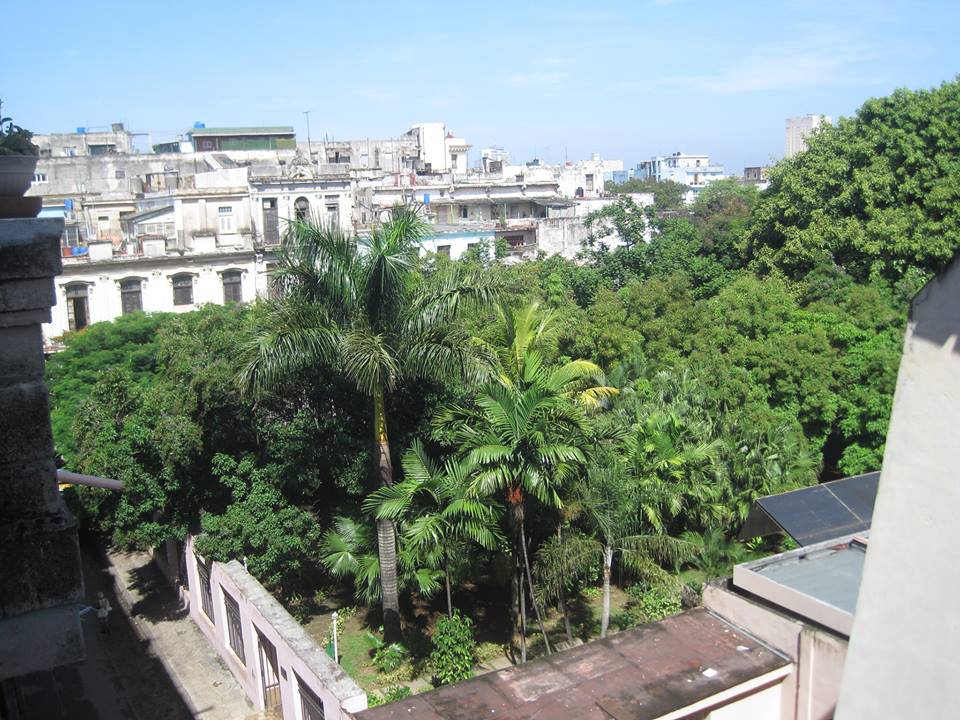
catOpposite our flat is some sort of park; it is not public, it seems to be open only to certain people, reserved for those of a certain organisation. There are so many organisations in Cuba, at every level; the park could be for members of the revolution or merely some association of gardeners. I did ask Yuri; she sort of knew but is not really interested and my Spanish is not good enough to understand her when it comes to details.

If the park is for former members of the revolution, perhaps its members are dwindling – there can’t be many left. It provides work for at least three people, who tend to it and keep it clean. I don’t know exactly what they do, but it is not very much, and perhaps next to nothing at all. They seem to sit in the shade of the garden most of the day. Good luck to them. Perhaps this type of job is repeated many times, not so much now that there are cuts, but pretty often. The park is pretty big, perhaps fifty yards by one hundred yards, walled with a gate and an office. The office is opened at about six in the morning and stays open all day, perhaps till midnight. In the time I’ve stayed here I haven’t noticed more than a dozen visitors.

It contains mature trees of many varieties, trees that have been there and grown for fifty or more years; as well as younger varieties, palms, smaller trees and plants. Of course, whomever’s job it is to tend to the offices and park will not receive much money, ten to fifteen dollars a month perhaps, which may explain why the workers are slightly apathetic: they do their stuff, go through the motions, but they do seem tired – I’ve only been watching for a few weeks; they are here every day, probably been doing it for years. There is a strange mixture of apathy and energy here, not confined to age groups, but more what people do with their lives. There is more choice now, but prospects are still quite narrow for most people.

Several cats live there, rarely straying outside the park. I can see them by the gate sometimes but mostly they are hidden. I assume they are fed by the keepers of the park and I’ve seen neighbours put scraps through the fence or leave something outside, the only time I see the cats leave the grounds. One cat in particular, a mixture of white, brown and black, stays almost continually on the office roof. Round and about are grey, ginger, black, white and all mixtures in between. The cat on the roof is thoroughly unsociable. At first I thought it was too scared to go down, that it was frightened of the company of the other cats, perhaps not having its own territory and taking refuge on the roof. But it is not scared, it is just unfriendly and aloof.

Sometimes another cat will join it on the roof, sit close to it for a while, stare at it. It does not respond, merely turning its back on the interloper until it goes away. It wants to be on its own, have nothing to do with any cat life or, as far as I can see, any humans either, apart from when it is fed. It is an antisocial cat, taking no part in Cuban comradeship. I don’t think it is old, not particularly, it moves well enough. It is an individual cat, perhaps a result of the new entrepreneurial spirit of the city and country.

130