Somebody (Please) Say Something

bin-001

I wrote a blog in July 2014 suggesting that despite the plethora of news and print everywhere, nobody was really saying anything, at least nothing of interest, importance or even relating much to the truth. It was called Somebody Say Something, the title of an article written by John Lanchester ten years ago. He was pleading then for someone to say something (of some relevance). I recently listened to a recording of interviews with American Writers, a CD I’ve listened to perhaps fifty times. I never tire of it or anything to do with writers. They seem to me to be people who think about the world and have interesting things to say, not all of them of course, but any vaguely serious writers. Listening to American Writers I was struck by how relevant their opinions were and are. The CD reminded me of Lanchester’s article – if people weren’t saying much in 2004, they are saying much less now. There is plenty being said of course, but how much really addresses matters of substance?

books

These interviews are from the 60, 70s and 80s and most of the writers are now dead. It doesn’t matter. Their words are as important today as they were then. Is anybody today saying anything of significance? Here is


William Burroughs in 1964:

Love plays little part in my mythology. I feel that what we call love is largely a fraud, a mixture of sentimentality and sex which has been systematically degraded and vulgarised by the virus power. The virus power manifests itself in many ways: in the construction of nuclear weapons, in the creation of political systems which are aimed at curtailing inner freedom. It manifests itself in the extreme drabness of everyday life in western society. It manifests itself in the ugliness and vulgarity that we see on every street.

Toni Morrison in 1982

That business about lazy. People doing four jobs are supposedly lazy. I remember working in houses for white people. It’s very difficult if you move in somebody’s dirt not to recognise that they are both lazy and dirty. I am the one who is assumed to be both those things. If a proper economic study is done of this country, it must include the fact that they had 200 years of free labour, which made them a successful country in one eighth of the time they would normally have to spend.

Henry Miller in 1979

Sex has no pull anymore. Everybody is immersed in it like a hot bath. Therefore there is no ecstasy, no surprise, no enjoyment. It’s as if they were doing exercises.

Saul Bellow in 1977

They are intellectual professionals in the study of literature. Their purpose is to convert novels, poems, plays into subject matter. This is where the damage comes; they make discourse of it. It wasn’t originally there to make discourse of. Modern novels weren’t taught in the universities of the 19th century. Anyone who has received a decent education should be able to pick up a novel by themselves and read it.

IMG_0369

Mary McCarthy in 1960

I think the world is pretty terrible and somebody has to speak up. I think there is a general conspiracy of silence about what goes on. All the stuff that’s piped in, including probably this programme with me on it, that daily cant that pours from the radio, the newspapers, advertising, education and everybody simply endures it. Somebody should get up and just shut it off.

Eudora Welty in 1985

Something has been troubling me a lot when I go round and talk to students. It is that very intelligent people don’t know the difference between fiction and non-fiction and they don’t assume there is any.

Arthur Miller in 1968

The reality was depression. The reality was the whole thing coming down in a heap of wood and cinders. What happens when everybody has a refrigerator? What happens when everybody has a car? It’s got to end.

Gore Vidal in 1978

With politics and religion, one is the mirror of the other and there is no answer in either case.


Except for Toni Morrison, these writers are now dead. None would be pleased with the way society has gone. If Mary McCarthy thought there was too much daily cant then, her head would explode now. Why must we be taught literature? We can teach ourselves and enjoy it ourselves. The virus power attempts more and more to curtail inner freedoms. To Eudora Welty I would point out that those students were certainly NOT ‘very intelligent people’. She was being far too polite. Arthur Miller knew in 1949 that it all has to end – we’re much closer now. Sex is merely an advertising scam.

This is just a small sample of what the writers had to say about their world. I can thoroughly recommend the CD to anyone interested (British Library: The Spoken Word archive). They also recorded a British Writers CD which is almost as good, including JB Priestly, William Golding and many others.

I shall continue to read biographies and listen to recordings of writers. They seem to me to be the only people recognising what is actually happening. Some care, some don’t. Some would like to change the world, others think it unchangeable or they would change a small part of it, usually their own tiny part of it. No matter, through the ages, from Homer to Dickens and beyond, they all have something to say. They lead interesting lives and find different ways of communicating their ideas, as did Hunter S Thompson in The Rum Diary: escaping from the Luce empire with its ‘slick drivers and jingo parrots’ spreading  ‘like a piss puddle’ to Puerto Rico where a tourist ship arrives ‘from somewhere in the middle of America, some flat little town’ with another ‘fearsomely alike’ group, consisting of ‘shapeless women in wool bathing suits and dull-eyed men with hairless legs who should never have been allowed to leave their local Elks Club.’

 chriscuba-001

Who says stuff like that anymore?


Reviewing books….

booksI haven’t written anything for a while, not because I lack the desire, but because there are so many ideas bouncing around that I’ve failed to keep hold of a single line of thought long enough to turn it into words. Frustrating, although at least I don’t live with a dull mind. Anyway, one theme keeps returning; it’s here again today, so I’m going to write about it before people forget I exist: A book I published in 2012, two other books and the reviews they received.

Caliente, an account of my time in Cuba has sold around one thousand copies, I haven’t kept track, and perhaps the same again in electronic format. I occasionally receive small boosts to my bank account due to people, I assume worldwide, buying it. It started as a diary, then when people liked bits and pieces, over many years it became a book. The story at the time seemed to me so alive and interesting that I had to tell it. With much help from a friend, I manfully did my best to promote it, but without a massive or even moderate publicity budget (it was truly tiny), I stood little chance of achieving big sales.

I still get emails from people who read and enjoyed Caliente, mostly travellers. At the beginning, when it was published, I got eight or so positive reviews on Amazon from friends, the other reviews, good or bad, are from genuine readers that I don’t know. I suppose everybody, even established authors, must get friends to review their books, and one thing one must always do on Amazon is try to separate the friendly from the genuine.

After a year I abandoned the publicity trail and started a novel. I have finished my novel twice and am now beginning a third rewrite which will be much longer. If I do finish it, it will almost certainly not sell. I don’t care. Some success would be good but it isn’t essential. I’m proud of Caliente and I will be proud of my novel. I appreciate the sales of Caliente and I like getting appreciative emails. I am not bitter in the slightest, but I do wonder about the reviewing process in Britain (I assume it’s the same in the USA).

In making my point I’ve chosen two books that can take a little criticism. Both have been fantastically reviewed and achieved significant sales: The Yellow Birds, Kevin Powers (2012) and In The Light Of What We Know, Zia Haider Rahman (2014). The Yellow Birds is written by a veteran of the Gulf War, so has immediate kudos which people will naturally not easily criticise. On Amazon it has dozens of reviews from famous authors, actors, broadcasters and newspapers; inside its covers are printed a choice of the best reviews. Hilary Mantel (whom I admire) described it as ‘A masterpiece of war literature and a classic’; Damien Lewis, star of Homeland, thought it ‘poetic and devastating’. It won The Guardian First Book Award.

I bought the book based on the reviews, surely so many couldn’t be wrong. I must be appallingly out-of-step. I did not like the book at all. Not only did I not like it, I found hardly a page or sentence which moved me, let alone interested me. I was bored. I thought the book was badly written, had no real purpose and never came alive at any stage. I’ve read plenty of war literature, never coming across anything as bad as this. I accept that this was written by a serving soldier, and I have no experience of war, but that does not mean that the soldier can write. I believe that The Yellow Birds is a bad book.

In The Light Of What We Know supposedly ‘wrestles with the intricacies of the 2008 financial crash’. James Wood thought it ‘astonishingly achieved…ideas and provocations abound on every page’; Joyce Carol Oates compared it to Heart of Darkness and The Great Gatsby and the writers Graham Greene, W.G. Sebald, John le Carre and Thomas Mann. At 554 pages, as opposed to The Yellow Birds’ 226, this was very hard going. Again, I read it because of the reviews. Again, I found almost nothing of interest. This is not to say that Rahman may not write a good novel in the future, but this is not it; it is an obvious first novel, with too much crammed into it and no recognisable structure to hold it all. To me, another bad book.

I am still mystified by the marvellous reviews for these books. I do not believe I am over critical or unreasonable. I am quite widely read, reading anything from Shakespeare to detective novels. I fully accept that books like Fifty Shades of Grey get published and people like them. But they do not pretend to be, or get treated as, literature. They are harmless, not to my taste, but harmless. Was The Yellow Birds taken so seriously because it was written by a serving soldier? I don’t think so; there are many better books on the subject that get much closer to the truth. Did the author merely know the right people, who spread the word? I really don’t know. In The Light Of What We Know was crammed full of ideas which ultimately went nowhere in very boring fashion. How on earth did it gain such reviews?

I would be interested to hear from anyone who disagrees with me. Have any of you read these books? Am I so out-of-touch? Or is there a strange system of reviewing, where a book is chosen and the same people choose to say wonderful things about it? The same books and authors seem to get reviewed by the same people, ad nauseam. Not all the books are bad, of course, but every week something awful is praised to the heavens. I repeat, I am not bitter, merely mystified.

Just to add balance, I would like to say that I’ve recently read: A True Story Based on Lies and Prayers for the Stolen by Jennifer Clement, A Brief History of Seven Killings by Marlon James, Jimfish by Christopher Hope, Wide Sargasso Sea by Jean Rhys, Trespass by D.J. Taylor, Dog Soldiers by Robert Stone and A Pleasure and a Calling by Phil Hogan (among others) and thoroughly enjoyed them all, for very different reasons, gaining a different kind of pleasure from each.

They were simply good stories, well-told.

chriscuba-001

Undisturbed Reading…

viva

I returned from a three week trip to Cuba nine weeks back. I haven’t worked since and won’t start again until October. My working year gets shorter. Money is sometimes a problem, but I’ve enjoyed the time off. While in Havana, I read: A Ring of Conspirators: Henry James and His Literary Circle 1805-1915 by Miranda Seymour (The circle here included Hart Crane, H.G. Wells, Ford Maddox Ford, Edith Wharton and James’s brother William); Americans in Paris: Life and Death under the Nazi Occupation 1940-1944 by Charles Glass; Eichmann and the Holocaust by Hannah Arendt, Stranger from Abroad: Hannah Arendt, Martin Heidegger, Friendship and Forgiveness by Daniel Maier-Katkin; Conversations with Marilyn [Monroe] by W.J. Weatherby and You Talkin’ to Me: Rhetoric from Aristotle to Obama by Sam Leith.

Quite a heavy selection, now I look at it, but I enjoyed every one. Possibly I wouldn’t have read all of those books at home – too distracted, but in Cuba I can read for hours undisturbed and with good concentration.

082

In the nine weeks I’ve been home I’ve read: Empire’s Workshop: Latin America, the United States and the Rise of the New Imperialism by Greg Grandin; The Other Man: Conversations with Graham Greene by Marie Francoise Allain; Defying Hitler, a memoir by Sebastian Haffner; Five Past Midnight in Bhopal (the horrific tale of the chemical spill) by Dominique Lapierre & Javier Moro; Selfish Whining Monkeys: How we ended up greedy, narcissistic and unhappy by Rod Liddle; Cracked: Why Psychiatry is Doing More Harm Than Good by James Davies; The Quality of Mercy: Reflections on Shakespeare by Peter Brook and Thirst by Kerry Hudson.

They appear, on reflection, quite heavy too, but they weren’t. And it’s taken me nine weeks to read them, mostly in bed; during the day there was little concentrated reading, being easily distracted.

I also noticed from one of my recent posts that I said I’d never read William Faulkner. The reason I’d never tried was just a few comments I’d read over the years. I remember Bill Bryson, ages ago, writing about a passage being three pages long “which would constitute one sentence for William Faulkner”; that and a few other remarks coloured my opinion of him. But having never read Faulkner, I became curious and, after all, he won Nobel and Pulitzer prizes.

I decided to investigate Faulkner. I looked through his books on Amazon and settled on Light in August. The Spectator said that it:

Burns throughout with a fierce indignation against cruelty, stupidity and prejudice – a great book”

A comment from a reader said;

This a Faulkner’s major work which could be considered as one of the best American novels of the 1930s. This book represents the best introduction to Faulkner’s novels and to the history of the deep South. Anyone interested in American literature should read it.”

It has 384 pages. Surely ideal as an introduction to Faulkner. I enjoyed the first few chapters but found the style difficult. Faulkner describes everything, tells you everything. It is written in, what for the time, was a modernistic style. It is impressionistic. The following passage is fairly typical:

Then a cold hard wind seems to blow through him. It is at once violent and peaceful, blowing hard away like chaff or trash or dead leaves all the desire and despair and the hopelessness and the tragic and vain imagining too. With the very blast of it he seems to feel himself rush back and empty again, without anything in him now which had not been there two weeks ago, before he ever saw her. The desire of this moment is more than desire; it is conviction quiet and assured; before he is aware that his brain has telegraphed his hand he has turned the mule from the road and is galloping along the ridge which parallels the running man’s course when he entered the woods.

Beautiful writing. But essentially the man changes direction; that’s about all I wanted to know. Perhaps that makes me a moron; perhaps I have a short attention span, except there comes a stage where I just want to get on with the story – it seemed so slow, so stodgy. It is wonderfully written, but the whole book is like that: every action, every thought, everything surrounding that action and thought is described in detail. It was too much. I waited and waited for the story to move. I tried. I read 200 pages. I don’t mind that kind of description in moderation, but paragraph after paragraph, page after page – and I was never entirely sure what was going on. So I gave up. I don’t like abandoning books; I usually give a book ten to fifty pages; I really tried with this one. Ultimately I didn’t care.

Maybe I am a moron. If that is a good introduction to Faulkner, I won’t be reading any more. A wonderful writer. But not for me.

books

This post would be too long for me to discuss the above books in any detail, assuming anybody wants me to. Although I would recommend them all, I would like to praise a few unreservedly. I enjoyed Thirst. Kerry Hudson writes with great insight about Alena, a girl in trouble, but I didn’t care for the male character – a shame. Hudson though is a good writer. She writes about ordinary people and their interesting and, in this case, dangerous lives. She is also genuinely working class. Not enough of those writers around (see Rod Liddle) and I’ll watch out for anything else she writes.

Peter Brook is always interesting. He writes clear prose and thinks originally. He writes very slim volumes though. This one I read in an hour-and-a-half, and I’m a slow reader. Stiff at £12.99, full-price. All his books seem to be that way. Recommended though.

Strong recommendations for:

Stranger from Abroad: Hannah Arendt, Martin Heidegger, Friendship and Forgiveness by Daniel Maier-Katkin.

I knew nothing about Hannah Arendt but found myself agreeing with everything she said and everything she thought. I liked the way she lived her life, her courage and her stubbornness. I disliked Martin Heidegger. Stranger from Abroad is a superb read. I’d never heard of Daniel Maier-Katkin. He’s an academic, but also a good writer and meticulously fair-minded.

Selfish Whining Monkeys: How we ended up greedy, narcissistic and unhappy by Rod Liddle

Rod Liddle’s book is a bit of a rant, but all the better for it. He says things most people haven’t the courage to say and, for me, need saying. Our society has become rather silly and unfair. He says so, says why and names the guilty. Selfish Whining Monkeys indeed.

Cracked: Why Psychiatry is Doing More Harm Than Good by James Davies.

Cracked is an exposure of the psychiatric industry; and it is an industry. It also reveals how drug companies are prescribing dangerous drugs worldwide, doing most of the published research themselves while burying negative reports. Very disturbing.

Despite appearances, all the above are easy reads with the exception of Light in August (for me). You Talkin’ to Me can be hard-going too.

Hope you weren’t bored.

chriscuba-001

Happy Idleness

pencil-001

Idleness is a word that encompasses a great deal of human activity. I suppose in today’s society it is a dirty word. We’re all supposed to be rushing around being proactive, inspiring change, making things happen – why we should do that is rarely questioned. Idleness is associated with those on benefits, people who don’t want to work, loafers, scroungers, drains on society.

But I don’t think of idleness as meaning that. Idleness can merely mean stopping to think. How many people actually stop to think about anything, free from the distractions of TV, the Internet, their phones, games – the constant babble of civilisation?


Robert Louis Stevenson wrote the essay An Apology For Idlers in 1876. He could not imagine the ways one can be idle today; just the welfare state and technology would have been unimaginable to him. But his points remain as true today as they were then; many, many things have changed, some things remain the same.

.an_apology_for_idlers

Idleness so called, which does not consist in doing nothing, but in doing a great deal not recognised in the dogmatic formalities of the ruling class, has as good a right to state its position as industry itself. It is admitted that the presence of people who refuse to enter in the great handicap race for sixpenny pieces, is at once an insult and a disenchantment for those who do.

.

Ah, the mad pursuit of money for its own sake. I read today that Tony Blair insists that he is ONLY worth twenty million, not the one hundred million that some claim. Why does he want that much? What will he do with it? Apart from other obvious acts of his, isn’t it a little disturbing that a man who chases after money with such enthusiasm ran the country for ten years? Do the people who run after more and more money all their lives ever stop to think: What did I do with my life? Well, Tony Blair is a ‘Middle East peace envoy’. But that’s a joke, isn’t it?

Stevenson again:

Many make a large fortune, who remain underbred and pathetically stupid to the last.

He continues:

While others (at school) are filling their memory with a lumber of words, one-half of which they will forget before the week is out, your truant may learn some really useful art: to play the fiddle, to know a good cigar, or so to speak with ease and opportunity to all varieties of men.

I learnt very little at school. My education began while I was playing truant, but mostly after I left. I chose what I needed to learn. I don’t think anybody does learn much at school, apart from perhaps how to read and write, if they didn’t know how already. Most real learning comes from life. An uneducated person can be very wise, an educated person very stupid. But there is no place for the wise today.

.

I suppose the best universities and some private schools provide something better for people. But our government was, and is, full of these people: Tony Blair, David Cameron, Nick Clegg et al – born privileged, they seem to be magnificently ignorant, have worked nowhere, apart from perhaps PR or the Law, have never fought, have never had to worry about paying a bill. No knowledge of history (unimportant), can’t do simple multiplication, completely out-of-touch with ordinary people – hardly a good advertisement for the education which produced them.

Stevenson continues:

Might not the student afford some Hebrew roots, and the businessman some of his half-crowns, for a share of the idler’s knowledge of life at large, and Art of Living? Nay, and the idler has another and more important quality than these. I mean wisdom. He will have a great and cool allowance for all sorts of people and opinions. If he finds no out-of-the-way truths, he identifies himself with no very burning falsehood.

.

Politicians, leaders generally (not all), never stop to think; they are too busy. As are many in the mad rush for money, the only true gauge of worth today:

.

Extreme busyness, whether at school or college, kirk or market, is a symptom of deficient vitality; and a faculty for idleness implies a catholic appetite and a strong sense of personal identity. There is a sort of dead-alive, hackneyed people about, who are scarcely conscious of living except in the exercise of some conventional occupation.

.

They have no curiosity; they cannot give themselves over to random provocations; they do not take pleasure in the exercise of their faculties for its own sake; and unless Necessity lays about them with a stick, they will even stand still. It is no good speaking to such folk: they cannot be idle, their nature is not generous enough; and they pass those hours in a sort of coma, which are not dedicated to furious moiling in the gold-mill.

.

Stevenson’s essay reminds me of my travels. The sheer happiness and joy of living one often witnesses in poor countries. I can vouch for the happiness of children in Cuba, India, Indonesia and parts of Africa. I have read about the amazing resilience of the untouchables in Bangladesh and Bhopal. I am not suggesting that we should copy their economies and become poor, but we have lost something here. Something is very wrong with our lives.

.

There is no duty we so much underrate as the duty of being happy. The other day, a ragged, barefoot boy ran down the street after a marble, with so jolly an air that he set everyone he passed into a good humour. A happy man or woman is a better thing to find than five-pound note. He or she is a radiating focus of goodwill; and their entrance into a room is as though another candle had been lighted. We need not care whether they could prove the forty-seventh proposition; they do a better thing than that, they practically demonstrate the great Theorem of the Liveableness of Life.

.

I’ll remember this on my next trip to Cuba, a poor country that has much wrong with it. But one of those wrongs is not the happiness of the children (or most of the adults, come to that). I have heard young Cubans crying very few times in years of visiting and staying (they laugh all the time). It is impossible in England to visit a supermarket or a cafe without hearing some spoilt child screaming its head off, its parents having no idea what to do with it, apart from perhaps buy it something else. The children have no shame; they don’t care who they disturb or who sees them. I would never have cried in front of other people when I was a child. I rarely cried at all. Today there are dozens of them, every day, everywhere.

.

But back to idling and a last warning from Stevenson:

.

They have dwarfed and narrowed their souls by a life of all work and no play; until here they are at forty, with a listless attention, a mind vacant of all material amusement, and not one thought to rub together with another, while they wait for the train. This does not appeal to me as being Success in Life.

.

A marvellous essay, as true now as when it was written, 138 years ago.

chriscuba-001

…Leaving(2)

Bonnie watched the film to the end, and was quite tired herself. She chose a bedroom upstairs. They were both neat and tidy, but she just chose by appearance, the one she liked most. She undressed and got into bed. It was too hot, too many layers. She folded a couple of sheets and got back in. She thought about Nancy and the house and what she was going to do. What am I doing? she thought. Well, I have somewhere to stay tonight, and I haven’t spent much money. That’s a success, I suppose. She began to think ahead and was asleep before she’d made any decisions.


After two days of watching daytime TV and feeling brain dead, Natalie went for a walk. Damn, she was confused. Everything had seemed so simple in the planning, but now that she was free, she felt bewildered. Only natural, she supposed; the reality is never quite what you expect it to be. It will just take time, that’s all. She wondered if she should move, go somewhere else. Would she feel any different? She ended up at the train station, looked at all the destinations, tried to figure out where she wanted to be, had no idea. She sat on a bench and watched the teeming crowds; they all knew where they were going; they had a purpose. As much as she had hated home, at least her days were set out for her, now she had to make decisions – and she wasn’t used to it.

She couldn’t make a decision. Eventually, feeling defeated, she walked back into the town, and back to the hotel. In her room she studied herself in the mirror; need to tidy the hair up a bit. She thought she still looked fifteen, but who was taking any notice? No one; as long as you had the money, they didn’t care. She freshened up, and then made an appointment to get her hair done; still half the day to go. Her life, even in the holidays, had been fairly regimented; she spent most of it avoiding her mother and brother, perhaps a few friends here and there, nobody was close, nobody. But even when there had been nothing to do, there had been something to do. Now, with the whole country at her mercy, money in her pocket, she felt a bit lost; what did people do? She didn’t like boys, yet. She liked reading but couldn’t concentrate. She wasn’t very interested in television. She hated technology apart from its obvious uses; she’d never gone on Face Book or Twitter – she understood it all, it came naturally; she’d whizzed through Adam’s stuff, gleaned his passwords, worked out what he was up to. But all the inane chatter, the manufactured emotion and outrage, the bullying, the sex; she didn’t want anything to do with all that, had just sidestepped it. Although now, it meant she had nothing to do, nobody to contact. Slow down, you’re expecting too much. You can do this. It will come to you.

She was hungry and went to a McDonalds to eat. She had a weakness for junk food, some kind of rebellion against her mother’s health fads. She looked around her as she ate. A lot of school kids, fatties and families – same as everywhere else. What was she going to do?


Bonnie woke early the next day. She hadn’t drawn the curtains and the brightness at five o’clock woke her; she tried to go back to sleep but it wouldn’t come. She lay for an hour thinking about it, and then got up. Nancy was still asleep or at least not stirring. There was no shower, so she had a quick bath. It was an old fashioned bathroom, but it had been modernised; there was a new boiler that heated the water at certain times of the day, and there was hot water now, plenty of it. The room had been recently painted, everything was ordered and neat. She found  a fresh towel, dressed and moved to the kitchen. She raided the fridge for breakfast, wondered if she should wait, but was very hungry. Perhaps it would be cheeky to make breakfast for Nancy; she made herself a small fry up, tea and explored the house.

Later she heard Nancy moving around upstairs. She was sure that Nancy would not remember her, so she made a pot of tea, not too strong, and sat at the kitchen table. Nancy came into the kitchen fully dressed; she wasn’t surprised to see Bonnie, merely said,
‘Good morning, Bonnie,’
and sat down, as though the situation was quite normal. Bonnie poured two cups and handed Nancy hers, sat down again. It was as though she’d slightly refreshed her memory through the night, absorbed what had happened and retained it. Bonnie wondered if, being sharper than she’d thought, Nancy would ask her to go, be more inquisitive, perhaps that would come. She sipped her tea. It was about eight o’clock, the sun was up, another lovely day; she was going to comment on it, but decided to wait.
‘Who are you, dear? I know your name is Bonnie, but who are you, what are you doing here?’
‘I’m just a girl on the move. I haven’t done anything wrong and I don’t mean you any harm; I don’t want to say much more than that.’
‘In that case, I’d rather you didn’t stay. I’m not completely gone, I have my moments of complete lucidity and I’m quite happy. I have good days and bad days. You can stay for a few days; perhaps you need to decide what to do. I let you stay last night because I had the feeling I could trust you, that you wouldn’t do anything horrible. Stay for a few days, my dear, I don’t really want to know why you’re here.’
‘A few days will be fine,’ said Bonnie. ‘Thank you.’
‘Lovely, let’s have some breakfast.’

Bonnie kept her word. She stayed for four days. She mowed the lawn, did the shopping, a few chores and generally made herself useful. Nancy didn’t say much. She had no interest in why Bonnie was there; they spoke here and there but only when really necessary, chatted a little bit about nothing much. Nancy was quite sharp in the mornings. She tired as the day went on, became a little confused; she was on the way, but had a way to go yet. On the fifth day Bonnie got up early and ate breakfast. She fixed some toast and tea for Nancy, who was regular in her habits. She packed the little she had and was ready to leave when Nancy came into the kitchen.

‘Well, goodbye,’ she said.
‘Goodbye, Bonnie. It was lovely to meet you. You were so useful I’m tempted to ask you to stay, but I think it’s better that you go.’
‘It was lovely to meet you too,’ said Bonnie.
‘Good luck, dear.’

Nancy didn’t come to the door and Bonnie didn’t look back. Perhaps it was time to spend a little money; she’d been lucky, but this was far too risky.


Natalie returned to McDonalds, partly for the sake of economy, partly because she had a weakness for junk food and partly because she was becoming a creature of habit – already. The restaurant was nearly full, the window seats were taken. The place was narrow, just one long aisle, leading to the counter. It must have been converted rather than a new build; the new ones were always much larger. She walked up the aisle until she found an empty table. She ordered a cheese burger and a coffee, was feeling depressed because she was still here, still no idea where to go and no idea what to do when she got there. She’d been away for seven days, extended her stay, and she was stuck. Stuck in Birmingham.

Across the aisle a girl sat alone. She had a burger and a coffee. She didn’t look at anybody, stared at her food or gazed into the middle-distance, over everyone’s heads. She wore jeans, clean, but seen better days, and what looked like a man’s white shirt done up to the neck; a tatty fleece hung on the back of her seat, old trainers that had been cleaned up. She seemed to possess a self-assurance though. She had a purpose about her even though she was doing nothing. Natalie wanted to talk to her, but the girl finished her meal and coffee quickly and left, without making eye contact with anyone. Shame. Perhaps she’d see her again.


There were youth hostels in Birmingham, but the main ones wanted credit card booking.
Bonnie was amazed that they wouldn’t accept cash; they wanted ID too, which she didn’t have. No credit card. No ID. She eventually found somewhere that accepted her story that she was waiting for ID due to losing her credit card. They accepted her cash and asked no questions. They offered dorms, quadruples, doubles and singles. A single was thirty pounds, more than she wanted to pay. She really did not want company. She’d never had much of it, never liked it and she didn’t want to speak to anybody. She decided on a double for a few days. It was twenty pounds, still more than she wanted to pay, but then she really didn’t want to spend anything.

The double room had nobody else in it yet. Perfect. She used the communal facilities and spoke to no one unless it was essential. She didn’t like it, didn’t like the company, didn’t like the jovial ‘let’s all be friends’ atmosphere. She stowed her things but soon got depressed with her surroundings. She bought a burger and a coffee at McDonalds, tried not to interact with anybody. She did notice a dark haired girl staring at her. She was alone, young, confident looking. Bonnie ignored her, finished her food, returned to the room, read the local paper and went to bed.

She slept late; there was nothing else to do. She needed to make a plan, find a job. She should have decided all that at Nancy’s, but she’d been enjoying herself. She went for a walk, browsed in some shops until she was hungry and returned to McDonalds, trying to think, but nothing would come.


Natalie woke early, had breakfast in the lobby and went for a walk. She browsed the clothes shops, book shops and charity shops, then went for a stroll in a park. It was a bright sunny day again; the park was full of families and school kids, young and older, normal people doing normal things. She found a dead tree near the edge of the park; she liked dead trees, nothing against live ones, but there was something about the dead ones: they still changed shape and they looked good against the sky. They stayed around for ages if left alone; she liked to draw them. She found a spot in the shade and leaned on the tree: it felt good, peaceful. She tried to read the book she had bought, but she couldn’t even get to the end of a paragraph. It wasn’t the book, it was her. All that planning. She had to get free. Well, here she was: free. And she had no idea what to do. She knew where she wanted to end up, abroad eventually, but the getting there: she just hadn’t thought about it. She thought freedom would be enough, but all it had brought was this blank mind. She didn’t know what to do.

book-001A boy tried to chat her up. He was very confident, didn’t expect to be refused and very persistent, good looking she supposed but she didn’t really know. She tried to ignore him and then several times, politely, she didn’t know any other way, told him she was not interested. She waited until about four and decided to try McDonalds again. She hoped to see the girl again. As she entered she saw her straight away. The place was almost empty and she sat by the window. Natalie took the next table, so she was facing her. She tried to make eye contact, but the girl looked everywhere but at her.

She finished her food and decided to try. She wasn’t frightened at all; she thought she’d recognised something; all the people she’d seen, they just floated by, they didn’t mean anything. She just had a feeling she might get on with this girl; it would be a first if she could. She went and sat opposite her table.
‘What are you up to?’

The girl ignored her, stared at a point above Natalie’s head or out of the window, completely blanked her. That takes a bit of nerve, thought Natalie.

‘I’m fifteen’, she said. ‘I’ve left home. I’m staying at the Hilton. I’m wondering what to do next. What are you up to?’

The girl finished her coffee, collected her stuff and left, all as though Natalie was not there. Unhurried. She didn’t look back. Natalie watched her as she disappeared along the street: the same clothes as yesterday, slim, quite tall, short hair, no particular style to it, an easy-going walk, confident, and, despite her scruffiness, very appealing, though she didn’t know why. Cool, thought Natalie. Very cool. I’ll try again. It gave her something to focus on.


When Bonnie returned she found someone had moved into the room, another girl, very friendly, very talkative. Bonnie didn’t want to talk, wasn’t interested in where the girl came from or where she was going. She tried not to be rude but the girl was thick skinned or stupid or both and no reaction or lack of it from Bonnie would dissuade her from talking. Bonnie decided she had to leave, but she wasn’t sure what to do, where to go. She didn’t want to spend much money before she found a job. But where? The north was depressed, it wasn’t much better elsewhere. Perhaps she could stay another night or two and work it out. Whatever job she took would be minimum wage; any difference between minimum wage here or in the south? Try London, maybe, she didn’t know.

She told the girl she wanted to sleep and turned away from her, face to the wall. She thought about the girl who had stared at her, and then spoke to her. She didn’t want any friends. She was full of life though, those big excited eyes, her own age, confident. And she was staying at the Hilton? How weird. Perhaps if she went back to McDonalds. What did she want? Why did she speak to me?


Natalie was in McDonalds again in the late afternoon. She figured the girl might come in at the same time every day. The restaurant was crowded. Natalie sat by the window, kept the opposite seat vacant. She was glad to see the place fill up. She saw the girl on the street, same clothes, same casual movement. She gave her a friendly wave through the window. Bonnie glared at her. She walked straight to the table and sat down without ordering.

‘What do you want?’
‘Just to talk.’
‘Why?’
‘I don’t know.’

Bonnie stared at her. She was well-spoken. A round and very pretty face, great big, wide lively eyes, blue or grey, she wasn’t sure, they changed.

‘I’m Natalie, who are you?’
‘Bonnie.’

Natalie held out her hand. Bonnie ignored it. She said

‘You said you’d left home.’
‘Yes. Over a week ago. I couldn’t stand it. I have a plan.’
‘A plan?’
‘Yes.’
‘What sort of plan?’
‘A bit vague.’

Bonnie continued staring. She couldn’t think of anything to say. Staring was easy so she stared. Natalie didn’t blink, she just smiled, a lovely smile, perfect teeth, strange lips, full and wide under a little slightly turned up nose.

‘You left home didn’t you?’ said Natalie.
‘What?’ said Bonnie, she’d lost herself, had no idea what to say.

Natalie said
‘OK. Let me tell you about myself. I’m fifteen. I was fed up with my family. I stole loads of money from my step dad and left. I’m not going back.’

‘Poor little rich girl.’
‘I can’t help what I am. I’m quite serious. I’m not messing about. I hated every minute in that house. I got myself free and I’m not going back. Tell me what you’re doing.’
‘My parents are dead,’ said Bonnie and then wondered why she’d said it.
‘I’m sorry.’
‘I’m not.’
‘You’re poor aren’t you?’

Bonnie stared, angry, nobody had ever said that to her. Then again, she’d never met any rich people.
‘I’m sorry. I’ve offended you. But you are, aren’t you? You’re poor.’
‘I’ve got a bit of money. I need to find a job, find somewhere to stay.’
‘I’ve got loads of money.’

Bonnie looked into her face. She wasn’t boasting. She was just stating a fact. You’re poor, I’m not. She didn’t seem snobby, just jumpy and excited, staring with those big, now blue, eyes and waiting for a reply. Her foot was tap, tap, tapping under the table.

‘So?’ said Bonnie.
‘Where are you staying?’
‘Youth Hostel.’
‘Come and stay with me. I have a room at the Hilton. You won’t have to worry about money.’
‘I don’t want your money.’
‘Okay, I’m not offering it. But Hilton, Youth Hostel, hmm, what would you prefer?’
Her tone, for the first time, had riled Bonnie.
‘Why would you offer that to me? If you have money and a plan, why would you offer help to a complete stranger?’

Natalie didn’t notice the change in tone. She forged ahead.

‘Because my plan was just getting myself free. I’ve done that and now I don’t know what to do. And there’s something about you. I just feel like I can trust you. You can’t do me any harm, can you? You’re not going to bang me over the head or anything. Why not work together? I really don’t know what to do. Perhaps we could work something out. What have you got to lose?’

Bonnie thought about it, or gave the appearance of thinking about it. Was there any choice? She was sure Natalie was playing, would go home when whatever money she had ran out, but everything was proving more difficult than she’d imagined. She didn’t really want to go back to her room. She didn’t want to deal with Miss Motormouth. Here was someone doing the same stuff, not really sure what she was doing. She didn’t really know what she was doing either, but no point in telling Natalie that, although she suspected Natalie wouldn’t care. Was there anything to lose?

‘What do you think?’ said Natalie.

Those big blue eyes. Or were they grey? They were dancing, sparkling. She was smiling nervously, afraid of the answer. Why did a girl like this leave home? Bonnie’s logical mind was a bit flustered. She was staring and not thinking any more. Natalie moved a hand over the table and laid it on Bonnie’s. It was an unconscious gesture and normally Bonnie would have flinched, but she didn’t.

‘What do you think?’ said Natalie again.
‘Okay.’

‘Let’s have a drink,’ said Natalie. ‘We’ll stop on the way. The hotel is a bit stuffy. I don’t normally drink, well, hardly had a chance, but I feel like it now. This is exciting.’
They stopped at a bar along the way, a wine bar, half full, where it was possible to sit and talk. Their age was not questioned and Natalie ordered a bottle of white wine, house white; they sat in a booth as far away from others as possible. It was still early and fairly quiet.
‘I didn’t really want to do this,’ said Bonnie.
‘Why not?’
‘I just didn’t. I wanted to do this on my own.  I got scared, and meeting you, it seemed too good to be true. But I don’t want your money. I’m not sure why I’m here.’
‘Oh, don’t worry about the money. I’ve got loads. This is fate, it must be. Two girls leave home at the same time and meet up like this, it’s got to be fate. Two heads are better than one. I’ve got money, you haven’t. So what? Now we can work out what to do.’
‘Let’s see how it goes.’
‘Right. Well, tell me about yourself. You’re on your own. How did you come to be here? What are you doing ? Where are you going?’
Bonnie was silent for a few seconds. Then she said,
‘My parents died. There’s nobody else. I left, a week ago. I’ve got a bit of money, not much. Since then I’ve just been wandering.’
‘But where are you from? How did your parents die?’
‘I’m from Bradford. They were junkies.’
‘Oh, I see. Well, okay, but what are your plans? What are you going to do next?
‘I really don’t know. I knew I had to get away. Now I’m away, I’m not sure what to do.’
Jesus, one glass of wine and she was telling Natalie everything. She tried to slow down.
‘I know exactly what you mean. I planned this for ages. I had everything worked out. I got free, got a hotel, sat down, and thought: What am I going to now? And you know what? I don’t know what to do.’
‘So, you stole some money?’
‘Yes. I took it from my step dad. My mum’s away, and my brother, Lard Boy. Adam plays the stock market, does loads of stuff on the Internet. I just watched him for a year and blackmailed him. He needs mum and he’s got women on the side. He’s into porn and kids. It was really quite easy. Mum’s away until school starts, it might change a bit then, but they won’t find me. I’m not going back, seriously.’
‘Are you sure? And the money, surely it won’t last forever. I don’t want to know how much you’ve got, but when it runs out: What do you do?’
‘It’s not running out for a long time. I know what you mean, you think I’m just playing. I’m not. I don’t know what I’ll do, but I’ll do something, and I’m not going to worry about that yet. It’s a long, long way off.’


They finished off a bottle quickly. Neither of them was used to alcohol and they were really quite tipsy, but they ordered another.
‘So’ said Natalie, ‘what are your plans?’
‘Beyond getting free, I didn’t really have any. I had to find somewhere to stay, but everywhere is really expensive, and then find a job. What else can I do?’
‘Hmm, I see. You’re in a different position to me, much harder. I’ll help you. We’ll stick together and work something out.’
‘I don’t know.’
‘What do you mean you don’t know? What else are you going to do?’
‘You’re dead keen now, but you might change tomorrow or next week. Maybe I should just stick to what I was doing.’
‘Which was what?’
‘I was doing alright. It’s quite weird to come across someone with lots of money who just wants to share it. Maybe I should stay as I am. I’m strong. I’ll get myself together and work this out.’
‘Right. I see what you mean. We’ve only known each other ten minutes. Well, you’re coming back to the hotel. We’ll sleep on it. We’ll go somewhere else tomorrow. If you don’t believe in me, you can leave, but let’s give it a week or two. You think I’m soft. Well, I’m not. Can’t expect you to realise that yet though. It’s early. Let’s see how it goes.’


Bonnie was befuddled, Natalie could see that. She’d hit her too hard with stuff, and made an offer that was very difficult to refuse. But she had to get it all out quickly to try and make her stay. Bonnie didn’t want it though. Natalie admired that. Bonnie was alone with not much going for her. There was loads going on behind the front, but she was still here. Such a severe face, no smile, not even a hint of it. That thin serious face, a permanent frown. Her skin was white, translucent almost; high cheekbones tapering to a thin pretty lips. She couldn’t hide the prettiness, not with the frown, not with anything. Her hair was dark and short, like maybe she’d cut it herself, a fringe combed right to left and hanging just above her eyebrows, the eyebrows trimmed but not sculpted; there was a gap in one of the eyebrows, a tiny bald piece of skin that was a scar on closer inspection, just on the right of the left eyebrow. The nose was straight and normal, if a nose could be normal, not turned up like hers. She hadn’t seen any teeth yet. The shirt buttoned to the neck, a medium bust, the old fleece, the scruffy hair. She’s be a mess if she wasn’t so…if she wasn’t so…

Bonnie thought about it. Very hard to argue with the logic. Everything she felt said one thing: get away, but Jesus, where was the harm in giving it a try? And it would solve her money problems for now, while she figured things out.

‘Okay,’ she said.
‘Splendid,’ said Natalie.

They woke next day with mild hangovers, but not enough to conceal their excitement, well, Natalie was excited. Bonnie was a little bit into herself. Natalie assumed that was normal and ignored it.
‘Where shall we go,’ said Natalie, ‘anywhere you like, in this country.’
‘I’m not sure I want to go anywhere.’
‘Oh, for God’s sake stop it. We’re giving this a try. I don’t want to know anything about you and just for now what’s mine is yours, or for now use your own money. I don’t care. Can we just get on with it?’
Bonnie stared and nodded, very slightly.
‘I don’t know, south I suppose. I’ve never been anywhere.’
‘What, nowhere?’
‘No. Leeds once, that’s it. I’m from a different world.’
‘Well, we’re in the same world now. South it is. How about London? We have money, it might be fun.’
‘I don’t want to go to London yet. I’m not sure why. Natalie, even though you’ve got plenty of money, you need to think about the future. Maybe you won’t always have it. How much is this place costing you?’
‘I know. But for now I’m not going to worry about it. Not for a few weeks. I’m free, you’re free. I want to enjoy it. Shall we make a plan or buy some clothes,’ said Natalie.
‘I don’t know.’
‘Well, you’re useless,’ said Natalie. ‘I know it’s different for you and all that, but here you are. We have money, you’re free. Wake up. Start enjoying yourself.’

They left the hotel and found a place to have breakfast.
‘So, tell me about you. You’re parents are gone, you’re from Bradford and you haven’t been anywhere. What else is there?’
‘Nothing,’ said Bonnie.
‘Of course there is. What do you want to do? Any boyfriends? What was it like when your parents were alive? Where did you go to school?’
‘There’s nothing to tell. Survive. No boyfriends. Horrible. School. I don’t talk much, unless I have something to say.’
‘Right. I can see we’re going to get along splendidly. You don’t have any opinions on anything? Nothing makes you angry, sad or miserable?’
‘Not really.’
‘Hmm, opposite personalities. Interesting.’
‘Opposite backgrounds, perhaps.’
Natalie was silent. She studied Bonnie carefully for a few seconds.
‘Maybe. Never mind. Things will work themselves out. Right, what shall we do?’
Bonnie was so used to being on her own, she couldn’t make decisions now, or she couldn’t make decisions for both of them. She shrugged.
‘Let’s have a wander, see what happens.’
‘The money,’ said Bonnie, ‘I don’t want to know how much you’ve got, but how do you know it will last? When will it run out, do you know what you will do then?’
‘Why on earth are you thinking about that now? Look, I’ve got plenty, even if it stopped tomorrow, I’ve got plenty. I am not going to think about that yet. We’ll start planning later. Let’s just enjoy ourselves for a while.’

They were both dressed in jeans and t-shirts, looking younger than eighteen, but nobody had worried them with that yet. They could both look older, but were also able to look younger, and today they did. Natalie was a dark haired blonde; Bonnie was dark anyway; their hair was short, they were both very good looking in different ways. They wandered to the town centre, browsed clothe stores, drank coffee. Natalie bought Bonnie a new bag, a couple of new t-shirts, jeans, a jacket, something warmer in case it got cooler. Neither of them had a phone or anything else technical; they left it that way. Towards evening they went back to the hotel, changed into smarter clothes and went out again. They were asked for ID for the first time in the first pub, but were alright in the second. They ordered a bottle of wine and sat in a quiet pub without a television, the sort of rare place now where people might just want to talk. It was early and would get busy later.

‘You’re really rather good-looking, you know,’ said Natalie.
‘I suppose.’
‘A good bone-structure, high cheek bones, you’re quite striking.’
‘So are you.’
‘I’m fairly ordinary. I have nightmares about ending up like my mother. She’s enormous, which is her own fault, but she’s no oil painting anyway. My real dad was okay, what I can remember of him. I just have to hope I take after him.’
‘You’re not ordinary.’
‘No, I’m not. I’m ordinary looking though, just reasonable. There are hundreds, thousands like me. I don’t have an ordinary personality. I very much grant you that.’
‘I don’t think there are many like you.’
‘Maybe. Was your mother eastern European? Those cheek bones.’
‘Not as far as I know, certainly not directly. I don’t know about her history.’
‘So, what do you know about your parents?’
‘They were junkies.’
‘That’s it?’
‘That’s it.’
‘Or you’re just not saying any more.’

Bonnie was silent.

‘What about you? You didn’t get on with your parents.’

A large crowd entered the bar. It looked like a party, young people, probably students. They were boisterous and happy, made a lot of noise taking two tables. They waited for them to settle down.

‘I hardly knew my dad. He left quite early when I was eight or nine. Step dad moved in four years ago. Mum thought he was rich, but he wasn’t, it wasn’t real money. But mum had some money, she was already wealthy and dad left her with more. Step dad, Adam, used that and he’s quite rich at the moment. Millions. It may not last, but it won’t end overnight. He’s slowed down a bit, he’s not going anywhere unless he finds a richer woman and that’s unlikely. After dad left and Adam arrived mum just ate and pretended to be busy with charities and stuff, but she doesn’t do anything but get fat. She must have put on three or four stone since Adam arrived. I suppose he does stuff to her, perhaps he likes it, I don’t know. My younger brother’s just a dickhead. He’s got every technological thing going: computer, I-phone, I-pad, everything, but he doesn’t know anything, he’s completely spoiled, mummy’s favourite. I hate him.’
‘And your mum’s away?’
‘Yes, till September. She probably doesn’t even know I’m gone. I’m sure she doesn’t. She’ll probably cause a fuss when she gets back. But she ignored me for fifteen years, I don’t see why she should. I’ll deal with that when it happens.’
‘Are you sure? She may have ignored you, probably took you for granted. But she’s still a mum, you’re her daughter, she’s expecting you to be around. Her feelings will change, and you’ll make her look bad. She can’t let it go. Even if she wanted to, she can’t. There are all sorts of pressures, school, the neighbours, she will make a fuss. She’ll get the police involved, and social services. Have you thought about that?’
Natalie shrugged. She had thought about it, but she’d underestimated it. And now she just wasn’t thinking about it at all.
‘You know, I had this vague idea that the whole world would be after me.’
‘Nobody cares,’ said Bonnie, ‘I was the media’s tragic story for two weeks. I bet not one of the people who read about me, felt concerned for me, even remembers my name. That’s just fine. But how will you deal with your mother?’
‘I’ll deal with that when it happens. You were a media story?’
Changing the subject.
‘I told you. My parents were junkies. They died. I was the tragic child for a time. Then they forgot.’
‘So nobody…’
‘Nobody cares.’
‘That’s good, isn’t it?’
‘I think they’ll care about you.’

They were still in Birmingham a few days later. Bonnie tried to get Natalie to move out of the Hilton, but she wouldn’t. There had been no sign of anyone looking for Natalie. Nobody would be looking for Bonnie.
‘We’ll slow down with the money soon, but I don’t want to, yet.’
‘How does your step dad make his money?’
‘I don’t really know. He plays the markets, perhaps he does other stuff, but he makes money. I just knew what he had, in his accounts, on his cards and I knew how to access his accounts and cards. How he actually made the money, I don’t know, I don’t understand it, but it really is millions.’

‘Look, I’m not asking how much you’ve got, but what have you got on him. How are you actually getting the money?’

‘I saved five thousand. I have all that. He’s got loads of debit and credit cards. I picked one that he’s never used. It’s a debit card and he has twenty five thousand in an account that he’s never touched, minus what I’ve spent. That’s what I’ve got. I’ve got his debit card. I’ve still got twenty and a bit thousand, plus my five.’
‘But you don’t have it.’
‘What?’
‘’You don’t have it, do you? You’ve got a thousand or so from where you cashed it in, and your five thousand, but the rest is still on the card, over twenty thousand, and he controls that. Anything could happen, your mother could come home early, Adam might panic, change his mind, the police or social services could get involved. If he’s dodgy, the police might investigate him, discover something. If any of that happened, well, that’s that. You’ve got your five, I have my three, but that wouldn’t last very long would it?’
‘Hmm, I hadn’t considered that.’
‘You don’t have the money until you’ve taken it off the card. It’s his money until then. You’ve got to empty that card.’
‘What do I do with it?’
Bonnie stared at her in disbelief.
‘Keep it for now, very carefully. You need to find a base, somewhere you can put in safety deposit boxes. You can’t put it in a bank. It’s too much and you’re too young.’
‘Right, I’ll start tomorrow.’
‘Start today. Draw to the limit and do the same tomorrow and the next day.’
‘Right, let’s go.’
‘No wait, we have until midnight. Look, I don’t care how much money you have, and I didn’t ask for this. Remember that.’
‘You know how much I have. Twenty plus thousand and my five thousand.’
‘Okay. You actually have five thousand but never mind. Hopefully soon that will be more. But if you’re going to do this, then it’s important that you do it properly.’
‘Yes.’
‘How much money does Adam have? Wait, hang on before you tell me. Look, this is advice for you. I don’t want your money. I’m just trying to help you.’
‘Listen. We’ve been together for a week. Already I couldn’t do without you. And you like me, I can tell. Shut up. It’s just my luck that I can get this money. I don’t even think of it as mine now. It’s ours. Ours. It’s me and you. Understand? I don’t want to hear anymore about not wanting my money. It’s our money. It’s us. Shut up. I really, really don’t want to hear any more of this separate stuff. It’s me and you. Here we are. Okay?’
Bonnie stared at her for a long time.
‘Okay.’
‘Good. I’m glad that’s cleared up. Adam has loads. I mean millions. I didn’t really keep up with everything he was doing. I spotted the debit card I wanted, kept an eye on that and monitored his women, the porn, stuff like that.’
‘Right. Your mum doesn’t get home for over a month. As far as we know, he’s going along with this. He hasn’t told anybody, he must just be sitting tight, waiting for your mum to get home.’
‘Yes.’
‘Phone him. Ask him for more. Before there’s a fuss. Ask him for more and get it in your hands. Don’t depend on the card. Draw out what you have left of the twenty five thousand, and get more, get as much as you can. You’re staying in top hotels. Even if you downgrade, this country is expensive, everywhere. That money won’t last you five minutes. It’ll be gone before you know it. It seemed a lot to you because you’ve never had money like that before. But you’ll be skint by Christmas, then what will you do? Get a job?
What would you do? Minimum wage, that’s the best you could do. Phone him. Get another card or two. Get some more money. As much as you can.’
Natalie stared back.
‘You’ve thought about this, haven’t you?’
‘And I worked out what I was going to do, ways I might be able to survive. You’ve planned this, but you haven’t thought it through. You had more options. You asked me to come along. I didn’t want to but I have. Here I am. If you really want to do this you have to get as much as you can. You’ve done it now. You can go home in six months, or you can do it properly. Look at the chance you have. Get more money. Phone him tomorrow.’
‘You’re right. You’re smart, aren’t you.’


IMG_2140


“The story had probably been percolating within me for a long time when it suddenly came to me whole.


I wrote the complete first draft in three months. I was interested in two girls who didn’t like the world they were in and decided to do something about it. They reject the surrounding world completely and create their own.

I am doing this, of course, to see if people like the story. I am very confident though, that it’s a good tale. I hope you like it.”


 Leaving will be published as a paperback and available in all e-reader formats from late Spring 2014.




Leaving…


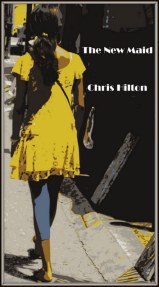
Leaving is the story of two girls, Natalie and Bonnie, who leave home at more or less the same time. They are fifteen and from very different backgrounds. Too young to leave home (officially), they have both had enough of their respective home lives.

Natalie is highly intelligent, has no obvious reason to leave but senses there is something that she wants outside of her present existence. She is highly intelligent but also impulsive, in ways she doesn’t yet understand. Bonnie has hardly formed a personality. Circumstances force her away from home. She has only a determination to endure and knows little about herself – apart from the fact that she is a survivor.


IMG_2140“The story had probably been percolating within me for a long time when it suddenly came to me whole. I wrote the complete first draft in three months. I was interested in two girls who didn’t like the world they were in and decided to do something about it. They reject the surrounding world completely and create their own.


I will send the novel to my agent and various other outlets shortly. Here are the first few chapters . I am doing this, of course, to see if people like the story. I am very confident though, that it’s a good tale. I hope you like it.”


Lard Boy sat eating and hitting keys on his computer. He rarely moved, except to reach for a cake and stuff it whole into his mouth. Perhaps he would swivel his chair from his iPad, to his Xbox, to his computer, to his TV, and sometime, who knew what time, he would fall into bed. He rarely spoke, just grunted, demanded food or, if nobody was around to serve him, he would raid the fridge. His fat buttocks hung over the edge of his stool. His lanky, greasy hair hung unevenly – mummy cut it, badly – otherwise he just wouldn’t bother. Natalie wondered if he had ever spoken to her; really spoken to her. He’d grunted, swore, repeated inane witticisms from the TV and the Internet, but never actually said anything. He’d never really spoken at all. He was thirteen years old and he’d never said anything; never had a thought about anything either. He was just a lump of lard.

She watched him from the door. He was quite unaware of her. She tried to summon up affectionate feelings for him, but they wouldn’t come. His bedroom was twice the size of hers with a mass of equipment; OK, she didn’t want all the gear that he had, but if she did, she’d have needed to ask for it. He was given everything, mummy’s boy. Would she miss him? Not for a second. He was going with his mother tomorrow. Her mother! Although she much preferred not to believe that – somewhere there had been a mistake, a terrible mistake. Somehow she’d been transplanted into this useless family – somewhere, there had been a terrible mistake.

Tomorrow, mother would take him to Greece, some island, where miraculously their fat would disappear. Fat mother would ‘find herself’ and Lard Boy would return wiry, toned and dynamic. They would go together because he needed constant supervision; he couldn’t take a dump without supervision. She said goodbye; he ignored her. She shouted another goodbye – he’d be leaving early – and he grunted. She knew that was it. She moved along the corridor to her mother’s room, knocked and put her head round the door. ‘Have fun in Greece,’ she said, a stupid cliché but nothing else would be understood. Her mother looked up briefly from her magazine, said ‘Thanks, darling’, and went back to her furniture or fashion or celebrities. Would she miss her mother? Not for a second.

She was fifteen, but she thought she could make herself look eighteen. She’d miss her piano.

She watched them leave in the morning. The taxi stood there for half-an-hour while they messed around, forgetting this and that, checking everything over and over, until finally, they were gone. Stage One.

Father, not really her father, sat at his computer making money. That’s what he did. He was very good at it. Well, she thought he made money. Money certainly became available through his efforts, though she was never really sure if it was real money, if he really had it, but he seemed to be getting away with it, for now, and that’s all that mattered. The two fat people were gone. She was to spend the next three months with him. She quite liked him, in a shallow sort of way, because he was shallow, but he was alright; in a shallow sort of way. And she knew she could manipulate him. She knew rather a lot about him. He had no idea, but he was about to find out.

He sat at his computer, two large screens with multi-coloured columns and figures, constantly changing; she understood none of it, she didn’t need to, she just understood the results. He had over four million in numerous accounts. His office was spacious; it was a spacious house, white carpeted, everything modern, stuff replaced as soon as something new appeared; her mother had money, tons of it, and he had used it to make more. He must be with her for the money, what else could he see in her? She couldn’t bear to think of them together. Ugh. But he seemed happy. She thought he would lose the money again, perhaps he didn’t even have it – who knew? – but millions passed through his little world every day. He sat in a corner, his back to the windows, the position where he believed he worked best. The rest of the room was determinedly minimalist; everything was done, dusted and recorded on those two screens.

She was never really sure what to call him; father wouldn’t do, but neither would Adam, his name, as far as they knew. So she had never called him anything. Quite surprising really; that you could talk to someone for so long, without actually referring to them in any way, but it had worked. You had to find a way into a conversation, but once it started – well, you were away. She didn’t have to use his name, and he didn’t seem to care, didn’t even notice.

‘How’s business today?’
‘One second, darling, while I finish this. One second.’

He called her darling. And ‘my lovely’ and ‘babe’ and ‘sweetness’ and ‘sugar babe’ – he had an inexhaustible supply of names for her. She wasn’t really sure if he had any idea who she was; she was quite sure he didn’t, but that was better anyway, and she responded to whatever he called her. Perhaps it was best to get straight to the point. She waited until he was finished.

‘I’m leaving tomorrow.’

He just stared for a few moments, not taking it in. She was fifteen. He probably knew that. She was part of the furniture. She’d be here until she went to university or whatever. She hadn’t even finished school.

‘You what, babe?’
‘I’m leaving tomorrow.’
‘Leaving.’
‘That’s right.’
‘What do you mean, leaving?’
‘I’m leaving. I hate it here. I’m not staying another day. I’m leaving. I’ll stay in touch, perhaps. You’re going to help me, in quite a big way.’

He smiled. He had a nice smile. She could see why mother had fallen for him, after father had gone. They hadn’t heard from him since. She understood that too.

This would take a bit of time. It was a shock. She understood that. Give him some leeway. Explain everything slowly, maybe more than once – she did have all day. But by the end he would understand. No reason at all why that shouldn’t be so. But, give him some time for this to sink in. She had been planning this for two years, since she was thirteen.

‘You can’t leave,’ he said.
‘I can and I am.’

He looked at her anew, seemed to be sensing something. She’d tied her hair back; tomorrow she’d shave most of it off and dye it. She was already beginning to play the part, and he sensed it. He was nowhere near there yet, but he wasn’t stupid, he would understand.

‘You can’t,’ he said.
‘But I will,’ she said. ‘Listen, you have over a dozen accounts, some of them in different names and countries. Perhaps you intend to leave some day, I wouldn’t blame you. I think I know all of them. I know your passwords, your secret codes and ways in. You have three passports to cover your identities. You have loads of credit and debit cards. I want a debit card. Credit will be unreliable. A debit card you’ve never used. There’s twenty five thousand in the account I want. You’ve never used it. I want it. You will give me the card.’

He stared at her. He doesn’t know what to say, she thought. I’ll continue.

‘You don’t have that many passwords. It was very easy to get them all. Not just for your financial stuff, but all the other stuff you’ve been up to. The women you keep on the side, the porn, you’ve even been into the underage sites; only looking of course. You only need to look nowadays for the police to be interested. And then you’re finished. Even if it was innocent, nobody will believe you. I don’t blame you for just looking, but you wouldn’t want anybody to know that, would you?’

His shoulders had slumped. He continued to stare.

‘But…’

Then nothing more came.

‘I know what I’m doing. You can tell mother I’m gone, or you can wait. You may as well let her enjoy her holiday. You can say I left just before she got back. We’ve just finished school, so you don’t have to worry about anything for seven weeks, just tell school that I’m with mother, or something. I don’t mind. You won’t find me. I’ll only come back if I want to, and I won’t. Mother will probably pretend that she cares. I suppose she’ll have to make a fuss, bring in the police and stuff. But you won’t find me. I hate it here. I can’t stand Lard Boy. My mother has never spoken to me, seriously, not once. I hate it all beyond belief. I know I’m young and I’m supposed to wait, do what everybody else does at the right time, but I don’t want to. I can’t wait. It’s too horrible. You’ve helped. With your little games and our little chats, but that was only a bit of relief. I’m much smarter than you. Sit and think for a while. Someday your racket will fall apart and you’re going to need mother’s money. That’s the only reason you’re here, really. She thought you were rich, but you weren’t. You’re rich now because you used her money. Maybe you’ll stay rich for a while. I hope so. But I won’t be here. I’ll be gone. You don’t care. Think what you can get up to in the time she’s away. No need to tell her until she gets back. There’ll be a bit of a fuss, a bit of a panic. There’s no chance you’ll ever find me. Before you know it, I’ll be eighteen, and nobody will have to worry. So give me that debit card. Leave the account alone. That’s all I want from you. Give it to me now.’
cards1


Bonnie stared at her parents. Well, her mother, she was pretty sure of that; the man, just another man, her father, whoever he was, was long gone. She sat at the kitchen bar. Sort of a bar: a stool and space for two people, three at a tight squeeze, the rest of the kitchen before her, not much: a small work top, fridge, cooker, sink, microwave and the floor. Not much space there either, enough for two or three people. And there they were, side by side, sort of poetic really, the way they lay, touching each other. And dead.

She wondered when she should call the police. It was five o’clock. She’d give it an hour.

The police sat her in another room with a female officer. She’d got up in the night and found them, exactly like that. The drugs were on the side, the work top, and the syringes and some blood. Obvious, really.

She knew they would put her in care. She knew where she’d go. She was quite prepared for it. She was fifteen. There was nobody else.


Natalie decided to take the train. She was sure that Adam would not do anything, but she had planned this meticulously, and would follow her own rules. As if the whole world was after her. She spent the first night at an empty house. She knew it would be empty because the house belonged to friends and they were on holiday. She’d had some keys cut several months before. The house was not overlooked by any others; she was quite safe. She took precautions anyway, keeping to two back rooms and the bathroom.

She cut off most of her hair, which had been below her shoulders when she let it down, blonde with a slight curl to it; it was lovely, she knew that. She cut it up to the ears, as neat as she could make it, and then dyed it black. And she practiced making up her face, whatever made her look older. That’s all she wanted to do, look older. Appearance didn’t matter for now. She knew she was beautiful, was very comfortable with it, and she was slim and would be beautiful for a long time and she didn’t think ahead anywhere near any stage that she might not be, there was no need.

She tried Adam’s debit card. She was confident he would go along with everything, but she wanted to be sure. She drew five hundred pounds with it. No problems. She had five thousand in cash anyway, but she needed that card if she was to fulfill all her plans. Beyond staying free, she didn’t have that much in the way of plans – that was the point – but the early days were very important. Times would become difficult again when her mother got home and when school started, but that was quite a way off – she wouldn’t worry about that yet. Unless Adam panicked and told her mother. She was sure he wouldn’t, but she was prepared either way.

The second morning she took a train to London. She sent Adam a text while on the train and left the phone wedged down the seat. She took the tube to Euston and caught a train to Birmingham, the most boring place she could think of; nobody would look for her there. The train was a nice way to see the country in the spring. She adjusted her hair, tested make-up combinations, ordered lunch, read her book, looked out of the window, slept and spoke occasionally to the people opposite her.


The verdict was misadventure. Bonnie was put into a home that suffered, like most places, from the cuts. Most of the men were gone, and those whom remained were hardly allowed near any of the ‘service users’. She behaved herself for a while, was gradually mostly ignored. She could have left at any time, but there had been some publicity about her; she had been a story for a while. She was very pretty. The evil parents, the lone child. But she didn’t want to talk to anybody and, very quickly, she wasn’t news.

One day they had a trip into town, Bradford; that’s where she lived. They were supervised, sort of, but it was easy to sneak back to the house, boarded up, desolate, grass and weeds three feet high. She walked to the back garden, just an overgrown tiny square with the remains of a shed in the corner and removed a paving stone behind the shed; she dug down about a foot and removed a plastic bag. Inside was three thousand pounds. She had been saving it for four years, stealing bits and pieces from her parents. The cash was all she had. She was leaving and it would have to last her until she found a job and beyond. She didn’t care; she wasn’t worried, anything was better than her life up to now.

She didn’t really care where she went, although it would have to be south, where the work was. She didn’t want to go to London, too easy to get dragged into the wrong stuff, so she chose Birmingham; she hoped to find work there. She deposited some of the money in her pockets and tucked the rest, in fifty pound notes, into her underwear. Then she went to the station and caught a train.


Natalie had no luggage at all. She needed some clothes. She bought a suit in John Lewis and some casual clothes. She had her hair tidied, adjusted her make-up. Did she look eighteen, or more? Not really. Confidence would have to do that. And honestly, who cared? She paid cash at the Hilton Metropole in the National Exhibition Centre; the receptionist didn’t even blink, took a top floor Junior Suite with a view, paid for a week in advance. It was £280 per night; she didn’t care. She would work everything else out from there.


Bonnie didn’t know what she would do in Birmingham. She had only the clothes she wore. Hungry, she walked into a supermarket, walking around and around, not sure what to buy. Her sense of freedom was exhilarating and a little bit frightening, but she was not overly concerned. She would have to find somewhere to stay, get some charity shop clothes. She noticed a few old ladies, alone and confused, taking forever to choose what they wanted. She bought a sandwich and a drink and went and sat outside, watched people going in and out. She watched the old ladies in particular. She followed one, who looked eighty or more, and carried a stick, into the supermarket. As the old lady dithered over some fruit, Bonnie offered to help, but the woman glared at her, seemed shocked and affronted to be approached. She wandered around for a while but found no one. She bought another drink, and sat outside, watching.

Near closing time, an old lady with white hair, perhaps seventy or more, Bonnie couldn’t tell, entered the supermarket pulling a trolley behind her. She had shortish white hair that looked as though it had just been ‘done’, a kind face – she smiled at everyone, but not many people smiled back. Bonnie watched her take forever in choosing what she wanted. When she came to choose some bread, she couldn’t reach what she wanted.

‘Let me get that for you’, she said.
‘Thank you, my dear, very kind.’

She stayed with the woman as she wandered around; picking things she couldn’t reach, making suggestions. The woman was all there in the moment, she had bright blue, intelligent eyes; she knew what she wanted, but seemed to forget very quickly, referring back to a list and going to buy some things that she already had. Bonnie took her list and told her what she had got and what she needed. She read the ingredients of a few things, made sure the lady got exactly what she wanted, asked her if she wanted anything else. When she was finished, Bonnie stayed with her at the checkout, watched her pay. She used a card, remembered the number, and paid for her stuff. Bonnie helped her transfer it all to her trolley and offered to pull it for her. The old lady looked into her face for quite a long time, thinking about it; she was quite short, Bonnie was five eight or nine, and the old lady looked into the sun slightly. She turned her around, looked into her face and said,

‘Thank you, my dear, that’s very kind of you.’


Natalie didn’t bother with a phone or anything else technical. She didn’t need anything. For now she merely relaxed in her great big room. No awful fat mother moaning about everything, nagging her, thinking she’d be there forever. Mother was jealous of course. Not even forty and built like a tank. And miserable. And stultifying. And boring. What did Adam see in her? Money. But nothing was worth life with her. He was lacking something too. He wasn’t bad looking; he was younger than her, of course he had the women on the side and the Internet stuff, but nothing could compensate for a life with her. And Lard Boy. God, she hated him. She didn’t just not love him, or not like him – she hated him. Hated his flab, his stupidity, his grunting, the way mother doted on him as though he was the hope of the family. Why?

But she was free. Now she was free. Not really used to it, but that was part of the pleasure. She was used to luxury; she’d stayed in many places like this with her family. She supposed she’d have to downgrade at some stage, but for now, she really didn’t care. Why should she wait until she was eighteen? Why did everybody do that? What was so special about eighteen? Well, she wasn’t going to wait. What use were they? Her fat mother, her fat brother and Adam. She should wait and do everything that was expected of an upper-middle-class girl, the same stuff that everybody did. It looked different but it wasn’t: university, year out, job, husband, kids, and living death – no thanks. No thank you. She’d got herself free. And she wasn’t going back. Ever.


Bonnie pulled the woman’s trolley. The old lady had walked to the supermarket; there was no bus to catch, perhaps a one-and-a-half to two-mile walk. It was a lovely sunny, spring day, so at six o’clock it was bright and the world seemed full of life. They passed children in playing grounds, football matches, and people in summer clothes. The lady didn’t look around much, concentrating on her path ahead. Bonnie spoke to her occasionally, just small talk. The lady would turn her head and look into her face for a few seconds, and then continue with the effort of walking. She stopped once, pretending to look around, as if unsure which way to go, getting her breath, Bonnie thought, and then continued.

Then they arrived at her house. It wasn’t an estate, just a road, rather large houses with small front gardens and, Bonnie guessed, much more at the back. The lady stopped by the front gate, getting her breath again. Bonnie didn’t make any move, didn’t offer the trolley; she just stood there. The old lady got her breath back and then looked at Bonnie’s face for what seemed like an age. Then she said,

‘Would you like a cup of tea, my dear?’
tea


Natalie was a little disappointed. After four days, she still felt the occasional exhilarating sense of freedom, but she was bored. She had bought some clothes, not many, because she did not want to be encumbered by luggage. She had been in Birmingham for four days; she had a smart suit and two sets of casual clothes; that would do for now. She had been to the new library, Repertory Theatre and visited the home of WH Auden, but she couldn’t really concentrate; she had tried to read but her mind was too active. She was a big reader; she loved books, but her mind would have to settle down first. Early days.

Here she was in her hotel room, with a marvelous view of the city, and she wasn’t sure what to do. She had planned her escape so meticulously, so that nothing could go wrong, and all she’d wanted was to be free. Well, she was free and she didn’t know what to do – move on perhaps? She went downstairs and ordered a drink from the bar; no reaction from the barman – there had been no reaction from anybody, not one person had given her more than a cursory glance. Strange, she’d sort of expected to be hunted, to be searched for, but nobody took any notice at all. She sipped her wine. Not a big drinker, not yet anyway, but it was quite a pleasant feeling, things were coming into perspective. She wore the suit, had an empty folder she occasionally referred to; the bar was almost empty, a man was playing with a phone and a laptop; he was middle-aged, totally absorbed in what he was doing.

At another table sat a woman, perhaps mid-twenties, dressed well; she rarely looked up from her phone. Foreign, thought Natalie, she’s waiting for someone. Dark hair, straight, good bone structure, shortish skirt, good shoes. It was about two o’clock. An older man came to her table, expensively dressed, everything was expensive here – her drink had cost eight pounds. He didn’t sit down, stood and said a few words, the woman smiled, a TV smile; the man waited. She rose, took his arm and they moved to the elevators. Gone. An escort? Interesting.

Natalie saw a map against the wall, near reception. She ordered another drink, one more, and wandered over to it. Where shall I go? What shall I do? You can do anything you want. Go anywhere you like. She studied the map: London? Leeds, Liverpool, Manchester? She didn’t know what to do.


The old lady handed Bonnie her tea and switched on the television. It was time for the news and she seemed immediately engrossed, sometimes tutting or shaking her head. It was quite a big house. Bonnie had seen the kitchen, old fashioned and large. She’d asked to use the bathroom and checked upstairs; there were three bedrooms, all neatly kept, and an empty room. The news finished and the old lady switched over to more news. She turned and looked at Bonnie, not quite sure why she was there, but offered more tea. Bonnie said she’d get it and made another. She wanted to discover her name; she didn’t want to ask.

The house was old fashioned but not ever so. There was some modern stuff, a couple of pictures looked fairly recent and some ornaments; the TV was newish too. The old lady went to the toilet. Bonnie checked the drawers for a bill; her name was Nancy. Nancy returned. She looked at Bonnie again, seemed about to say something, but just sat down, continued watching the television. There was a computer in the corner, not switched on; it wasn’t recent, but it wasn’t ancient either; she must have been sharp fairly recently, if she wasn’t now.

Bonnie made them something to eat. They sat and ate from trays, which Nancy seemed quite used to. She did stare at the food for a few seconds, as if it wasn’t quite what she’d expected, but then she ate and carried on watching the news. When the ITV news finished, she switched over to Channel 4 and watched some more.

They watched EastEnders, a documentary about fat people and started on a film, something about Dylan Thomas and the women in his life. Half-way through Nancy began to stir; she wanted to go to bed. She fussed around a little bit, looked in some drawers, tidied up though there was little to do; then she stopped and looked at Bonnie,

‘Who are you, my dear?’
‘I’m Bonnie.’
‘How long have you been here?’
‘Oh, I’ve just arrived. It’s OK, I’m just going to give you a little help when you need it. It’s not compulsory; you can change your mind any time you like.’

Nancy stared. She seemed to be trying to think; it was an effort, too much in the end – she wanted to go to bed. Eventually she said,

‘Very well, dear. I suppose I’ll see you tomorrow.’
‘My name’s Bonnie, call me Bonnie.’

She looked for a few more seconds. She knew something wasn’t quite right. Instinct was taking over; did she trust this girl? She seemed to decide that she did,

‘Good-night, Bonnie.’
‘Good-night, see you in the morning.’


(continue reading) chriscuba-001Leaving is Chris’s first full length fiction title and will be available for general release in 2014.


Advertising Whores

The late and great Bill Hicks once introduced a sketch with:

‘By the way, if anyone here is in marketing or advertising, kill yourself.’

A tad extreme perhaps, but I know what he means, and that was in 1993. If only Bill was around to skewer the greedy celebrities of today.

Most American and British actors have been reluctant to appear in widespread advertising campaigns, assuming that it cheapens their image and can be seen as selling out.  But Brad Pitt, Leonardo DiCaprio, Gwyneth Paltrow and Jodie Foster, who generally avoid publicity in the United States, have been doing large-scale advertising campaigns in Japan and China. Leonardo DiCaprio and Meg Ryan have filed cease and desist letters against websites that mirrored their foreign advertisements in an attempt to preserve their image at home. Robert De Niro has advertised for American Express, Bob Dylan for the Co-op.

‘If you’re a young actor, I’ll look the other way.’

Bill Hicks

You expect the venal to advertise: Bruce Willis, Britney Spears, Beyonce, Beckham and so on, but when I see Helen Mirren, David Tennant and now David Bowie whoring their image for money they don’t need, my heart sinks. How was your Hamlet, David? I don’t care. What about your Prospero in the recent Tempest, Helen? Not interested. And David Bowie? He’s been making millions since the sixties. Does he need any more money? No, he doesn’t. Will he whore himself to Louis Vuitton for a few million more? Sure he will.

‘You do a commercial, folks, you’re off the artistic roll call for ever. You’re another corporate shill, you’re a whore at the capitalist gang bang, and if you do a commercial there’s a price on your head. Everything you say is suspect and everything that comes out of your mouth is now like a turd falling into my drink.’

Bill Hicks

Nothing these people do will ever mean anything to me again. As Bill Hicks observed: they have removed themselves from the artistic register. Here is a small sample of people whose names will never quite mean the same to me:

David (Virgin) Tennant

Helen (Wii) Mirren

Al (Sky) Pacino

George (Nespresso) Clooney

Derek (Sony) Jacobi

David (Apple) Mitchell

Uma (Schweppes) Thurman

Chris (Direct Line) Addison and Alexander (Anything) Armstrong

I owe a sort of apology to the celebrities mentioned because of the many thousands that have not been mentioned. The people here are just those that I remember or who particularly stuck in my mind when they appeared selling stuff for corporations. I don’t watch commercial TV very much so I suppose there are hundreds more that I have never seen. There seems to be a free for all now. Nobody cares. Let’s sell our souls.

Did Luis Figo stop to think that people might prefer to remember him as a fantastic footballer rather than pretending to use Just For Men? Did Jarvis Cocker really need to endorse Eurostar or Derek Jacobi pimp Sony?

‘You have no rationalisation for what you do, you are Satan’s little helpers.’

Bill Hicks

I’m not at all jealous. I don’t have any money. I have enough for today and next week and that’s all I’ve ever needed. I wouldn’t mind a bit more, but only a bit. Perhaps I’ll sell a book, I don’t know but I don’t mind either. I don’t understand greed at all. It doesn’t make any sense.

The strange thing is that few people care. We live in such a commercial nightmare that many people see this behaviour as normal. I’m not sure that many people can tell the difference between the ads and reality. It really isn’t normal. It’s very strange behaviour.

I tried to balance this with a list of celebrities who don’t advertise. Several Google search combinations just repeatedly came up with those who DO advertise, such is the way of the world, I suppose. Google finds it unthinkable that anybody WOULDN’T want to appear in an advert. How horrible.

But, nevertheless, there must be hundreds, thousands who do not and would not appear in adverts. Many actors just use their voices so it is hard to tell. I know that Ian Hislop refuses to advertise, but he is a famously moral man – he has to be, as the editor of Private Eye. I’m afraid the rest of my list are just guesses. I don’t think that Ian McKellan, Alan Rickman or Juliet Stevenson have ever appeared in ads, but I’m not sure. I don’t think Steven King has either, apart from his books of course, which is different. There must be loads of others and I salute each and every one of them. A toast to non-greedy, sane people everywhere.

‘Haven’t you got enough money, you ####### whore?’

Bill Hicks

chriscuba-001

Butch Cassidy versus the Accountants

I watched Butch Cassidy and the Sundance Kid recently. I first saw it in 1969 and it had a big effect on me, as did many films of that time. However, most of those films are deservedly forgotten or they were so of their time that they are now unwatchable or they were simply very bad. I was much easier to please in those days. Butch Cassidy is still as good now as it was then, perhaps in many ways, better. One would think that with the terrific technological advances made it would seem dated. That is not the case. It helps that it is a western; there are no outfits or hairstyles to go out-of-date. Films now date very quickly with phones and computers becoming obsolete practically overnight. But really, there is little about this film that shows it was made 45 years ago. It is timeless.

butch-001

The only lack from a spectator’s point of view would be the lack of moving cameras. Perhaps some long shots could have been improved, but only very little. The 27 minute chase scene never gives a close up of the pursuers; in some of the long distance shots you can barely see them, so maybe a slightly closer view would help, but I don’t think it matters. The fact that the pursuers are barely visible makes the whole situation slightly more sinister; it adds mystery.

longshotbutch-001

The three main leads are impossibly attractive and do not seem dated in the slightest. The whole film is full of humour; even the death scene at the end is humorous; you know it’s coming, Butch and Sundance know they are going to die, but they face the inevitable with the same attitude they faced their whole lives with. The film is a celebration of life. Butch is more intelligent than the average outlaw; he spends the whole film running away, not something the average cowboy did – they usually stood, fought and died. Butch and Sundance do their best to find more banks or trains to rob; their day is done but they keep trying. Ten seconds before they die they are planning a trip to Australia. Their pursuers are never really seen: they are the enemy; we identify totally with Butch and Sundance. The last scene was accurate: they faced about 200 soldiers as they made their last stand. All those people to kill two bandits.

I had forgotten how slowly the film starts. I cannot remember if I was bored at the time, but once the chase begins the film is gripping. The chemistry between Newman and Redford makes the film; brilliant lines that everyone remembers:

‘Who are those guys?’

‘Hell, the fall will probably kill you’

and many more. The film is a paean to friendship, friendship to the end. It is wonderful. Remember also that the film was made before a pubic hair had been seen on the screen or a swear word uttered.


George Roy Hill ‘shot’ the film with beautiful scenery and colour, perfect teamwork between the main actors and a great script. The late Paul Newman, speaking on the twenty fifth anniversary of the film in 1994, said:

‘In those days they shot films. Now they shoot schedules, budgets, someone’s bonus or a release date, but that film was shot. That may be why it worked. There was a lot of pressure at the end on George Roy Hill to hurry up the distribution because some southern distributor said he could get a million one out of Texas and Arizona. George lived in someone’s dressing room so that he wouldn’t waste 20 minutes driving to and from the set.’

Robert Redford said that George Roy Hill created space for behaviour and character. He had discipline and knew exactly what he wanted to do. Redford believed the critics missed the core of the movie: bonding and friendship. Actors worked on days off and didn’t let ego get in the way of the film. Redford said that it was

‘The most fun on any film I’ve had.’

I can’t hep but feel that this is analogous to our times, 45 years on. There are too many people managing who don’t know what they’re doing. They are taking an awful lot of money for telling people who do know what they’re doing what to do: in education, health and finance – they are everywhere, but especially in films. With the massive advances in technology, cameras can do anything and most directors overdo the scene switches and close ups. Until about ten years ago only one or two people could edit a film; it was a skilled job. Now anybody can do it and many talentless studio executives do edit films because they don’t like the ending or because, possessing a massive ego and little else, they think they know best. Writing appears to count for very little: we’ll just make up for it with special effects. Writers have rarely been given credit in film, now, in most cases, particularly in the US, they are obsolete or just provide conveyor belt stuff.


Forty five years ago executives tried to interfere with George Roy Hill’s vision for Butch Cassidy. They failed. With technology as it is and a perverse political correctness holding sway, the money men have taken over. Hollywood does still produce some good stuff but it is rare. I would rather watch a Latin American, Scandinavian or French film, costing pennies but showing a little intelligence, than most of what is churned out today.


And if you haven’t seen Butch Cassidy and the Sundance Kid, watch it now. And if you have seen it, watch it again. As Paul Newman said:

‘The film was about the delight of the film maker. All the ingredients have to work. We had a terrific time.’


chriscuba-001

The New Maid – Free Reader Promotion

102-002She left Spain to escape from a domineering family. A new job in London gives her the opportunity to start again: the start of something fresh and exciting or has she just swapped one dysfunctional family for another? A self-obsessed mother, a quiet, flirty husband and a very forward thinking daughter – and a lot of time to herself.

What lies in store for her? How will she cope?

Will it be heaven or hell?

The New Maid: a story of change, new prospects and a kind of redemption.

“…a tale of a maid working for a stereotypical, high class, dysfunctional family. It empathises with the maid as she gets all caught up in the politics of the family. But there is only so much a maid can take…”

Available free through KDP from Decemeber 14th through to Decemebr 19th.

Download a copy now

“a short story which manages to capture so much.”


Amazon UK – The New Maid

Amazon US – The New Maid

I would really like to hear what you all think.

Reading in Bed

“Those of you who have seen my book, whatever you may think of its contents, will probably agree that it is a beautiful object.  And if the physical book, as we’ve come to call it, is to resist the challenge of the eBook, it has to look like something worth buying and worth keeping.”


From Julian Barnes’s acceptance speech at the 2011 Booker Ceremony, on winning with his novel, The Sense of an Ending.

A Guardian article states at length how the book buying public are now being seduced by a book’s appearance as well as its content, how more care is being taken in the production and appearance of books. Generally, I don’t believe this is true.


The Sense of an Ending is a physically beautiful object; a compact hardback with dust wrapper containing a nice but simple design, all put together with good quality material.  I think all books are beautiful in their own way, but that is another discussion.  Barnes’s book is a beautiful object, but how practical is it?  By that I mean how well does it do its job, perform its practical purpose of being read, and being read with ease, without unnecessary hindrances?  The answer to that is: not very well.

IMG_0368

I read frequently in bed.  That may not be where the majority of reading hours are put in, but it is the place where my reading most often takes place – every night without fail.  Actual reading time can be as little as one minute before the object of reading falls onto my face to remind me that I’ve fallen asleep; it can also be hours or occasionally a whole book.  In bed is where one judges the practicality of a book.  I believe most of us must read while lying on our back, holding the book above our face; that way when sleep comes it’s possible to place the book on the floor or on the bedside table and quickly get to perfect slumber without unnecessary interruptions, such as changing position drastically or rearranging pillows, cushions and covers.  If, like me, you do read this way, then you should know what I mean about the practicality of reading a book as opposed to its beauty.


Julian Barnes is right.  His Booker winning novel is a beautiful object; I read it over a few nights, entirely from a prone, on my back, position.  And it is not a practical object.  For a very simple and infuriating reason: its inner margins are too narrow.  The book requires an uncomfortable and impractical two hands to be able to see the whole of the text; in other words, without forcing the book wide open with two hands the inner text on both pages will disappear into the fold of the book; one is constantly tilting the book this way and that to read the end of the sentences on the left-hand page and their beginning on the right hand page.  This is unusual with hardback books, but this is a small book.


Although this fault is most noticeable in bed – I suppose publishers will protest that books are not designed to be read in bed (if not, they should be) – it is almost as annoying when reading anywhere in any way.  If, like me, you love books as ‘physical’ objects then you will resent having to practically break their backs to read the central text.  Apart from the discomfort and the detraction of pleasure, you are damaging the book, shortening its life – the act of doing this, bending the two halves of a paperback hard against its spine makes me angry; apart from the inconvenience which has been added to what should be a pleasure (depending on the book), I resent having to treat a book this way.  It should never be necessary.


Why are so many books made this way?  And who is producing them? I can’t decide if this is just a quirk of printing or penny-pinching.  I was unable to decide if some publishers habitually printed unreadable books, if some never erred or if the whole business is a lottery.  I was going to put together an extensive list but found that margin width is completely random, there is no pattern to it; a publisher may release a book with wide margins followed by one with narrow margins: same price, no reason. It appears to be haphazard. Rather than try to catalogue the problem, here are just a few examples of what I have been reading lately.


Geoff Dyer’s Working the Room (Canongate) is impossible to read in bed without forcing the covers back with two hands (not a natural position).  Using the natural stance of holding the book between thumb and forefinger reveals the bottom half of the text, but the top half disappears into the centre, forcing one to use unnatural, uncomfortable pressure to be able to see the upper text.

A Little Aloud (Chatto & Windus) is not only a marvellous book, its proceeds going to charity, it has really wide central margins to make one-handed reading easy as well as silent or noisy reading in bed – in fact why not read aloud to a loved one in bed?


I had hoped that this would be a modern phenomenon, a sign of the philistinism and greed of the post-modern era, penny pinching publishers saving another £0.0001 per copy by depriving the reader (me!) of reading space and comfort.  It was not to be: A 1998 Penguin edition of Lucky Jim is very mean with its margins.  It requires two hands and needs forcing open at all times because also, without the book open flat there are always shadows to contend with, a hazard for all but those with 20:20 vision.

IMG_0374

Another factor is ‘Give’.  Have you noticed how the better paperbacks allow themselves to be forced flat, you feel as though you are breaking them but you are not – the spine remains uncracked, the glue holds – they are a miracle of design and engineering. I present two examples: Alone in Berlin (Penguin) 2009, and Leviathan (Fourth Estate) 2009; beautifully put together books, but Alone in Berlin has narrow margins while Leviathan has wide margins; they are both priced at £9.99 – the problem has nothing to do with cost. I don’t think publishers even consider this. The Empty Space by Peter Brooke also has ample room on the inner margin.


The crazy thing is: Who needs outer margins? They are necessary for appearance’ sake but provide no practical purpose. Why not shorten the outer margin and give the difference to the inner margin? I hope I’m not the only person to notice this. Any thoughts?