What do People do here?

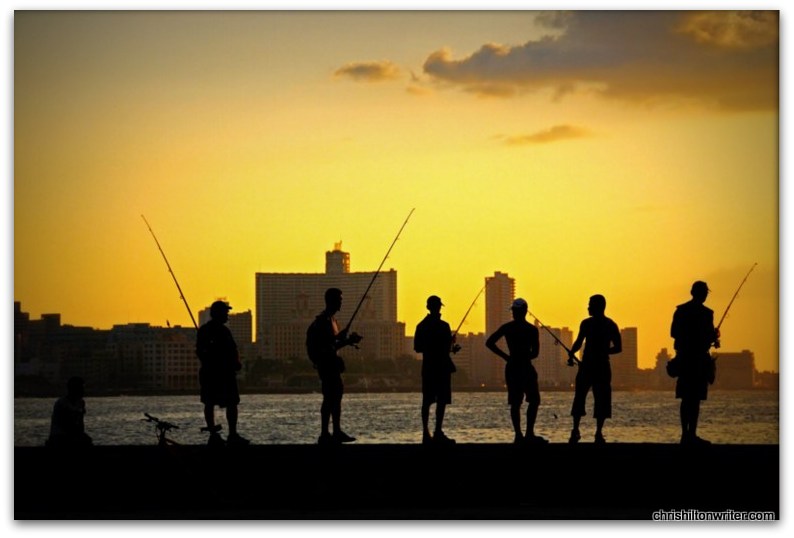
malecon

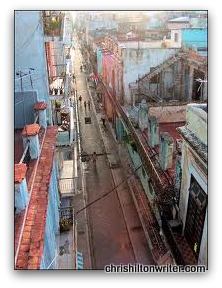
I didn’t really ask myself in the past – what do people do here? I still don’t know but I have much more idea. What almost everybody does is something. Starting at around five in the morning, a constant stream of people pass beneath my balcony; just one street of millions in the city. Among the first to arrive are the taxis, not taxis in the imagined sense, but ordinary low level private cars. They use the seventy yards or so just before the corner as a queuing spot for customers, perhaps eight or so taxis at any one time, constantly changing as customers take the first in the queue, all day, six or seven days a week. Although this happened before; there were always willing drivers to take people on whatever journey they wished, this is more official. I don’t know how much they charge because we only take bicycle taxis, of which there seem to be many more than were here a few years ago.
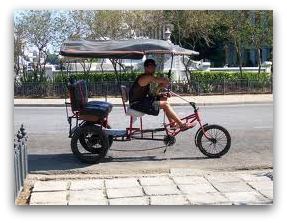
taxi

Whatever they charge, they are just part of the burgeoning private enterprise; along with the taxis are soft drink sellers, fruit sellers, cloth sellers, trinket sellers – anything sellers. All this activity takes place non-stop, every day, along with what must be the normal day-to-day activity of everyone else.  The daily pushing of carts, trolleys, the carrying of goods, those who work and those who don’t – a constant stream of people – in one street, my street, one of many, many thousands.


There are more people begging on the streets, more selling Granma, the daily paper here, more persistently, more of a nuisance and mostly completely tolerated by hotel staff and anyone else involved. Perhaps that is the result of a more tolerant attitude to free enterprise. While they were once stopped or discouraged by police, they are now more ubiquitous. Nothing like as bad as in almost any other country, but certainly more here, more real and more confident.


The Capitol is closed for renovation, as is a very big shopping centre close by and many public buildings. No matter what else is happening here the country is gearing up for more tourism. The shopping centre contained six or seven floors above it, also closed and empty. What happened to the people who were in those rooms? I don’t know. Were they moved elsewhere? Will they be able to return? I don’t know.


It is hard to tell what is going on here. Most people take no interest, too busy in surviving, getting by. There are more paladares, more taxis, more stalls selling bits and pieces. I asked Yuri if life was easier now or more difficult than, say, 2006. She says things are easier. What of the buildings? Coming in from the airport there seems to be no difference in anything: people still stand by the road waiting for lifts or rare buses; people still seem to struggle with their daily lives. Our lift from the airport stopped along the way to carry out some private business or other. Old and central Havana, where I spend very much most of my time, is different. More people have more, though not so that most people would notice.


With the world economy in a complete mess, demonstrations and revolts occurring everywhere: Egypt, Spain, Iran, Iraq, Turkey, Greece… what are the Cubans doing? Yuri has not the slightest interest. At the moment I don’t know anyone that has, although if I make contact with more English speakers or find an interpreter then I’m sure there will be a different story. At the moment I don’t care. I am curious though. I know only what I see. Some of that I may interpret correctly, much I’m sure that I don’t.


The police have new cars. There are new buses although they are as full as ever and the queues remain long. There are designer stores, many more now than before, and not just for tourists. This is one of the big contradictions here: How can ordinary Cubans, on a wage of ten dollars a month, afford the prices, which are much the same as any other store worldwide. But many Cubans do afford the prices, perhaps with money from the United States or perhaps through employment in the more profitable parts of the tourist industry or perhaps through the new entrepreneurship, although I very much doubt it.


Everywhere you go is fantastically clean in Cuba. A woman comes every other day to clean our apartment. If it were left to me I would probably give it a very quick once over, maybe once a week. Just tidy the bathroom and the kitchen and a quick sweep elsewhere. She takes between two and three hours every time. Everything is spotless. You do come across the odd mosca (fly) and very occasionally a mosquito; otherwise I have never seen an insect in any Cuban house.


It is not just the cleaning lady who is so conscious of cleanliness. We have her because I rent a room, otherwise the lady of the house would clean everything every day. Many years ago, when I was with Yamilia, although she was basically lazy, she would always clean the house first thing. It is the same wherever I’ve stayed in Cuba – I’ve never seen a dirty house.


It seems to be part of the Cuban DNA. The floor is always covered with water and mopped – all rooms have tile floors. Of course there are many dilapidated buildings which, until they get attention, are left to rot, but any inhabited house, no matter how humble will be clean.


Certainly things have changed since I first came here. Cubans can now stay in their own hotels (if they can afford it), visit their own beaches. Accommodation is much easier to find. All sorts of jobs (about 180) have been added to an entrepreneurial list. In other ways it’s not so good. The bars on Obispo used to stay open all night, now they shut at twelve (so as not to disturb tourists in the few hotels nearby) – why come to Havana if you’re bothered by noise? Now, I don’t mind the changes, but a quiet Obispo does not seem right. Even though I rarely drink, I would like the choice; there are always other places, but it’s not quite the same.


Just now I don’t know. I know a lot and I will learn more, but after fifteen years there’s still loads I don’t know. Yuri knows everything, absolutely everything. I’ll have another go at Spanish (they talk so fast here), but I’ll try.

chriscuba-001


Changing Cuba

In the street outside our flat, taxis start to position themselves early in the morning. It seems to be a partly or wholly official business. There are perhaps twenty or so people who come here daily. They work from about six to midnight, depending on how keen they are. Before in Cuba it was always possible to find an unofficial taxi, but it was illicit, easy but illicit. Now, I assume that it is official and controlled. It is low status, compared to the official taxis, but it is here, and it means that the drivers can turn up every day and be able to work, I would imagine, much more regularly than before.

bluecar

The line of taxis, usually seven or eight, but varying as the day progresses, works peacefully most of the time. Ninety per cent of the cars are Ladas in various states of disrepair although efforts have been made to spruce them up. The other cars are a mixture of all sorts, usually slightly more modern, but well below the standard of the official taxis. Occasionally, every few days, a row breaks out over the positioning of the taxis; it is not serious but often continues for about an hour. Much shouting and waving of arms, but there is no violence; the argument is not serious – Cubans just like shouting at each other, letting off steam.


Repairs are continuous. Most days at least two of the taxis will undergo running repairs. The system appears to be random, but it isn’t; someone has control, someone is getting the customers, making sure they go to the right taxi and so on. This process is being repeated all over the city; wherever you go there will be someone touting for a taxi. Their service will be mostly taken up by Cubans looking for a cheaper ride, whereas before they would wait by the roadside until someone appeared willing to take them where they wanted to go; now they go direct to the taxi. I assume the price is about the same. We took mostly bicycle taxis because we weren’t going very far, but on the couple of occasions we had a longer journey, we took one of the taxis queuing rather than an ‘official’ one, always checking the price first.


This is just one example of the new entrepreneurship. There are apparently around one hundred and eighty possible avenues. There are many more bicycle taxis – by far the bobispoest way to go short distances and many more stalls. The stalls are selling everything that can be sold: drinks, peanuts and fruit and much more; there are many more paladares. There must be some kind of pecking order for where you can sell your stuff, but it is mostly not obvious. The taxis in our street have a good spot, but nearer Obispo would be better and, of course, there are sellers of everything there too. There must be strong competition for the best spots, probably corruption too.


The new entrepreneurship is called trabajo por cuenta propia, the individuals are cuentapropistas. Every street in every town has something new. In 2010 Fidel Castro told, then president of Venezuela, Hugo Chavez, that

‘Here we nationalised even the funeral home, the barber shop, the sale of ice cream. That doesn’t have any reason to belong to the state.’

Attitudes have changed very slowly since the Russians left, but they are changing nonetheless, and will probably speed up from here. There are estimated to be six hundred thousand Cubans in the private sector now; half-a-million state sector jobs are expected to be lost by 2015.


On one street is an Esoteric Digital Library. What is it? Customers arrive with a blank disc or flash drive to download books and articles and music. The first download costs twenty pesos, and each one after that costs ten. Streets have cafeterias, room rentals, ice cream stands, sellers of trinkets, pizza makers and new private restaurants.


This is just a very brief snapshot of what’s happening. Where will Cuba be in five years, ten years? I don’t know, but it will be very exciting. I hope I’m here to see it.

redcar

Cuban television is great…


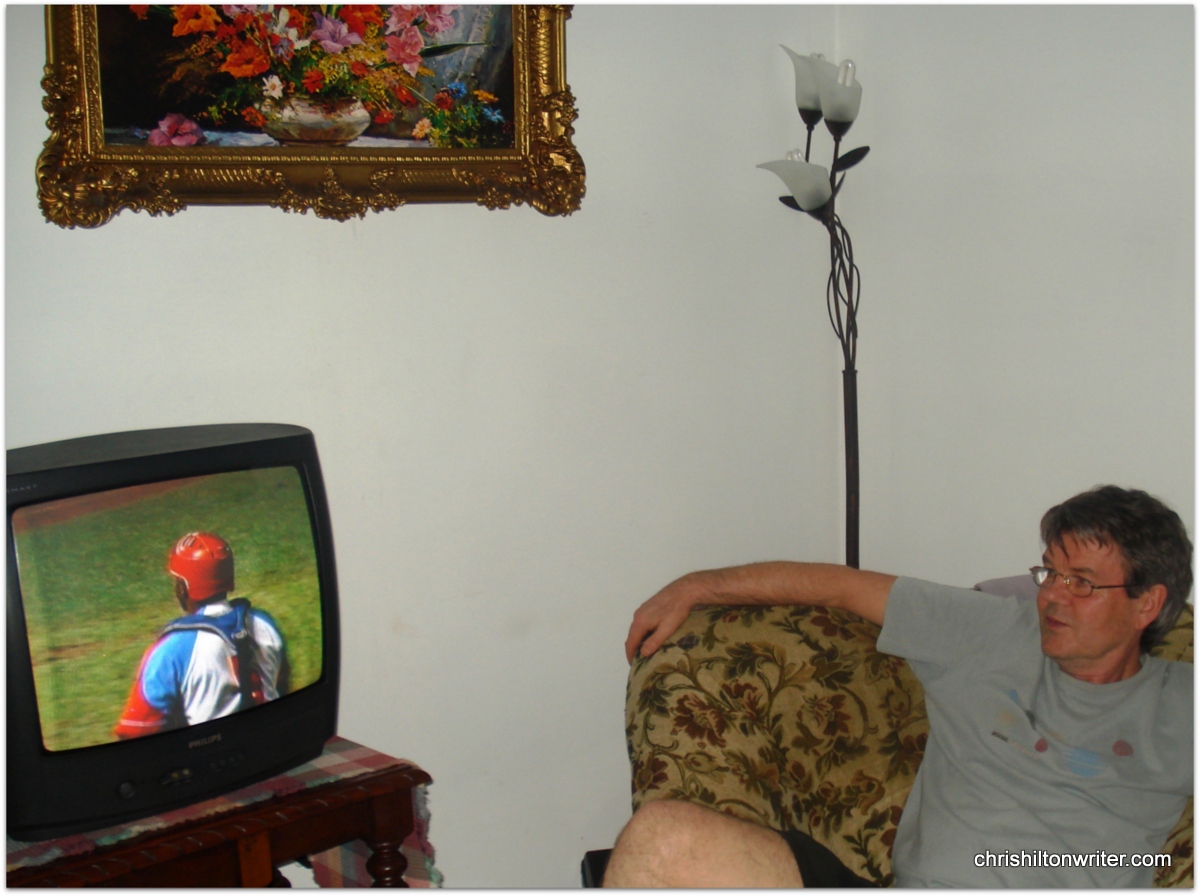
Cuban television is great. There are five channels (I think) – I can only ever find three with regularity – but I live in a flat with poor reception. I don’t watch much TV in the UK; I’m very, very fussy.  I can’t stand advertising of any sort, so watch mainly the BBC channels or, if occasionally I want to watch a commercial station, I edit out the adverts before watching. I don’t have SKY or any other non-traditional station. Cuban TV has no adverts, none whatsoever.


It is a mixture of imported stuff and home-grown Cuban stuff, mainly documentaries. It is twenty four hours now, which it wasn’t back in the early noughties. Strangely, there is a mass of United States’ imports: everything from reality shows, weight loss programmes, cartoons, crime shows and films – everything. US programmes are shown regardless of content. Life is shown as the Americans want it to be shown; it is repeated here as though it is something that exists, but is nothing to either envy or comment on.


The news is pretty biased. Every country has a prejudice towards itself, but Cuba is quite extreme. The news programmes, although not so plentiful as they are here, tell you next to nothing about the outside world. Every broadcast has masses of stuff about Cuba: a technological advance, a meeting somewhere discussing something important, somebody has been awarded a certificate; very occasionally there will be some mild criticism. But there are only two main hour long news programmes per day with a few fillers in between. Foreign news is given about two minutes on a normal day, perhaps longer if anything noteworthy has happened. Sports news is hard to decipher; there is much about baseball, anything else that Cubans have been doing: swimming, judo, football, but I find that for long periods the announcers just talk; of course not understanding ninety per cent of what they say doesn’t help, and they seem to talk for much longer without showing any images – I noticed this on all the programmes; there seems to be much more dialogue, they stay in scenes for much longer. This applies to a whole variety of broadcasting because although much of their television is from the US, there are also Brazilian and Argentinean soap operas, English programmes; it seems to be a Latin American thing – needing many more words to say the same thing. There is an hour long discussion programme just before the evening news, where events of the day are debated at length.


Apart from that there is an eclectic mixture. There has been something on China every day (a pending deal?), but that may not be so unusual – back in the UK there have been many programmes on China too. Strangely, bearing in mind the bias of the news, US television makes up about a third of the broadcasting. It is not censored at all. Whereas the internet is practically banned here, so that Cubans cannot learn what is going on in the outside world, US television provides a constant reminder that just across the water, life, apparently, is much easier. It seems that the way of life is regarded as inferior, nothing to be sought after, just here for your amusement. Of course Cubans don’t entirely believe in the US stuff. It’s treated as propaganda; for all the wealthy, happy people, the news sometimes points out that there is no free health care, that millions live below the poverty line, that the economy is collapsing and life is not at all as it is represented most of the time.


The TV is very well organised now, and professional. There are many, many films, often very recent, more recent than those available to me in the UK. Sunday is film day on one of the stations, twenty four hours of film, at least half very recent. When I first came to Cuba there were only two stations, and the schedule was fairly disorganised. In many ways I preferred that – you never knew what you were going to get, but it was often interesting – perhaps a two hour documentary about Bob Marley as a kid’s programme,TVCuba followed by a film, followed by sport. Children are very well catered for and treated as mini-adults. There is still no advertising here (although they advertise themselves a lot), which is fantastic for me. I do fear that soon they will change that, though. The economy desperately needs a boost, and I’m afraid that advertising will do it no harm. Perhaps they will manage to do it tastefully. I hope so.


Havana Book Fair

Despite a lifelong love of books, the Havana Book Fair somehow passed me by during my two year stay. I remember the beautiful Castle Morro as the site of a Saturday night club, where, on a lovely patio overlooking the sea, I sipped mojitos. A sea breeze slapped waves against the rocks and, through the spray, the lights of Havana winked at me from across the bay. The club has gone – bars and clubs appear, disappear and sometimes reappear in Havana – but the castle remains. And so does the Book Fair.

Cubans are generally avaricious readers – I take all the books I can carry each time I return, to give to friends. Books are expensive in the Havana bookstores, beyond the reach of most ordinary people, and the choice is limited. The Book Fair is great event, providing wider choice and the opportunity to find bargains. It is descended upon with infectious enthusiasm by readers of all ages. I’m proud to associate my story with this rich and lovely occasion.

******************

Caliente: a true story of love, adventure, gallons of rum and lots of trouble.

“I must say I was gripped. It has the sweet-and-bitter tang of reality and in my view it will find an eager readership.”

John Carey, Merton Professor of English Literature at the University of Oxford


Caliente CoverExcerpt from chapter one:

I sat in the empty car park and smoked a cigarette.  Then I drove contentedly, dreamily, through the grey, bad-tempered Friday night crawl.  I left my car in the Pink Elephant long-stay car park and booked into the Gatwick Hilton.  I spent the next three hours roaming the airport, drawing dollars and sterling from various ATMs and exchanges.  The next morning I did the same and posted my Pink Elephant ticket to Paul.  The car belonged to him now.  At four that afternoon I boarded a Cubana flight, direct to Havana.  Paul, now free and tagged, called as I sat on the runway,

‘All set Reggie?’
‘All set.’

I had $100 000 in an attaché case and considerably more than that in a Channel Island bank account, accessible in Cuba.  I didn’t set foot in England again for two years.

******************

“Hilton is a delightful guide to the very special atmosphere of Cuba in the last years of the Castro family, and his book should find many readers. I read with immense pleasure.”

Richard Gott, author of Cuba: A New History.

“A fantastic tale, full of pace and steeped in the sense of the place. Hilton really knows Havana.”                                      

Matthew Parris, The London Times

bookfairhavana