Crime in Havana

vivaI heard a sudden noise from the street, rather an increase in noise – there is always noise in central Havana, always. This was high pitched shouting and screaming. At first I thought it was kids in the corridor, not unknown, boisterous, echoing, but it was far too loud for that, so I moved to the balcony. Yuri had returned; she’d been out and gone straight to the other balcony. The disturbance must have begun right after she entered the building. I looked down, four floors; it was hard to figure out what was gong on; there seemed to be maybe a dozen people involved, nearly all women. There were two or three separate swirls of action, involving much shouting, angry, high-pitched and out of control, mostly female. I saw a few punches and kicks being aimed, but each swirl of action had another dozen people trying to break it up, and the whole thing was being watched by an almost instant crowd of about one hundred. Every balcony was full, traffic came to a standstill.


The police quickly arrived on foot and began to separate the warring parties. It was difficult though, because there were about ten women attacking two men; the men tried to take refuge in the flats or get into their white car. Every time the police moved one or two of the women, another one or two would come in from another side. And the women began screaming at the police, so more separate arguments began. The street was blocked with people by now. One of the men managed to get into the white car; a policeman stood guard at the door. A woman began screaming at him and while his attention was on her another woman opened the door and aimed a kick at the man inside. The police managed to separate the crowd from the fighting parties; one of the men was in the doorway to the flats, the other in the car. The man in the car was short and white; the one in the doorway was big, tall, probably mulatto.


The crowd watching swelled; it left just a small circle for the action, like a cock fight. The women were now screaming; at the police mostly, but also the men beyond. They were very, very loud, very angry, gesticulating wildly with their arms, jerky violent movements, explaining themselves to the police, but, I suspected, explaining nothing. I had seen this happen before in Bayamo one night. A friend and I had smashed up a hire car; we were in the police station to report the accident. It was quite a serious accident; my friend (he had no licence) had turned the car over, but we were more or less unscathed. A policewoman commented on this: why aren’t you more seriously hurt? José, my friend, indicated that we were wearing seat belts. She shook her head and wondered at the novelty. Anyway, suddenly about twenty women, mostly quite young, burst into the station. The noise was absolutely tremendous. Everything else had to stop. They were all shouting at once, waving their arms; it was hard to tell whom was arguing with whom, or what the problem was. Nothing else could be done while this was going on: the police woman excused herself. For about an hour they listened to various stories and (I think) pretended to take notes. The women talked (shouted) at the same time. Various officers listened to them. Slowly, very slowly, they calmed down a bit, perhaps talked among each other; it was hard to tell. Gradually everything went quiet and they were sent on their way. I don’t believe the police did anything. They just sighed with relief and went back to work.


This altercation reminded me of that, although three or four of the women didn’t calm down at all. The police though, calmly separated everybody and the watching crowd slipped away. Traffic started to move again. Two, then three police cars arrived. The white man stayed in the car, but the mulatto explained himself to the police. Some of the women tried to get at him, but couldn’t, so argued with the police. Eventually, the women departed. People left their balconies. The white man got out of the car. The two men left. The police stayed for about an hour, not doing anything, just talking.


Two hours later, three separate police on bicycles arrived; then a policeman on foot, then a motorcycle cop, then three police cars. The women then arrived; they came from another street, so I think did the men. The women had bought a bigger woman with them. She carried a can of beer and was built like a heavyweight boxer. She was shouting when she arrived and the whole time she was there. Two or three of the other women, the ones who’d been there before were also shouting. It was quite a performance but lacked the energy of the previous row. The police sort of listened, but really just ignored them. The men were nowhere to be seen. The car was still there. After fifteen minutes the women left. The heavyweight boxer kept stopping and shouting all the way up the street. She still held the can of beer, was probably drunk and perhaps trying to make up for not having been there. She had obviously been brought along as a reinforcement and was trying to make up for having nothing to do. The police ignored her.


The three bicycle police and the man on foot left after about thirty minutes. The three police cars, each with two police, and the motorcycle cop stayed for about another ninety minutes. They talked. One of them cleaned his car. They all had a look at the motorcycle; it was new. A trailer arrived, backed up to the white car and took it away. The police chatted briefly and left. I have no idea what it was all about. Neither did Yuri, but she lost interest after about five minutes.


I wondered about crime in Havana…

chriscuba-001

Advertising Whores

The late and great Bill Hicks once introduced a sketch with:

‘By the way, if anyone here is in marketing or advertising, kill yourself.’

A tad extreme perhaps, but I know what he means, and that was in 1993. If only Bill was around to skewer the greedy celebrities of today.

Most American and British actors have been reluctant to appear in widespread advertising campaigns, assuming that it cheapens their image and can be seen as selling out.  But Brad Pitt, Leonardo DiCaprio, Gwyneth Paltrow and Jodie Foster, who generally avoid publicity in the United States, have been doing large-scale advertising campaigns in Japan and China. Leonardo DiCaprio and Meg Ryan have filed cease and desist letters against websites that mirrored their foreign advertisements in an attempt to preserve their image at home. Robert De Niro has advertised for American Express, Bob Dylan for the Co-op.

‘If you’re a young actor, I’ll look the other way.’

Bill Hicks

You expect the venal to advertise: Bruce Willis, Britney Spears, Beyonce, Beckham and so on, but when I see Helen Mirren, David Tennant and now David Bowie whoring their image for money they don’t need, my heart sinks. How was your Hamlet, David? I don’t care. What about your Prospero in the recent Tempest, Helen? Not interested. And David Bowie? He’s been making millions since the sixties. Does he need any more money? No, he doesn’t. Will he whore himself to Louis Vuitton for a few million more? Sure he will.

‘You do a commercial, folks, you’re off the artistic roll call for ever. You’re another corporate shill, you’re a whore at the capitalist gang bang, and if you do a commercial there’s a price on your head. Everything you say is suspect and everything that comes out of your mouth is now like a turd falling into my drink.’

Bill Hicks

Nothing these people do will ever mean anything to me again. As Bill Hicks observed: they have removed themselves from the artistic register. Here is a small sample of people whose names will never quite mean the same to me:

David (Virgin) Tennant

Helen (Wii) Mirren

Al (Sky) Pacino

George (Nespresso) Clooney

Derek (Sony) Jacobi

David (Apple) Mitchell

Uma (Schweppes) Thurman

Chris (Direct Line) Addison and Alexander (Anything) Armstrong

I owe a sort of apology to the celebrities mentioned because of the many thousands that have not been mentioned. The people here are just those that I remember or who particularly stuck in my mind when they appeared selling stuff for corporations. I don’t watch commercial TV very much so I suppose there are hundreds more that I have never seen. There seems to be a free for all now. Nobody cares. Let’s sell our souls.

Did Luis Figo stop to think that people might prefer to remember him as a fantastic footballer rather than pretending to use Just For Men? Did Jarvis Cocker really need to endorse Eurostar or Derek Jacobi pimp Sony?

‘You have no rationalisation for what you do, you are Satan’s little helpers.’

Bill Hicks

I’m not at all jealous. I don’t have any money. I have enough for today and next week and that’s all I’ve ever needed. I wouldn’t mind a bit more, but only a bit. Perhaps I’ll sell a book, I don’t know but I don’t mind either. I don’t understand greed at all. It doesn’t make any sense.

The strange thing is that few people care. We live in such a commercial nightmare that many people see this behaviour as normal. I’m not sure that many people can tell the difference between the ads and reality. It really isn’t normal. It’s very strange behaviour.

I tried to balance this with a list of celebrities who don’t advertise. Several Google search combinations just repeatedly came up with those who DO advertise, such is the way of the world, I suppose. Google finds it unthinkable that anybody WOULDN’T want to appear in an advert. How horrible.

But, nevertheless, there must be hundreds, thousands who do not and would not appear in adverts. Many actors just use their voices so it is hard to tell. I know that Ian Hislop refuses to advertise, but he is a famously moral man – he has to be, as the editor of Private Eye. I’m afraid the rest of my list are just guesses. I don’t think that Ian McKellan, Alan Rickman or Juliet Stevenson have ever appeared in ads, but I’m not sure. I don’t think Steven King has either, apart from his books of course, which is different. There must be loads of others and I salute each and every one of them. A toast to non-greedy, sane people everywhere.

‘Haven’t you got enough money, you ####### whore?’

Bill Hicks

chriscuba-001

Reading in Bed

“Those of you who have seen my book, whatever you may think of its contents, will probably agree that it is a beautiful object.  And if the physical book, as we’ve come to call it, is to resist the challenge of the eBook, it has to look like something worth buying and worth keeping.”


From Julian Barnes’s acceptance speech at the 2011 Booker Ceremony, on winning with his novel, The Sense of an Ending.

A Guardian article states at length how the book buying public are now being seduced by a book’s appearance as well as its content, how more care is being taken in the production and appearance of books. Generally, I don’t believe this is true.


The Sense of an Ending is a physically beautiful object; a compact hardback with dust wrapper containing a nice but simple design, all put together with good quality material.  I think all books are beautiful in their own way, but that is another discussion.  Barnes’s book is a beautiful object, but how practical is it?  By that I mean how well does it do its job, perform its practical purpose of being read, and being read with ease, without unnecessary hindrances?  The answer to that is: not very well.

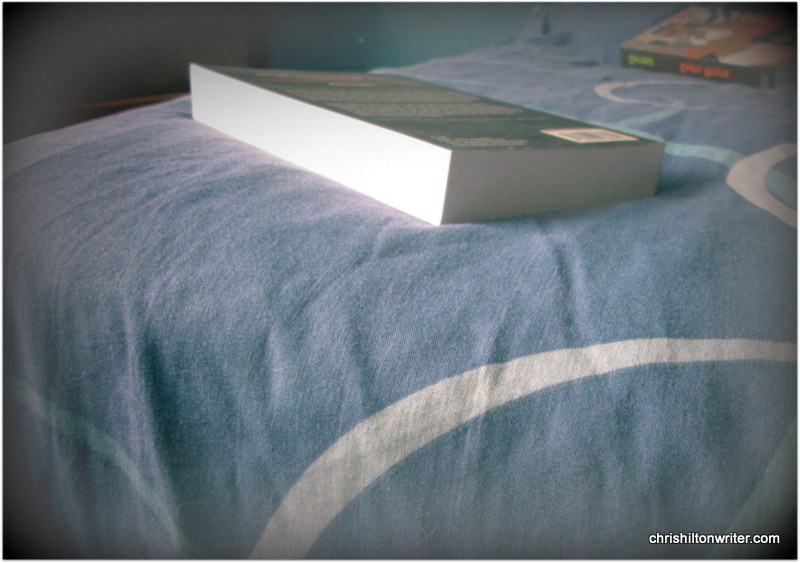
IMG_0368

I read frequently in bed.  That may not be where the majority of reading hours are put in, but it is the place where my reading most often takes place – every night without fail.  Actual reading time can be as little as one minute before the object of reading falls onto my face to remind me that I’ve fallen asleep; it can also be hours or occasionally a whole book.  In bed is where one judges the practicality of a book.  I believe most of us must read while lying on our back, holding the book above our face; that way when sleep comes it’s possible to place the book on the floor or on the bedside table and quickly get to perfect slumber without unnecessary interruptions, such as changing position drastically or rearranging pillows, cushions and covers.  If, like me, you do read this way, then you should know what I mean about the practicality of reading a book as opposed to its beauty.


Julian Barnes is right.  His Booker winning novel is a beautiful object; I read it over a few nights, entirely from a prone, on my back, position.  And it is not a practical object.  For a very simple and infuriating reason: its inner margins are too narrow.  The book requires an uncomfortable and impractical two hands to be able to see the whole of the text; in other words, without forcing the book wide open with two hands the inner text on both pages will disappear into the fold of the book; one is constantly tilting the book this way and that to read the end of the sentences on the left-hand page and their beginning on the right hand page.  This is unusual with hardback books, but this is a small book.


Although this fault is most noticeable in bed – I suppose publishers will protest that books are not designed to be read in bed (if not, they should be) – it is almost as annoying when reading anywhere in any way.  If, like me, you love books as ‘physical’ objects then you will resent having to practically break their backs to read the central text.  Apart from the discomfort and the detraction of pleasure, you are damaging the book, shortening its life – the act of doing this, bending the two halves of a paperback hard against its spine makes me angry; apart from the inconvenience which has been added to what should be a pleasure (depending on the book), I resent having to treat a book this way.  It should never be necessary.


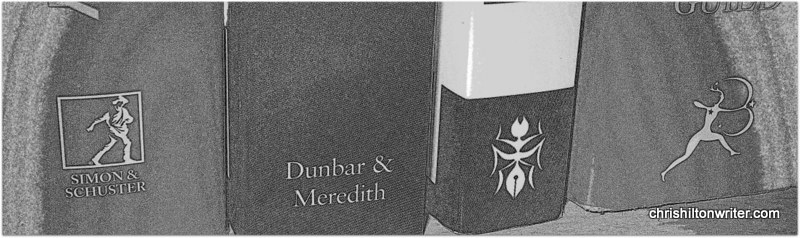
Why are so many books made this way?  And who is producing them? I can’t decide if this is just a quirk of printing or penny-pinching.  I was unable to decide if some publishers habitually printed unreadable books, if some never erred or if the whole business is a lottery.  I was going to put together an extensive list but found that margin width is completely random, there is no pattern to it; a publisher may release a book with wide margins followed by one with narrow margins: same price, no reason. It appears to be haphazard. Rather than try to catalogue the problem, here are just a few examples of what I have been reading lately.


Geoff Dyer’s Working the Room (Canongate) is impossible to read in bed without forcing the covers back with two hands (not a natural position).  Using the natural stance of holding the book between thumb and forefinger reveals the bottom half of the text, but the top half disappears into the centre, forcing one to use unnatural, uncomfortable pressure to be able to see the upper text.

A Little Aloud (Chatto & Windus) is not only a marvellous book, its proceeds going to charity, it has really wide central margins to make one-handed reading easy as well as silent or noisy reading in bed – in fact why not read aloud to a loved one in bed?


I had hoped that this would be a modern phenomenon, a sign of the philistinism and greed of the post-modern era, penny pinching publishers saving another £0.0001 per copy by depriving the reader (me!) of reading space and comfort.  It was not to be: A 1998 Penguin edition of Lucky Jim is very mean with its margins.  It requires two hands and needs forcing open at all times because also, without the book open flat there are always shadows to contend with, a hazard for all but those with 20:20 vision.

IMG_0374

Another factor is ‘Give’.  Have you noticed how the better paperbacks allow themselves to be forced flat, you feel as though you are breaking them but you are not – the spine remains uncracked, the glue holds – they are a miracle of design and engineering. I present two examples: Alone in Berlin (Penguin) 2009, and Leviathan (Fourth Estate) 2009; beautifully put together books, but Alone in Berlin has narrow margins while Leviathan has wide margins; they are both priced at £9.99 – the problem has nothing to do with cost. I don’t think publishers even consider this. The Empty Space by Peter Brooke also has ample room on the inner margin.


The crazy thing is: Who needs outer margins? They are necessary for appearance’ sake but provide no practical purpose. Why not shorten the outer margin and give the difference to the inner margin? I hope I’m not the only person to notice this. Any thoughts?


Why do homosexual writers get right to the essence of relationships?

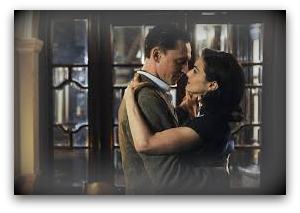
terrancerattigan-001It hadn’t occurred to me before (I don’t know why) how good homosexual writers are with relationships. I recently watched the film version of The Deep Blue Sea, a recent version of Terrance Rattigan’s play. I was very impressed with it and decided to watch something I’d recorded in 2011, an hour long documentary on Rattigan by Benedict Cumberbatch. It was in that interesting documentary that it was stated that Rattigan’s female characters, including, Hester Collier, played by Rachel Weisz in the film, were actually based on men, that at the time the plays were written the characters had to be changed because homosexuality was against the law.

I first came across a Rattigan play in the 1990s. I didn’t know or didn’t register who the play was written by. The play was Separate Tables, including Julie Christie and Alan Bates. The play was very moving. I remember my wife of the time saying ‘You could feel that’, and she was right – you could feel it. I recently watched the play again, but it is of course dated. With the best of intentions you can’t help noticing the hairstyles, the static camera – it’s still a great play but the shine is taken off it. The Deep Blue Sea was my first experience of Rattigan modernised – still set in 50s but with modern techniques. I felt it again. It is a very touching drama in which not much appears to happen.

This reminded me of The Browning Version, another moving Rattigan play. I suddenly realised that Rattigan gets right to the heart of the matter without making very much happen. I had watched an earlier version of The Deep Blue Sea. It was from 1994, televised as a play, but seemed even older. While the performances were good from the actors, including a young Colin Firth, it somehow remained quite static. Of course it was a play, not a film, but keeping the action in one dingy room somehow lessened its emotional impact, which was there waiting to be brought out. The main character, Hester, was also older, or looked it, which also (for me) reduced its effect. Subtle differences were introduced into the 2011 film: The action moved to a pub a couple of times; a musical scene in the pub showed the bond between Hester and Freddie Page (Tom Hiddlestone); Hester’s husband, Sir William Collier (Simon Russell Beale), was shown at dinner with his mother and provided more of a clue to the tension between husband and wife. The changes made for the film, just switching occasionally to the street, a pub, a telephone box, made the action more understandable and believable. The action in both was set in the 50s but the film had somehow made the action seem contemporary. It was very cleverly and sensitively done; I highly recommend the film to anyone who is interested. I have Rattigan’s plays and films in a BBC collection. Through no fault of their own they are dated, losing much of their impact.

hesterandfreddiepage-001The main thing I learned from the plays is that they are very emotional. Separate Tables moved me in 1983 and The Deep Blue Sea was incredibly poignant today; it left a lump in my throat, sent shivers down my spine and, believe me, it takes a lot to do that; I am a cynical person who dislikes ninety per cent of what I see, the pathetic excuses for drama we are now presented with. It takes a lot to affect me. The fact that Rattigan’s original intention in most of his plays was to have a man as the love interest rather than a woman does not lessen their impact, if anything it increases it.

Why do homosexual writers get right to the essence of relationships? Men are obsessed with sex and very few can write honestly about women. Women have other priorities, but again it is their own path they are interested in – there is a constant and never ending battle, rarely acknowledged. Homosexual men in general remain apart from the mating game. Whatever their heart desires, parenthood (until recently) was not a priority for gay writers. Although it is complicated, one could say that they are neutral, above the fray, and therefore write honestly. Cyril Connelly once said that:

‘The pram in the hallway is the enemy of art’

despite the valiant efforts of both men and women, this remains true. Men, no matter what they say, are only interested in sex. Women are interested in rather more. Homosexual men, freed from the battle of the sexes, are free to observe women as neutrals.

Tennessee Williams based his fragile women characters on men. Blanche, in A Streetcar Named Desire is based on a man. She is wise but broken by a cruel world; she is a mixture of toughness and vulnerability. A Streetcar Named Desire is another play that I find very emotive; I can watch it perhaps once a year, although, as usual, I prefer the film version. For me the tragedy of the play was the relationship between Blanche and Mitch; they were perfect for each other: Blanche’s wisdom would have smoothed Mitch’s rough edges, massaged his ego and Mitch would have provided much needed, last resort protection for Blanche. But Mitch’s ego, his twisted idea of morality led him to reject her and watch, albeit guiltily, as Blanche was taken away to the asylum. Real, heart rending tragedy. Williams once said that he just wished people would stop ‘being so beastly to each other’, which does rather seem to be a more typical female wish.

twilliams-001EM Forster’s Howards End is one of my favourite books. The main female characters appear full of reason and wisdom, while the men are merely insensitive, competitive and not very bright, apart from the tragic Leonard Bast. Forster did not make all his female characters wise, but his main protagonists were. Not openly gay, like Williams and Rattigan, Forster nevertheless wrote in a similar way: above the fray. Henry James, if we believe his many biographers, was celibate. Celibate or not, he was probably homosexual and wrote of women, incredibly long-windedly, but honestly. The film Wings Of The Dove demonstrates, briefly, his talent.

Of course, sensitive direction is essential and Terence Davies (The Deep Blue Sea), Elia Kazan (A Streetcar Named Desire), James Ivory (Howards End) and Iain Softley (Wings Of The Dove) all spotted the potential of the material and synthesised it wonderfully.

Lastly, in this necessarily brief reflection, comes Shakespeare. He was almost certainly bi-sexual. Of his 154 sonnets, 127 were written in praise or lust for an anonymous beautiful boy, only 25 to a mysterious dark haired woman. Shakespeare, many years before anybody else, wrote wonderful parts for women.

He was aware both of their qualities and faults and wrote about both. Generally though, I think he admired women over men. Anyway, I accept that this is a personal opinion and not many people will have seen the plays or films or know what I’m trying to explain. So, I defy anybody to watch the film versions of A Streetcar Named Desire (1951), Howards End (1992), Wings Of The Dove (1997) and, especially, The Deep Blue Sea (2011) and not be moved. All the films get right to the heart of relationships. I’d be interested to hear what you think.

The Shakespeare Controversy

01v/11/arve/G2582/016Perhaps many of you will have heard that there is a sort of controversy over Shakespeare’s authorship of the plays. I shouldn’t really describe it as a controversy because it isn’t, or it shouldn’t be; a controversy exists when there is some doubt about one side of an argument, when there are two sides to an argument and no matter how tenuous one side is, there is some substance to it. Over eighty alternative authors have been put forward for alternative authorship; they have one thing in common: there is not a scrap of evidence for any of them.

This is a subject that, since I became aware of it, has made me quite angry. I have tried to ignore it, but it always creeps back; you see even the ‘Does it matter’ arguments are annoying. Of course it matters. I shall try, briefly, to explain.

Apparently, doubt as to the authorship of his works began in the mid-nineteenth century, well over 200 years after his death. Friends and colleagues of his time had no doubt about his identity; they worked and socialised with him; Ben Johnson said of him that he

‘never blotted a line, would that he had blotted a thousand’.

It seems to have taken rather a long time for people to question his identity. A paucity of evidence from his life has helped, giving doubters ammunition to invent and speculate, but despite the paucity there is ample evidence that he was the author of the works. It takes a rather strange mind to doubt it. Unfortunately, especially now, there are plenty of strange minds around. And, I repeat (it can’t be repeated too often), there is not a scrap of evidence for anyone else having written his works. None whatsoever.

This poses the question as to why there are doubters. If we discount those always keen on any conspiracy theories and those with a vested interests (often lawyers), we are left with a relatively small bunch who simply refuse to believe that Shakespeare wrote his own plays. This is important; it is not that they truly believe any alternative, although they profess to do so, it is that they merely refuse to believe the truth. There is a reason for this: it is called snobbery.

The most popular fantasy today is that the Earl of Oxford wrote the plays, supposedly because only an aristocrat could have known so much about court behaviour, Italian history and poetry. As Bill Bryson has observed, this does make it rather difficult for him to have written Othello, King Lear, Macbeth, Antony and Cleopatra, The Winter’s Tale, The Tempest and many others, on account of being dead. But his champions merely point out that there was a conspiracy and evidence was falsified to protect Oxford’s identity. Why it needed to be protected or why it has taken nearly 400 years to discover this, does not seem to concern them. The Oxfordians have some quite well-known followers, Jeremy Irons, Vanessa Redgrave, Derek Jacobi and Mark Rylance among them.

The fact that there is any controversy at all is extremely irritating, indeed US writer James Shapiro felt the need to write a recent book, Contested Will, to try and end the argument once and for all. It would have been much better had he used his time more productively – he is a marvellous writer on Shakespeare generally – but felt compelled to write on this topic when an 8 year old in his class expressed doubts as to the authorship (the debate, of course, is quite popular in America). I’m afraid that, having reached America and the lawyers and the film makers, even Shapiro’s excellent book will not make the doubters disappear. Although very much a minority, they are vociferous and probably growing. A film with Vanessa Redgrave and Derek Jacobi has already been made. Thankfully, it was awful.

But back to snobbery. Shakespeare has been described as looking like a ‘self-satisfied pork butcher’; he liked money; he hoarded grain; he lent money; he bought a coat of arms and a new house (called New Place) in Stratford. He was far from both the aristocracy and the poor, grammar school educated (a classical education) and with a father on the wrong side of the law. All this is too much for those who need him to be a bit more refined, a bit more superior, a bit more above everybody else. Pork butcher? Money lending? Hoarding grain? A criminal father? No, we can’t have that.

This is where the snobbery comes in. The likes of Irons, Jacobi and Redgrave need to have the author of such wonderful works as somebody a little better than them. Having never struggled to pay a bill, never struggled with anything really, they can’t accept that an ordinary boy from Stratford could be so much smarter than they are, be so wiser than they are – be so utterly brilliant. So they have to believe that it was really an aristocrat who wrote the plays; lacking any evidence for anybody, other than an aristocrat who happened to be dead when many of the plays were written, they cling desperately to an illusion. What awful, silly people they must be.

masks-001Shakespeare was so brilliant, so good, partly because he wasn’t a member of the aristocracy, wasn’t tainted by privilege and received ideas.  He hadn’t been brainwashed by a university education. He was real and he knew people. He lived among them in London, he visited pubs and brothels; he knew and understood life. He is one of us, one of the people – he is ours. That is what the likes of Jacobi cannot abide. They have to try and raise Shakespeare above us. They simply cannot stand the fact that he was an ordinary person and, more importantly, that ordinary people are capable of being Shakespeare – that there may be another Shakespeare out there among the masses. They would have to admit that it was possible, that there is more possibility among the masses than their privileged upbringing and lack of brainpower allows.

That is also why the question of authorship matters, that the greatest writer of all time was ordinary is very important. It should give inspiration to everybody. Allow these idiots to give the credit to an aristocrat and you rob the whole world of the possibility of great achievement. It matters.

I don’t have much space to go into the question of proof for Shakespeare’s authorship, I shouldn’t need to, but feel it necessary to mention a couple of things. The forest is a recurring theme in his plays. I quote from Peter Ackroyd’s biography:

“To the north of Stratford lay the Forest of Arden. When Touchstone enters the woods in As You Like It, he declares ‘I, now I am in Arden, the more foole I’. Shakespeare’s mother was Mary Arden.  Anne Hathaway lived on the outskirts of the forest.  His consciousness of the area was close and intense. The evidence of Shakespeare’s work provides evidence that he was neither born nor raised in the city. He doesn’t have the harshness of John Milton, born in Bread Street, nor the hardness of Ben Jonson, educated at Westminster School; the sharpness of Alexander Pope from the City or the obsessiveness of William Blake from Soho. He is of the country.”

On the question of snobbery I quote from an interview with Bill Bryson about his excellent short biography of Shakespeare:

Interviewer: Is it snobbery? He was a relatively ordinary man from a relatively ordinary background and they want him to be an aristocrat or somebody sort of special.

Bryson: That is really quite insulting to ordinary people. The idea that you could come from a modest background and that somehow that would disqualify you from being William Shakespeare is really a very demeaning thought. There’s no evidence for it. There never has been any evidence for it.

Oxfordians cannot explain Shakespeare’s knowledge of the country and its people. His knowledge of the cities came from living with them, his knowledge of Roman history from Plutarch. He was mainly an adaptor, he took other works and improved them. He wrote what are still some of the best parts for women, 400 years before feminism. He understood both men and women. He was modest; I’m sure he would be baffled by all the fuss about him today, although I’m sure he would take advantage of it.

Academics are generally very polite. In all the works stating (again) that the man from Stratford wrote the plays, they are very kind to the likes of Irons, Redgrave and Jacobi. They shouldn’t be; these people are a menace. They are snobs and idiots, too stupid to realise the damage they are causing. I suppose the best thing now would be to ignore them. I try to, but unfortunately they keep cropping up on television. It’s hard to see a solution.

To the Tower with them?

tol-001

No advertising today please…

penI had not realised until recently how much I dislike advertising. I have always been averse to it, but in my youth took very little notice of it and prided myself in believing that I was completely uninfluenced by it, that I had never bought anything because of an advert; most of it seemed completely idiotic to me; I found it hard to believe that anybody could be taken in by it. But it must work; otherwise we would not be so inundated with it.

Until a few years ago, I suppose I ignored it. I rarely watched commercial TV and somehow managed to avoid noticing the adverts when I did. Six years ago I bought a DVD which could edit recorded programmes, so now I very rarely have to put up with adverts – I simply pre-record, edit out the adverts and watch. On the occasions when there is something too good to miss though, I do sit through them. In 2011 Ofcom announced an increase from 7 minutes to 12 minutes of adverts allowed in an hour. Now, there was certainly more than 7 minutes before the increase and since the increase there is more than 12 minutes. Perhaps the seven minutes was manageable; it was possible to stay with a programme despite it; it was not too intrusive: two short breaks an hour or three very short breaks were just about acceptable.

Now the amount of advertising is definitely intrusive and there is much more than 12 minutes an hour. One example is the US import, Homeland. It is scheduled at one hour and five minutes, but my edited version (adverts removed) comes out at 41 or 42 minutes. Although the second and third series are pretty silly, it’s just about watchable. But it is impossible to watch live; the adverts are just too intrusive. After the lengthy introduction which is shown every week and the lengthy recap of what’s been happening, the first break comes after about 8 minutes, barely longer than the break which follows it. It is impossible to get involved in the storyline, the breaks come too often and are too long – all narrative flow is lost.

The extended breaks were originally proposed for a trial run. I doubt if there was any intention for this to be temporary; the breaks have continued and, without any announcement or permission, extended. It is claimed that broadcasters would invest more money in drama. That may be true, all commercial drama is now sponsored by somebody, but the dramas produced are just vehicles for advertising. I can’t think of one memorable drama that has come from ITV, despite an increase in production. Broadchurch was probably the best, but it was spoiled by being too long with a ridiculous and sentimental ending; it contained the same amount of adverts as the US imports with only 42 or 43 minutes of actual programming.

Broadcasters get around the new laws by starting programmes late and finishing early. They tag on adverts for their own programmes so that each break is 5, 6 or 7 minutes, fifteen to twenty minutes in total. I think the new laws have rendered commercial TV unwatchable. The fact that it is watched by millions says rather a lot about the people who watch it. How they allow themselves to be subjected to the advertising, I don’t know. Presumably a great many are influenced by it.

I remember twenty years ago that programmes had two breaks per hour. I can’t remember how long they were, perhaps three or four minutes. It was bearable. I also remember more adverts containing humour, so that even if you were not interested in the product, you could have a laugh about the ad. Adverts now seem consistently puerile, as if the advertising people are assuming that the audience are idiots. One has to assume by the size of the audiences that most of those watching probably are idiots. I find it amazing that people still complain about the BBC licence fee. Every argument against it has people moaning about having to pay it when they don’t watch it. Firstly, I don’t believe that they never watch it, and secondly, if you object to paying less that £3 a week for an advert free station, including radio, a world service, BBC 1, 2, 3 and 4 and the red button, you are probably mad.

I know it is another era and before the time of most of you, but one thinks back to 1981 when Granada serialised Evelyn Waugh’s Brideshead Revisited, with a magnificent cast. It was interrupted briefly twice. Practically the whole country stayed in to watch it, every week. It is unthinkable now that any commercial station would attempt such a thing. The nearest we have had is the recent run of Shakespeare’s Richard II, Henry IV parts 1 & 2 and Henry V on the BBC. They were appreciated and discussed online, but I suspect it was a very small audience.

Advertising for the new products (phones, laptops, iPads, flat screen TVs) seems to concentrate on their coolness, with dozens of happy but vacant teenagers desperate to replace what they bought six months ago. The ads are beautifully put together but absolutely empty. The same goes for cosmetics and car ads: empty cool; either that or half-wits being persuaded to bet or enjoying their TVs exploding or shooting at them. One after another they are stultifying. I dread to think of the American mind, where they have been subjected to this for much longer with less choice. Last year it was said that the average American was exposed to 3000 adverts per day. I think it is impossible to say; it depends on the individual, but for the incautious viewer or internet user, it is certainly a lot. This country is not far behind.

I would like to think that I have been subjected to no advertising today. Nothing when I get up because I don’t watch anything until I get to work. Since then I have glanced at Facebook but did not look at the ads down the side; I have bought some food but I’m pretty sure that I did not look at any of the many Greggs ads plastered all around the restaurant; I did not register whatever ads my email providers tried to tempt me with; when I get home I may watch some TV but it is very doubtful that it will be a commercial station, if it is I will probably record it and edit the adverts out; I will be subjected to the BBC advertising its own programmes (far too much); their many links are unnecessary and must be exorbitantly expensive. But that’s about it. My dislike of advertising is such that when I do watch something like Homeland, I have to turn the sound down and even turn away or leave the room during the breaks – I can’t even stand to see the images. They are horrible: disgusting, sentimental, unrealistic, very clever garbage. I have become immune and allergic to advertising.

I am off to Cuba this Christmas. Whatever else you might say about Cuba, they do not allow advertising – five channels with no adverts – ever. How long they can hold out I don’t know, but more power to them. And thank God, thank Buddha, thank everyone for DVD players that can edit. I may have to buy a few of them for the future. I’m sure the Americans will ban them some day.

Writing Heroes – William Shakespeare

“It is not in the stars to hold our destiny but in ourselves.”

My first experience of Shakespeare was a performance of The Tempest on a school trip; I hated it. Three years later I was given a copy of Macbeth as one of my ‘O’ Level books: I loved it. I read it and studied it and wrote about it. I achieved a good grade. After that, until I reached middle-age, I had very little to do with Shakespeare; I don’t enjoy the theatre much and found his plays difficult to follow. I went to see Roman Polanski’s Macbeth at the cinema in the 70s and loved that (it is still the best version), but It was only when I began helping students with their English that I started to appreciate him, and, only then, through the filmed versions.

Since then, having studied him on and off for a few years, I have discovered that I like Romeo and Juliet, Othello, The Merchant of Venice, A Midsummer Night’s Dream, As You Like It and A Winter’s Tale; I love Macbeth but baulk at the walking wood. I don’t like Hamlet or King Lear. I do like Julius Caesar, Troilus and Cressida, Measure for Measure and Coriolanus, all rarely performed, although Coriolanus does seem to be having a revival, partly due to its supposed similarities with today’s society.

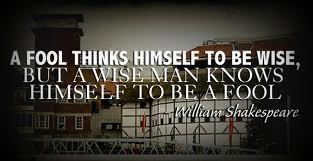
wsquote-001All of the Henry plays are good but particularly Henry VIII, one of the least performed. I like Richard II and love Richard III, even though it is a complete fiction (Tudor propaganda); I like Much Ado About Nothing but don’t yet understand The Tempest; Anthony and Cleopatra is marvellous; I enjoyed bits of Cymbeline, but the version I watched had a young Helen Mirren dressed as a boy (impossible to believe). I don’t like Pericles or The Taming of the Shrew. I am indifferent to Love’s Labour’s Lost, Twelfth Night and All’s Well that Ends Well. I know nothing about the Two Gentlemen of Verona, A Comedy of Errors, The Merry Wives of Windsor or King John.

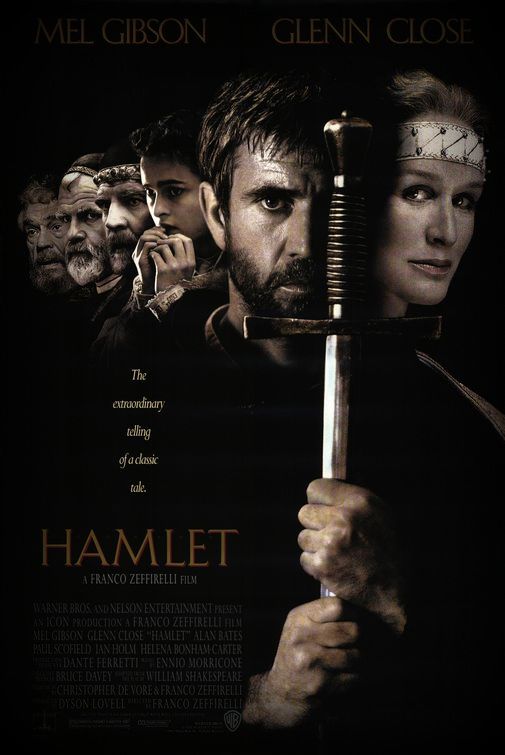
I think that just about covers them all; forgive me if I have forgotten anything. I enjoy watching Hamlet even though I don’t like him. Such a fuss is made about his tortuous journey and his suffering and tragic death, but I just find him a terrible whinger and get fed up with him very quickly. He is responsible for the deaths of Polonius (harmless old fool), Rosencrantz and Guildenstern (to be fair they would have had him killed otherwise, but only because of his awful behaviour), his mother and Ophelia, the one true innocent in the play. I found Ophelia the only sane person in the play and she is destroyed by Hamlet. Kenneth Branagh’s four hour film is quite entertaining but the best I’ve seen so far is Zeffirelli’s version with Mel Gibson.

hamlet-001King Lear and Hamlet are two of the most popular plays today. It is easy to obtain copies of performances and there are many films of both; I have seen quite a lot of them (the best King Lear is a Russian version by Grigori Kozintsev). As I said, I enjoy watching performances of Hamlet but have no sympathy at all with the play’s theme, which to me is: spoilt, self obsessed brat prattling on endlessly about his problems and dealing with them far too late, thereby causing the deaths of many. I suppose I get fed up with critics taking Hamlet (the character) so seriously (I grant his language is wonderful) when I find him very unlikeable.

King Lear is a play often performed and analysed. I hope I’m wrong, and one day might be convinced otherwise, but I find the whole thing ridiculous. I know it is about a foolish old man mistaking flattery for love and not recognising true love, of not understanding that the giving away of territory would change everything – of not understanding anything until it is too late; but it is told in such convoluted fashion, with too many characters and too many ridiculous scenes. I cannot watch the scene on the beach near the end without laughing.

I find Macbeth one of the most watchable of plays, partly because it is so short (the shortest). Its theme is simple: overarching ambition and female manipulation. There are one or two parts where I have to suspend disbelief: the walking wood, Lady Macbeth collapses into madness too quickly, but it is a marvellously entertaining example of what Shakespeare was best at: taking basic human emotions and dramatising them; of course all drama should do this but only Shakespeare did it so well.

One thing that stands out in all the plays though, is the language; there is wonderful language in all the plays. I’ll make a ridiculous understatement and say that Shakespeare had a way with words. Like no other before him or since, he could encapsulate the most profound thoughts and feelings in what is, when studied, beautifully simple language. His best plays are a joy throughout – I can watch them once or twice a year. The recent BBC series of Richard II, Henry IV parts 1 & 2 and Henry V was superb.

The way I found access to Shakespeare was through film. Watching his plays in the theatre I find that, unless one knows the play by heart (difficult), the language is lost – while thinking about one line, it is quickly followed by another and another and so much is lost, simply because it is impossible to keep up. With film, and today almost everything has subtitles, it is possible to pause and think, to absorb and understand and thereby find a way in to the plays.

This has been only a brief and haphazard introduction into my thoughts on Shakespeare. I have already written a rather self-indulgent review of Throne of Blood, Kurosawa’s film version of Macbeth. But bear with me. I would like occasionally to share my thoughts on Shakespeare, particularly the ridiculous authorship controversy, in the future. How do other writers feel about this – any other Shakespeare lovers out there? Or am I merely wallowing in my own enjoyment of him?

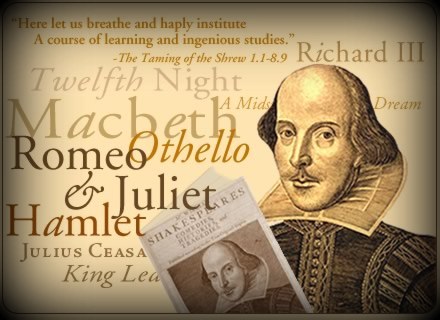
wsmontage-001

Throne of Blood

Macbeth was the first Shakespeare play I encountered. It captured my imagination more than any other, partly perhaps because it is more concise: it tells a simple tale and wastes no time. I remember at age sixteen that I thought Lady Macbeth was the main influence of the tale, that Macbeth, left to his own devices, would have done nothing.

sword-001

Recently, I watched Throne of Blood, which is Akira Kurosawa’s (1957) filmic take on Macbeth. Though dated in some ways, I found it fascinating, and I thought he placed much more emphasis on the Lady Macbeth figure, Asaji. Because Japanese society was so hierarchical and constricted, particularly for women, it allowed Kurosawa to demonstrate Lady Macbeth’s (Asaji’s) influence. Although women were restricted in Macbeth’s time, it was even more so for Japanese women. Kurosawa created a film that showed subtly and cleverly, how a woman can manipulate a man. Washizu (Macbeth) is not very bright, but he has all the power. Asaji must be very careful how she manipulates him. In this sense I think Kurosawa was limited by the constraints of following the play. Asaji’s collapse is too quick, too brief – she was stronger than that (as was lady Macbeth in the original play).

But enough preamble; this is a bit self-indulgent (and long), but I hope you will bear with me. Without having seen the film, this will mean nothing to you, so all I can do is recommend it very highly. Perhaps if any of you watch it, you can then come back and agree or disagree with me.

 ***

 The film begins…

throneblood-001Throne of Blood – The Review

Some are mathematicians, some are….

Some are mathematicians, some are carpenter’s wives,

I don’t know how all that started, I don’t know what they do with their lives.


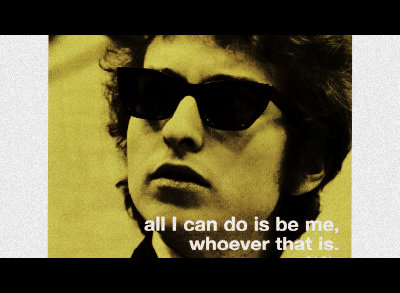
My intention is not to demean mathematicians or carpenter’s wives, but this is one of my favourite lines from Bob Dylan. I’m not even sure why; like much of his work it seems to sum up my life, get to the very essence of it. I’ve never understood how people get along, how people who have a choice can devote themselves to various occupations, day in, day out, for the whole of their lives. I don’t understand the pursuit of money either – of course Bob Dylan has pursued it throughout his life – but I don’t think money has anything to do with his talent, which is genius, something I don’t think he has any control over. So, I’ve drifted for most of my life. Not that I had much opportunity, only realising very, very late that I was moderately talented. I’ve been quite happy with my life though. No complaints.

SS057

Of course, half the world is poor. They have no choice in what they do. They have to survive, and every ounce of energy is taken up with that – surviving. The other half, from bus driver to prime minister, have a choice. The choice varies, but they can do all sorts of things. Most men seem to want to get married. Even at a very young age, long before puberty, I thought this a strange choice. Men can do anything they want. They have complete freedom, but seem to be in a mad rush to lose it, to become enslaved to young versions of themselves, to provide for them forever. The woman will lose interest in them, if they haven’t lost interest in her, and they will be stuck, for life. Lately, they will probably divorce. But then most of them will go and marry again, somehow believing it will be different. Fidel Castro once said that anybody who marries for a second time is insane. Fidel has said many wise things (and the opposite), but this seems to me to be the wisest. Some men serial marry, again and again and again. It’s very strange.


Different people have different talents. I do understand this: mechanics, doctors, dentists, scientists – and carpenters – it is endless. And you have to do what you’re good at. I’m very glad that there are mechanics and doctors. To me, the only duty is to enjoy your life. It is quite short (although mine seems to have lasted forever), and I’m very surprised at the number of people who discount this, especially among the young, who seem to think that some kind of financial success represents happiness. The pursuit of most things, especially money, is a chimera. Perhaps it does make some people happy, it’s hard to tell, but not many. The same is true with many professions. Many years ago my friends and I used to play friendly cricket matches against a team of trainee dentists. We were all poor, would arrive at the matches in various old bangers, play our games and have a drink afterwards. We all knew that while we would stay poor, the dentists would soon be very rich. I don’t know if they went into that profession for money – would you do that by choice? – but anyway, they were all going to be dentists. Gradually we all lost touch. Rich they may be. But they have been peering into people’s open mouths for years, fiddling around under their tongues, dealing with rotten and broken teeth. I don’t envy them.


I’ve drifted from job to job, probably did about fifty different things before I reached the age of forty five, sometimes well-paid (on a low scale), sometimes not. I’ve never been without money or a roof over my head. I’ve never held on to any money either; I don’t have any money now. But I don’t regret anything. I didn’t commit myself to slavery or a career; I’ve travelled very widely; I’ve lived through a very propitious time, granted, but it wasn’t easy in the seventies or eighties to find work; it was certainly very difficult to get rich. I’ve lived through peaceful times, which I’m grateful for, and I’ve been lucky, and more than once I’ve had a lot of help from friends. Generally, I’ve enjoyed my life, but that’s what I set out to do; I don’t mean enjoy at others expense either – I’ve been mainly well-behaved.


So, that’s what I mean by my title. A bit of a ramble; I haven’t explained myself very well but I had a go. Many of Bob Dylan’s lines encapsulate things for me. Desolation Row makes perfect sense to me; it is considered a drugged out, psychedelic muddle by most people, but every verse, every word, rings true for me. Perhaps I’m a misfit:


I just don’t fit,

Yes, I believe it’s time for us to quit.


You see, there I go again.

Myths, Legends and outright Lies

rainbow_overperranI’ve often wondered about the many myths we believe in. There must be thousands, more. I know of only a few, but in many ways modern life is based on myth, what we believe to be true, but which is only partly true or not true at all. You probably wonder what I mean. Well, everybody knows now, for example, that Iraq had no weapons of mass destruction – it was one of the many stories concocted by people determined to go to war with Iraq. I’m not sure, but surely most people know now that WMDs were a myth. Of course there are still those among us who believe the war was justified, and they may well choose to believe the claim. But they believe a myth. It simply isn’t true.

Likewise, when the USA chose to attack Iraq, Americans were told that Saddam Hussein was responsible for the destruction of the twin towers. None of the nineteen people responsible for 9/11 was from Iraq; Iraq had absolutely nothing to do with it, but apparently 60% of Americans believed it to be so. For those who do not want to believe that the war was a mistake, an ongoing mistake that is still costing hundreds of lives, it is much easier to believe that Iraq was responsible, to believe in the myth.

Myths do not need to be quite so important, to have such dire consequences, for example, it is popularly believed that one is never further than six feet from a rat. I’ve no idea where this originated, but the BBC’s More or Less team calculated that there are 3.1 million rats in urban areas; even if they were spread absolutely evenly (which they are not), this would give each rat 5000 square metres, which means that you are never further than 164 feet (minimum) from a rat. But of course, urban myths are a good topic of conversation; it is often more fun to believe them than to coldly consider the truth.

A rather more serious, but archaic myth, is that of King Richard III, who is, or was, widely believed to have murdered the two young princes in the tower. He is the perfect villain, hunchbacked and unappealing, with a record for ruthlessness and murder throughout his very short reign (1483-85). The first time I doubted this was on reading Josephine Tey’s The Daughter of Time, the title taken from the proverb, Truth is the daughter of time, written in 1951, and included in a fictional detective story. It is a forensic debunking of the whole Richard III myth; there is much detail, but basically, most of the evil attributed to Richard was Tudor propaganda, started by Henry VII, his successor, and continued throughout the whole Tudor dynasty, which lasted until the death of Elizabeth in 1603. But, the propaganda was marvellous stuff, Shakespeare’s play was based on it (written in Elizabethan times) and the story became embedded in the public consciousness. I’m sure that many people still believe in Richard’s villainy.

Less seriously again, it is widely believed that Sir Arthur Conan Doyle simply got fed up with writing about his fictional detective and stopped, and that it is only by popular demand that he resurrected him. The truth is more prosaic. In 1903, McClure’s magazine in the United States offered Doyle $5000 ($60000 today) per story; he told them he’d be a fool to refuse, so after a ten year hiatus, Holmes returned. Doyle hated writing the stories; he wanted to write more serious stuff, but continued writing Sherlock Holmes stories for another 25 years, and it is a credit to him that most of them remain of a very high quality.

Apparently, if you ask anyone how many immigrants are in this country (the UK), they will say about a third or 33%, and over half the population (57%) believe that there are too many immigrants. This is the highest figure of many countries surveyed, including the US, Germany, Italy, Spain and France. The UK population that was foreign born represents 11.1%. The unusually high belief that this is otherwise is probably mainly due to the media, papers such as the Daily Mail propagate the myth of immigrants daily, and politicians, especially today’s will soon jump on the bandwagon. Benefit fraud is another popular myth, mainly encouraged by the media. Surveys revealed that people believe that 27% of their money is lost to fraud. In fact the figure is 0.7%, rather a wild difference. These are just two of the many myths that a large percentage of the population live by; their whole belief systems, their philosophies and the way they behave are based on myths.

Lastly, I would like to mention a myth of my own, that of Mother Theresa. In 1992, I was in Bucharest, Romania, during the crisis of abandoned children; I was part of a many faceted and international aid programme that intended to help, and as far as I can see, did help in many ways. I was there for two weeks at the Sisters of Mother Theresa Orphanage in Bucharest. It was a fairly small orphanage, with little room in the building but extensive grounds and playing areas. There were two small rooms where the children, of varied disability, very few were normal, played; there was also a small school room where very basic stuff was taught. The children were allowed into the garden during the day, but only on request from the volunteers (there were about eight of us); the nuns wanted to keep the children inside, where there was little space, because it was easier to control them, perhaps not even control them because they ran wild, but at least they knew where they were.

After a few days Mother Theresa arrived on an inspection visit. She briefly surveyed the premises, not looking at the children once. She ordered that the school be closed ‘God will provide’, so that there would be more room and that the doors to the garden be locked. She did not speak to any of the children or the volunteers. And she was gone. The school remained closed, but we managed to persuade the nuns to allow the children into the garden, as long as we took responsibility for them. The encounter aroused my curiosity and when I got home, I investigated her. It emerged that her sanctuary in Calcutta (now Kolkata) was extremely basic: an iron bed, minimal food and toilet facilities. Nothing else was provided for the children in care under her name. Nothing. Doctors observed a lack of hygiene, unfit conditions, a complete lack of care, inadequate food, and no painkillers. Presumably God would provide.

Over the years I kept an eye on her. Her political contacts included the murderous Duvalier regime in Haiti, Charles Keating of Lincoln Savings and Loans and Donald Trump, in whose private jet she travelled. Of the numerous disasters in India, she offered medallions; no funds were forthcoming from the massive donations she received. In Bhopal in 1984, between 16000 and 30000 people were killed when Union Carbide’s pesticide plant leaked. No compensation has ever been paid and Union Carbide changed its name. Mother Theresa visited Bhopal not long before her death. She walked around while villagers begged her to do something, to spur some kind of action and help them; it was not only a case of people dying, many thousands were injured and since then there have been birth defects. Mother Theresa wandered among the suffering, hands held in prayer, and said merely

‘Forgive, forgive’

she couldn’t wait to be out of there.

Without my Romanian trip, I suppose I would be like anybody else, and believe that Mother Theresa is a saint. Just an example of one of the many myths we live by. Well, in reality, Mother Theresa is not a saint, very far from it. I would go as far as to say she was a very wicked woman.